Showing posts with label rationality. Show all posts

Tuesday, June 9, 2020

Rationality, Critical Thinking, Behavioural Psychology

Are evidence-based decisions impossible in politics? David Moscrop, OpenDemocracy. Nov. 24, 2019.
Human psychology and institutional incentives are powerful barriers to truth and reason, but both can be addressed.
Better political decisions are possible. Given the challenges we face now and those we’ll come to face in the future, good decisions are also essential. To make such decisions, we must address both the psychological and structural barriers that impede rational, truth-based politics among politicians and the general public.
Better decisions will require data and evidence. They’ll also require an environment buttressed by institutions that support and incentivize the use of these things. As challenging as these transformations may be, we can at least be encouraged by the fact that the best research and experience is showing us ways forward.


Of 2 Minds: How Fast and Slow Thinking Shape Perception and Choice [Excerpt]. Daniel Kahneman, SciAm. June 15, 2012.
In psychologist Daniel Kahneman's recent book, he reveals the dual systems of your brain, their pitfalls and their power


Critical Thinking. Stanford Encyclopedia of Philosophy

The rationality of science, critical thinking, and science education. Harvey Siegel. 1989.


Behavioural Investing: A Practitioner's Guide to Applying Behavioural Finance. Book by James Montier in PDF. 2007.

The Little Book of Behavioural Investing. How not to be your own worst enemy. Book by James Montier in PDF. 2010.

Saturday, November 16, 2019

Changing Minds is Hard

originally posted Oct 2018; updated Nov 2019

Why Changing Somebody’s Mind, or Yours, Is Hard to Do. David Ropeik, Psychology Today. July 13, 2010.

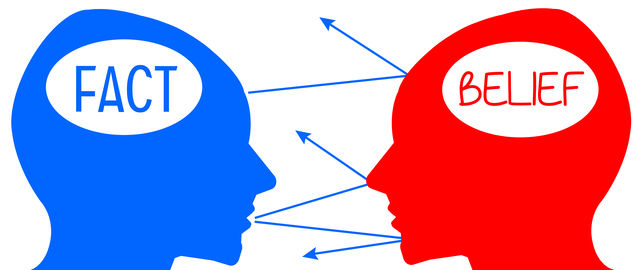
There are a lot of psychological terms for the fact that people don't like to change their minds; "motivated reasoning", "confirmation bias", "cognitive dissonance". But you don't need academic semantics to know that trying to get somebody to see things your way is tough if they go into the argument with another point of view. You argue the facts, as thoughtfully and non-confrontationally as you can, but the facts don't seem to get you anywhere. The wall of the other person's opinion doesn't move. They don't seem to WANT it to move. 
What's going on there? Why do people so tenaciously stick to the views they've already formed? Shouldn't a cognitive mind be open to evidence...to the facts...to reason? Well, that's hopeful but naïve, and ignores a vast amount of social science evidence that has shown that facts, by themselves, are meaningless. They are ones and zeroes to your mental computer, raw blank data that only take on meaning when run through the software of your feelings. Melissa Finucane and Paul Slovic and others call this "The Affect Heuristic" , the subconscious process of taking information and processing it through our feelings and instincts and life circumstances and experiences...anything that gives the facts valence - meaning...which turns raw meaningless data into our judgments and views and opinions. 
Okay, but why do we cling to our views so tenaciously after they are formed? Interesting clues come from two areas of study... self-affirmation, and Cultural Cognition. Both areas suggest that we cling to our views because the walls of our opinions are like battlements that keep the good guys inside (us) safe from the enemy without (all those dopes with different opinions than ours). Quite literally, our views and opinions may help protect us, keep us safe, literally help us survive. Small wonder then that we fight so hard to keep those walls strong and tall. 
Self-affirmation conditioning studies find that if, before you start to try to change somebody's mind, you first ask them to remember something that gave them a positive view of themselves, they're more likely to be open to facts and to change their opinions. People who feel good about themselves are more likely to be open-minded! (That's far more simplistic than any academic would ever put it!) One study, in press, was done back in 2008 and asked people about withdrawing troops from Iraq. Most Republicans at the time thought the troops should stay. Two separate groups of Republicans were shown statistics about the dramatic reduction of violence in Iraq following the "surge" in American troops. One group was asked to do a self-affirmation activity (they were asked to remember a time when they felt good about themselves by living up to a moral value they held). The other group was just shown the violence statistics, with no self-affirmation. Then both groups were asked whether the dramatic reduction in violence in Iraq was a reason to withdraw U.S. troops. The Republicans who did the self-affirmation activity, the folks who were primed to feel good about themselves, were more likely to change their minds and say that the reduction in violence in Iraq was a reason to begin pulling out of Iraq. The group that had not done the self-affirmation remained adamant that the troops should stay. 
Cultural Cognition is the theory that we shape our opinions to conform to the views of the groups with which we most strongly identify. That does two things. It creates solidarity in the group, which increases the chances that our group's views will prevail in society (e.g. our party is in power). And it strengthens the group's acceptance of us as members in good standing. (Like the lithmus test some conservative Republicans have proposed that candidates must pass, making sure their views conform to conservative doctrine before those candidates get party support.) 
Strengthening the group, helping it win dominance, and having the group accept us, matters. A lot. Humans are social animals. We depend on our groups, our tribes, literally for our survival. When our group's views prevail, and our group accepts us, our survival chances go up. So the Cultural Cognition motivation to conform our opinions to those of the groups/tribes with which we identify is powerful. And it would be consistent with that interpretation that the more threatened we feel, by economic uncertainty, or threats of terrorism, or environmental doom and gloom, the more we circle the wagons of our opinions to keep the tribe together and keep ourselves safe... and the more fierce grow the inflexible "Culture War" polarities that impede compromise and progress. The self-affirmation research seems to support this. It appears that the less threatened we feel, the more flexible our opinions are likely to be. 
So the next time you want to have a truly open-minded conversation on a contentious topic with someone who disagrees with you, don't launch right into the facts. Ask them to tell you about some wonderful thing they did, or success they had, or positive feedback they got for something. And try to remember something like that about yourself. Then you might actually have a conversation, instead of the argument you're headed for instead. 
The psychology of risk perception referred to above is described in detail in David Ropeik's new book, How Risky Is It, Really? Why Our Fears Don't Match the Facts.


What Actually Is a Belief? And Why Is It So Hard to Change? Ralph Lewis, Psychology Today. Oct. 7, 2018.

Beliefs evolved as energy saving shortcuts. Restructuring them is costly.

“For some of our most important beliefs, we have no evidence at all, except that people we love and trust hold these beliefs. Considering how little we know, the confidence we have in our beliefs is preposterous—and it is also essential.”2002 Nobel Laureate Daniel Kahneman 1


Source: Alain Lacroix/Dreamstime

Beliefs are a slippery concept. What actually are they? Philosophy has long struggled to define them.2 In this post-truth and ideologically polarized world, we need a better understanding of beliefs. As a psychiatrist, my job frequently involves identifying distorted beliefs, understanding how they formed, and helping people to learn to be more skeptical of their own beliefs. 
Let’s consider a helpful evolutionary framework for making more coherent sense of what beliefs really are, and why mistaken beliefs can sometimes be so hard to change. Then we’ll talk about how to gain a more accurate grasp of reality, and how, ultimately, to advance society. 
Beliefs as energy saving shortcuts in modeling and predicting the environment 
Beliefs are our brain’s way of making sense of and navigating our complex world. They are mental representations of the ways our brains expect things in our environment to behave, and how things should be related to each other—the patterns our brain expects the world to conform to. Beliefs are templates for efficient learning and are often essential for survival. 
The brain is an energy-expensive organ, so it had to evolve energy-conserving efficiencies. As a prediction machine, it must take shortcuts for pattern recognition as it processes the vast amounts of information received from the environment by its sense organ outgrowths. Beliefs allow the brain to distill complex information, enabling it to quickly categorize and evaluate information and to jump to conclusions. For example, beliefs are often concerned with understanding the causes of things: If ‘b’ closely followed ‘a’, then ‘a’ might be assumed to have been the cause of ‘b’. 
These shortcuts to interpreting and predicting our world often involve connecting dots and filling in gaps, making extrapolations and assumptions based on incomplete information and based on similarity to previously recognized patterns. In jumping to conclusions, our brains have a preference for familiar conclusions over unfamiliar ones. Thus, our brains are prone to error, sometimes seeing patterns where there are none. This may or may not be subsequently identified and corrected by error-detection mechanisms. It’s a trade-off between efficiency and accuracy
In its need for economy and efficiency of energy consumption, the default tendency of the brain is to fit new information into its existing framework for understanding the world, rather than repeatedly reconstructing that framework from scratch.

Seeing is believing 
It seems likely that the processes in the brain involved in abstract belief formation evolved from simpler processes involved in interpreting sensory perception
Since we experience the external world entirely through our senses, we find it hard to accept that these perceptions are sometimes subjectively distorted and that they are not necessarily reliable experiences of objective reality. People tend to trust their physical senses and to believe their perceptions even when they are hallucinating and no matter how bizarre their perceptual distortions. People will layer explanations on top of their perception of reality to explain away contradictions. 
We give our subjective experience too much credence, and so too our beliefs. We will more readily explain away evidence that contradicts our cherished belief by expanding and elaborating that belief with additional layers of distorted explanation, rather than abandoning it or fundamentally restructuring it. 
Homeostasis – maintaining stability 
Primitive nervous systems evolved in simple organisms in part to serve the function of homeostasis—a dynamic physiological state of equilibrium or stability, a steady state of internal conditions. Homeostasis is structured around a natural resistance to change, following the same principle as a thermostat.

The lower, primitive parts of our human brains maintain homeostasis of breathing, heart rate, blood pressure, temperature, energy balance (via appetite) and a variety of endocrine processes. So too, beliefs preserve a kind of cognitive homeostasis—a stable, familiar approach to processing information about our world. 
We should expect that the homeostatic function that defined primitive brains would likely have been preserved as an organizing principle in the evolution of more complex brains. Certainly, complex brains are geared toward reacting, learning and adapting, but just like primitive brain functions, these adaptations are ultimately in the service of maintaining homeostasis in an ever-changing environment. 
Radically restructuring our belief system and creating a new worldview engages parts of the brain involved in higher reasoning processes and computation, and is consequently more effortful, time- and energy-consuming. The brain often cannot afford such an investment. This would explain why, when we experience cognitive dissonance, it is easier to resolve this discomfort by doubling down on our existing belief system—ignoring or explaining away the challenging, contradictory information
A consistent sense of self, and personal investment in one’s beliefs 
Another important factor accounting for resistance to changing our beliefs is the way our beliefs are so often intertwined with how we define ourselves as people—our self-concept. Indeed, beliefs are associated with a part of the brain integrally involved in self-representation—the ventromedial prefrontal cortex.3 We want to feel that we are consistent, with our behavior aligning with our beliefs. We constantly try to rationalize our own actions and beliefs, and try to preserve a consistent self-image. It’s embarrassing and quite often costly in a variety of ways to admit that we are fundamentally wrong.

In many cases, people have a lot invested personally in their belief system. They may have staked their reputation on a particular belief. Not infrequently, people structure their whole lives around a belief. And this investment may go far beyond a sense of self, extending to large material and financial investments or a life’s career. A change of belief for such a person would obviously involve a monumental upheaval and may entail intolerable personal losses. 
No wonder it’s so hard to change our cherished and entrenched beliefs. 
The social dimension of belief 
A lot of our belief framework is learned at an early age from parents and other adult authority figures. Many human beliefs are the cumulative products of millennia of human culture. Children are strongly predisposed to believe their parents, and, as adults, we are inclined to believe authorities. 
It's not surprising that our brains have evolved to more readily believe things told to us than to be skeptical. This makes evolutionary sense as a strategy for efficient learning from parents, and as a social, tribal species it promotes group cohesion. 
People can be swayed by persuasive individuals or compelling ideas to override and reject their previously received authority. Sometimes, this is rational. But sometimes, it is not—people are susceptible to influence by charismatic ideologues and by social movements. Especially when these offer new attachments and new self-identities imbued with more powerful affiliation, validation, esteem and sense of purpose than the individual previously had in their life. 
Science and the excitement of proving ourselves wrong 
Science values the changing of minds through disproving previously held beliefs and challenging received authority with new evidence. This is in sharp contrast to faith (not just religious faith). Faith is far more natural and intuitive to the human brain than is science. Science requires training. It is a disciplined method that tries to systematically overcome or bypass our intuitions and cognitive biases and follow the evidence regardless of our prior beliefs, expectations, preferences or personal investment. 
The increasing application of the scientific method in the last four centuries ushered in unprecedented, accelerating progress in humanity’s quest to understand the nature of reality and vast improvements in quality of life. Discovering just how mistaken we collectively were about so many things has been the key to sensational societal progress.4 
Imagine if each of us as individuals could cultivate a scientific attitude of rigorous critical thinking and curiosity in our personal lives, and could experience an exhilarated feeling of discovery whenever we find we have been wrong about something important. Perhaps it’s time to stop talking admiringly about faith and belief as if these were virtues.
Faith is based on belief without evidence, whereas science is based on evidence without belief.

References

1. Daniel Kahneman, Thinking, Fast and Slow, New York: Farrar, Straus and Giroux, 2011, p. 209.

2. See for example Schwitzgebel, Eric, "Belief", The Stanford Encyclopedia of Philosophy (Summer 2015 Edition), Edward N. Zalta (ed.), https://plato.stanford.edu/archives/sum2015/entries/belief/

3. Harris, S., et al., The neural correlates of religious and nonreligious belief. PLoS One, 2009. 4(10): p. e0007272; Harris, S., S.A. Sheth, and M.S. Cohen, Functional neuroimaging of belief, disbelief, and uncertainty. Ann Neurol, 2008. 63(2): p. 141-7. The ventromedial prefrontal cortex is also involved in emotional associations, reward, and goal-driven behavior. [CLICK 'MORE' TO VIEW FOOTNOTE 4]

4. Democracy also loosely employs the scientific method of conjecture and criticism. Each election platform is an hypothesis, each elected government an experiment, subjected to the peer review process of a free press and the next election. The combination of science and democracy has been the key to human progress. To be sure, this progress has not been smooth or without calamitous derailments in modern history. But the overall trend over time has been definitively and spectacularly positive, and it is indisputably the most successful system humans have invented to date.


Reason Won’t Save Us. Robert Burton, Nautilus. Oct. 17, 2019.
It’s time to accept the limits of how we think.
In wondering what can be done to steer civilization away from the abyss, I confess to being increasingly puzzled by the central enigma of contemporary cognitive psychology: To what degree are we consciously capable of changing our minds?
... 
aliens would be equally befuddled by watching political debates on climate change or universal healthcare. They would observe humans ignoring data that strongly warn of impending catastrophic consequences for their species, apparently preferring and even enjoying conflict, anger, self-righteous indignation, and a wide variety of self-defeating behaviors. They would quickly conclude what most of us also suspect but often fail to acknowledge: Though our genes follow the laws of natural selection to optimize survival of the species, as individuals we are not necessarily similarly inclined.
... 
There is no compelling evidence to suggest that public debate on virtually any subject can ever be resolved through reason. We migrate toward what we feel is best.
... 
If this argument sounds harsh or offensive, so is watching present day failure of discourse between those with differing points of view, yet persisting with the unrealistic hope that we could do better if we tried harder, thought more deeply, had better educations, and could overcome innate and acquired biases. 
If we are to address gathering existential threats, we need to begin the arduous multigenerational task of acknowledging that we are decision-making organisms rather than uniquely self-conscious and willfully rational. Just as we are slowly stripping away pop psychology to better understand the biological roots of mental illnesses such as schizophrenia, stepping back from assigning blame and pride to conscious reasoning might allow us a self-image that reunites us with the rest of the natural world as opposed to declaring ourselves as unique. Only if we can see that our thoughts are the product of myriad factors beyond our conscious control, can we hope to figure out how to develop the necessary subliminal skills to successfully address the world’s most urgent problems.


Tuesday, May 21, 2019

George Mobus' Theory of Sapience available as PDF

A Theory of Sapience: Using Systems Science to Understand the Nature of Wisdom and the Human Mind. Millennium Alliance for Humanity and Biosphere (MAHB), Stanford. May 16, 2019.

Author: George Mobus

Categories:  History, Human Behavior, Independent Publications, Sociology

Humanity faces what can only be called existential threats created by its own hands. We have cleverly built advanced cultures that use extreme amounts of energy to make life easy (at least for some) and that energy, for the last several hundred years, has come from carbon-based fossil fuels. Now we sit on the precipice of a calamity for ourselves and many other species as well.

Why?

If human beings are so clever, why have we not learned to moderate our activities, to consume only in proportion to what the Earth system can sustain in terms of resources and waste removal? We have gained the knowledge to understand what is happening and what we need to do. But we don’t do it in a timely way to avert devastation. What is wrong with us?

The answer to this question is surprising. Society is not wise in its choices – the collective decisions of humans – because individuals are not wise in theirs. And that is because wisdom, the tacit knowledge that develops in human minds through experiences, is lacking in the majority of humans. Most humans do not develop wisdom adequate to deal with the complexities of the modern world. As a result they make choices not based on rational long-range thinking about consequences or how those consequences interact systemically. They tend to look only at short-term gains in their own selfish wellbeing.

This book reports on investigations into the underlying causes of the lack of wisdom in average people. Sapience is the set of nascent mental competencies, situated in the human brain, that make us human. Sapience is the basis of higher-order consciousness experienced by humans. It is linked with the emergence of the language facility and our ability to work in symbols. It is the reason that we can think about future states of the world, especially those that may be different from the current and past states we have experienced. It is the product of a remarkable evolutionary process that produced hyper-social animals with sufficient cleverness to invent tools, languages, symbols, even art. We invented agriculture to help bring stability into our living world and reduce uncertainty in our access to resources. But, we had only just crossed the threshold to sapient thinking.

We need to evolve further.

Sapience is the product of brain structures and functions that set the human species, Homo sapiens, apart from the rest of the animal world. It represents a major leap forward in the evolution of the Universe. It contributed to tremendous boosts in our general intelligence and creativity. It provided the basis for morality and concerns for the wellbeing of others. But, even so, it was just a beginning. It does not go far enough in terms of providing individual minds with the ability to grasp the larger and deeper meanings of their choices and actions.

This book explores the nature and evolution of sapience as it is found in human beings today using systems science. It explores the psychological implications of having some capacity for developing wisdom in one’s life but not enough capacity to fully grasp the big picture of the human condition, and thus, make tragic errors in judgements. It attempts to answer the question of why we are in this predicament. 

Read Professor Mobus’ full book by downloading the PDF

Saturday, February 2, 2019

Cognitive Dissonance

Perhaps It’s Time to Believe the Impossible
Cognitive Dissonance


"Alice laughed: "There's no use trying," she said; "one can't believe impossible things." "I daresay you haven't had much practice," said the Queen. "When I was younger, I always did it for half an hour a day. Why, sometimes I've believed as many as six impossible things before breakfast." - Alice in Wonderland.


It is often said, usually by those who wish to “educate”, control and manipulate us, that we are defined by what we believe. I submit it’s the other way around. We are defined, or more accurately confined, by what we disbelieve and think impossible, or at a minimum, improbable.

Once we consign something to the impossible, unbelievable, farfetched, unlikely, preposterous and unreal cognitive file, rarely, if ever, do we fish it back out of the garbage bin for reassessment and reconsideration. And why would we do so since it clearly belonged there to begin with, otherwise we never would have discarded it in the first place.

That right there is a perfect example of circular logic and emotionally comforting thinking.

From the point in time when non-religious standardized thinking was institutionalized, more commonly known as the scientific revolution of the 16th and 17th centuries, we have been conditioned to believe everything and anything can (eventually) be cataloged, quantified, qualified and confirmed…or denied. More importantly, the scientific method insists “real” truth can only be verified by way of uniform methods that produce repeatable results.

When dancing on the fringe, this mindset requires the use of measuring instruments not yet invented or even conceived of when pushing the boundaries of accepted thought and “reality”. If one disbelieves something, or at best thinks it highly improbable, what real incentive does that person, entity or institution have to pursue that line of thought. The answer, of course, is little to none. This leaves cutting edge explorations to those who are both brave enough to swim against the consensus belief system while also somehow funding those explorations.

This hardening of the cognitive arteries extends far beyond scientific principals and findings. And from my own personal point of view, it’s just another form of collective cultural corruption designed to maintain the status quo for all involved, including every single person alive today. If we are conditioned to believe, we are conditioned to disbelieve as well. And eventually we will fight to remain safely within the cerebral confines of our sheltered minds.

For example, everyone in their right mind knows 2 + 2 = 4. This is a self-evident fact that can easily be proven. Just count the fingers on your hands if you wish to be affirmed in your thinking. But the mathematical tool we use to “count” those fingers is Base 10, which makes perfect sense because we all have ten fingers and ten toes, therefore counting via Base 10 is perfectly normal and natural. Though I might argue Base 5 would also make sense.

But believing 2 + 2 = 4 to be an irrefutable fact completely closes the intellectual door to using any other tool with which to count. For example, if we were to count using Base 3, then 2 + 2 would equal 11, only in this case “11” in Base 3 converts to “4” in Base 10. So, in a sense, 11 = 4 when the proper parameters and perspective are understood.

Of course, in the interest of clear and concise communication, it makes perfect sense for everyone to employ the same “language” (in this case Base 10) when “speaking” in mathematical terms. But 2 + 2 = 4 only applies when counting in Base 10 and is not “truth” in all senses of the word. Because we are trained to think in binary absolutes, of either right or wrong, because we are told 2 + 2 = 4 is empirical truth, the whole truth and nothing but the truth, our minds of shuttered of any and all other perspectives and realities.

Very little, if anything, of what we purport to “know” is learned firsthand through direct experience or inquiry. Nearly all we believe we know is taught to us by those who were also first taught what they believe they “know”. Meaning the present-day consensus reality is a shared “illusion” of unknown validity and is mostly based upon self-interested circular logic and self-reinforcing confirmation.

I think; therefore, I am…I think. Besides, my fellow insane asylum inmate tells me I am, therefore I must be real because I can clearly see she is real; therefore, she is thee and I am me.

When we are told (by experts and authorities who obviously “know” more than we do) that one person, place or thing is true and correct, all other explanations, versions, concepts and alternative realities become essentially immaterial, moot and thereby inherently and irrefutably wrong. While we are assured there are a billion paths to nirvana, like a rigged casino game, all outcomes are preordained to end within the cognitive corral of consensus reality.

To think, let alone act, outside the norm is heresy at best and social/career suicide at worst. While we will all excuse an occasional dalliance with perceived nonsensical thinking if properly buttressed with laughter and “just joking” disclaimers, those who dare dance with the dark sided of unchaperoned thought and action are scorned, shunned and isolated.

Such is the way of the hive mind.

Born into the hive mind, raised inside a self-reinforcing and self-affirming insanity, “educated” by those similarly afflicted and then mixed into the general population safely ensconced within the insane asylum, are we really surprised the consensus reality dominants our thoughts, speech, thinking and actions? So complete is the illusion, so confining the cognitive box, it becomes nearly impossible to escape the chains that bind. And why would we even try?

For thousands of years the prevailing belief was/is that humans are doomed to be nothing more than…well, human. That we are slaves to the human “condition”, with no hope of escape unless we subject ourselves to the will of others, be it God, Emperor, King or President. How convenient, at least for those who benefit from the controlling belief system by setting the narrative memes, that we are told the only way out is to dig deeper in. Are we really so brainwashed that we truly believe more conformity, compliance, cooperation and concession is the path to personal happiness, awareness and enlightenment?

For those who drink deeply of the hypnotic and narcissistic elixir so readily available as the price of admission, the answer is unequivocally yes. But others, in ever increasing numbers, are beginning to question reality as presented in ways large and small. Some are chipping away at political and religious dogmas and ideologies, asking basic questions of heretofore previously unchallenged fundamental “truths”. Others are traveling deeper down the rabbit hole and discovering there are more than just one or two layers to the deception.

But for those who wish to begin, a basic question presents. How does one break from the consensus reality when the only tools available are designed to circle us back into its domain? Or as I like to say, how does one gain sanity when the only perspective we have is insane?

The fundamental premise one must begin with is simple; humans are not naturally insane and the present-day consensus reality is not the only reality, just the oppressively dominant one. Therefore, our so-called human condition is artificially induced via conditioning, repetition and affirmation. This means the present consensus reality can be changed, if for now only on a personal level. In fact, our “own” reality is the only reality we can possibly change in our severely degraded cognitive state.

The key is to view the problem as one would/should view recovery from an addiction. For that is what we are, horribly addicted to a reality that is poisonous at best and terminal at worst. The first step in any recovery is acknowledging our condition, taking personal responsibility for our situation and recognizing we (alone if necessary) must push against the tide and enact fundamental changes in everything we do, think and say.

No big deal…right?

Instead of perceiving the task as impossible, meaning not believable, it helps to embody a few concepts. Breaking from the consensus reality is a long process, not a onetime event. Reversing a lifetime of rote conditioning and addictive behavior is difficult work that will consume the rest of our lives. There is no finish line to cross, if for no other reason than short of becoming a Buddhist monk and withdrawing to an isolated mountain top monastery, we are constantly assaulted by the consensus reality even as we attempt to understand it, then create and enter an alternative one.

But this doesn’t mean things will not get better. Far from it in fact. As with any new learning, experience builds as the basics are mastered and repeatedly practiced. How does one eat the proverbial elephant? One bite at a time is the only answer to this seemingly impossible elephantine task.

How does one think outside the box when the parameters of the box are the only way we know how to think? To start, question everything, especially our own personal belief system. This doesn’t mean all beliefs must be jettisoned simply because there are flaws embedded within. Our belief system acts as a stabilizer in an increasingly insane world. To merely cut loose is the cognitive equivalent of cutting our engines and letting the hurricane smash our boat upon the rocky shore just because we no longer trust the engine.

Strategic reassessment is necessary in order to avoid an existential crisis of epic proportions. Cognitive confusion and emotional breakdowns are not pretty. The object is to get better without getting significantly worse during our awakening, so baby steps are in order throughout the process. Progress, not perfection, is the standing order at all times.

I try to employ several techniques in order to become familiar and practiced with thinking and living outside the consensus. Or more accurately, exploring the frayed edges where the controlling memes lose their effectiveness. I started relatively late in life, a substantial impediment for much unlearning must take place to make room for alternative concepts and considerations. On the other hand, with age comes wisdom and a clearer understanding of the various tricks and cons used over and over again to keep the herd corralled.

One method is to create an alter ego with which I practice becoming someone I wish to be, but presently am not. Many people today have already created alter egos on various social media platforms, either in their own name or concealed behind a fictitious character or alternative name. The problem is they often use the alter ego to say (and sometimes do) things they wouldn’t ordinarily say or do if directly exposed to others. Since this behavior is encouraged within the insane asylum of modern-day consensus reality because it is unhealthy and destructive, those who do so are headed deeper into the insanity.

My Cognitive Dissonance alter ego is a perfect example of my desire to practice that which I am not, but wish to be. And after a decade of practicing, I am closer than I was last week, month or year. The goal is not to become “Cognitive Dissonance”, for “he” is not me and I am not “him”, but to emulate those qualities I continuously imbue within the Cognitive Dissonance alter ego. Forward progress, not perfection, are my own personal marching orders.

The odd thing is this. By practicing the now possible as demonstrated by my alter ego, by devouring that elephant one bite at a time, the seemingly impossible soon becomes merely improbable, then impracticable, then very difficult, then problematic and soon enough actually possible. Managing personal expectations in order to gain perspective, rather than to self-deceive so we may apply temporarily soothing emotional and intellectual balms, is critical to forward progress.

This requires absolute personal accountability (I am solely responsible for all that I am and no one makes me do anything I don’t wish to do) self-honesty (all lies, at their root, begin with self-deception) and constant self (re)evaluation (the first signpost encountered is never the last).

But we need to do more if we are to begin to break consensus reality spell. And make no mistake about it, the hold it has upon us has all the characteristics of a spell cast upon us by powerful witches, overlords and demons. It is so commanding, in fact, that we know of no other way to live, work, speak and think. It is “reality” after all.

Michael Corleone said in ‘The Godfather Part 3’, “Just when I thought I was out, they pull me back in.” While we would all like to believe it is “they” who pull us back into the consensus reality, often it is the other way around. While the overall beat of the narrative drum is set by powerful political, financial, military, corporate, religious and now social media entities, at least for now our cushy cages aren’t locked from the outside.

Endlessly conditioned via the carrot and the stick, nearly all of us tend to pull our cage doors shut and padlock them from inside. The tendency for the frightened or inflexible mind to seek closed cages and equally closed minds is well known and thoroughly documented. One of the ways we do this is to seek out and “consume” only information (notice I did not say “truth” or “facts”) which confirm our beliefs and cognitive bias.

To help combat my deeply ingrained bias I force myself to read (consume) things that are contrary to my perspective and point of view. This doesn’t necessarily mean just politics, though that is presently the favored method the meme makers use to divide and control, but also science, education, religion and so on. The primary purpose is not to change my mind, though that is sometimes the outcome, but simply to exercise my perceptive filters and expose them to the knowledge there is more than one perspective with which to view the insanity.

Essentially, I am attempting to pull myself out of a rut even if the result is simply to get stuck in the one next to it. I am exercising my imagination and creativity, my tolerance to disbelieve things I want to believe and to believe things I wish to disbelieve and don’t wish to challenge. I am exploring possibilities, not fact, truth or settled opinion. The value derived is in the process, not the immediate result.

But that still leaves the problem of speaking, and thereby thinking, in consensus reality words, concepts and beliefs. It is extremely difficult to think outside the box when the terms and concepts used to (critically) think require remaining safely within the box. In many respects we don’t know what we don’t know mostly because the unknown has not been described using new terms which introduce new imagined concepts. It’s sort of a chicken and egg thing. Which came first?

Regardless of what we do, think or say, we must first visualize or imagine “it” before the “reality” of what we are now doing, thinking or saying can be created. In practice, nearly all of the basic building blocks of the consensus reality are pre-formed and rapidly accessed by our minds, then combined to create a reality that closely conforms to the consensus. While we may believe we are being creative, the vast majority of imagination is “pre-imagined”. That, essentially, is what I mean when I speak of the consensus reality.

For example, we don’t actually “imagine” a chair, despite the fact there are millions of different designs and our “thought” or “idea” might incorporate slightly different elements. The word “chair” is already established in the consensus lexicon. And the word, when summoned from memory, recalls already imagined design elements, aka already experienced pre-imagined reality. While the element style may vary from region to region, basically it is a device made of sturdy material with four supports and a seat, often a back and sometimes arm rests.

There is little to no substantial creative thought required to conjure up the consensus reality, precisely the reason we are firmly cemented within this reality.

I often say I have no original thought, just original composition and arrangement of old concepts and ideas. I simply lack the capacity to plow new ground in my present state of conditioned cognitive paralysis. But there are people out there who do possess the imaginative capacity to venture off the beaten path to some degree or another. In a broad category sense, they are the artists of the world. More narrowly they are authors, in particular those who write fiction and specifically those who write science fiction.

While general fiction writers are most definitely creative, for the most part they are simply more fully utilizing consensus reality concepts and beliefs in more creative ways. But by no means am I denigrating fiction authors, just as I do not denigrate myself for saying I have no original ideas, only original composition. And there are certainly fiction genres, such as horror (Steven King et al.) or fantasy (Alice in Wonderland, Harry Potter etc.) which compel the reader to push the boundaries of consensus reality.

For me though, I find science fiction (and to a much lesser extent science fantasy) forces the mind to not only think, but imagine outside the box. Even though the science fiction author has already created the concepts while writing the story, because many of the concepts fall outside our consensus reality, we are forced to go beyond our known reality and visualize what we are reading as new or altered reality. Often, we must go where we have never gone before.

While the list of excellent science fiction, both old and new, is long and varied, I tend to seek out authors who force me out of my comfort zone by focusing not just on futuristic machines, by thought, concepts, language and thinking. While I prefer audio books, which allow me to listen while doing mundane chores, physical books work just fine.

For example,

The Three-Body Problem Trilogy by Cixin Liu and translated from Chinese. An excellent study in how alien memes and narratives are created, propagated and assimilated while set in China’s Cultural Revolution perspective.

Rosewater by new author Tade Thompson, who explores how the integration of an alien entity changes everything. Set in Nigeria, this alone brings a fresh perspective to western cultural points of view.

The Dispatcher by John Scalzi, a delightfully interesting story about how life works when death doesn’t.

Stranger in a Strange Land by Robert A Heinlein, a classic that still resonates today for its eye opening perspective on ingrained cultural beliefs when “groked” from an alien point of view.

Again, the purpose of this activity is to exercise our mind and imagination, to push beyond our conditioned comfort zone, to teach our mind, body and soul the invisible fence line is just an illusion we are conditioned to believe is real. It’s sort of a “fake it until you make it” exercise, adding unfamiliar experiences to the mix that help create memories, which in turn begins to supplant conditioned cognitive reflex. Do it often enough and it enters long term memory from which the consensus reality is retrieved and realized.

The above are just a few suggestions on ways we can begin to pull out the deep roots of consensus reality perception and commence to create our own alternative reality. The key is to understand one simple idea. We are deeply immersed inside an all consuming and very convincing consensus reality. As Albert Einstein once said, “Reality is merely an illusion, albeit a very persistent one”. To expect we can escape after performing a few Jedi mind tricks is naïve and self-delusional.

The one item not outlined above is probably the most important facet of this practice. If we remain as deeply immersed in the consensus reality as we presently are, no amount of expended effort in the opposite direction is going to move us very far off the starting line. When standing under a waterfall, a garden hose isn’t going to make much of a difference. We must begin to withdraw physically, mentally and emotionally from the hustle and bustle of everyday life inside the matrix of insanity.

For most this is the most difficult part of the journey. Many won’t even try, preferring the insanity they know to the unfamiliar and frightening reality of personal responsibility and sacrifice that can lead to greater self-understanding and enlightenment. To walk away, or even just distance ourselves from the hive mind, is to experience self-imposed isolation and a rejection of much of the external affirmation we have been conditioned to believe we need. It takes courage and perseverance to be contrary to the herd for any substantial period of time.

This is why I said earlier we cannot discard all our anchors at once, regardless of their flaws and entanglements. For to do so mostly assuredly will destabilize us to the point where we are falling back faster than we are moving forward. Two steps back with each step forward is not the way out, but deeper in.  Whatever we do to begin the withdrawal process, the most critical aspect is to move toward a goal with purpose and intelligence rather than run from ourselves in fear and haste.

Perhaps it’s time to begin to believe the impossible.