Thursday, November 21, 2019

Accepting and Using Climate Change

Accepting and Using Climate Change. Ian Welsh. Nov. 21, 2019.

A couple days ago I was thinking about the problem of surveillance states and I realized “this problem is likely to become less of one because of climate change.”

And I started thinking about all the opportunities and good things climate change makes possible.

My grieving was done.

My pre-grieving, I suppose.

I see grieving for climate change and ecological collapse everywhere. Informed people who have done their homework know it’s going to be bad, really bad, and that they and those they care about are going to be hit by it. For a lot of people it rises to the level of trauma, even though most of it hasn’t happened yet. It’s like the moment you really know you’re going to die or that something else horrible WILL happen. You can get caught on it, and traumatized by something which isn’t here yet.

But then there’s the point where you hit acceptance.

Alcoholics Anonymous has a prayer, ““God grant me the serenity to accept the things I cannot change, courage to change the things I can, and wisdom to know the difference.”

But acceptance doesn’t mean resignation. It doesn’t mean “oh, nothing can be done.” If I know there’s going to be a famine I can stock up food. If I know I’m going to die, I can write a will and say my goodbyes. If I know  here is going to be climate change I can take that into account in my actions going forward.

Knowing something is going to happen, that it can’t or won’t be stopped is freeing and empowering. I am now able to stop worrying about the fact that it is going to happen, and plan for it.

When I was young I used to read a lot of adventure novels. One of the criticisms of such fiction is that the protagonist’s seem to just shrug off bad events: they aren’t effected much emotionally. But what they do do is take those events into consideration in their plans and actions.

Adventure fiction thinking is a pretty good way to live your life, actually, if you can pull it off. What is, is. What will be, will be, but you can adapt to it.

Here’s the truth about climate change: it’s going to suck more ass than anything since the Black Death. That’s a lot of ass.

But it’s also an opportunity. You want change? You don’t like society today?

I don’t. I mean, I fought like the dickens to avoid climate change because the price of this change is too high. Like billions of dead too high.

But we lost. It’s happening.

And horrible as it is, it’s still an opportunity. The good will go away, but so will a lot of the bad.

The society created after the Black Death was, in many ways, much better than the one that came before.

That’s our challenge. There will be real breakdowns in how we run our society. The challenge is to replace with them with something better.

Some things better.

And because you’ve accepted the truth of climate change and that it isn’t going to be stopped, you have an advantage over the deniers. Those who act in alignment with what IS and what will be are always stronger, more nimble and more capable than those running around in denial.

Climate change is coming. It’s going to suck horribly.

How are you going to use it to make your life and everyone else’s lives better?

Monday, November 18, 2019

About Trump

despite the stupid denial in the following of anthropogenic global warming, there is a big part of me that wishes much of the following is true; at the very least, its worth considering and food for thought:

About Trump. Sylvain, LaForest, Oriental Review. Nov. 15, 2019.
The timing is right for everyone to understand what Donald Trump is doing, and try to decrypt the ambiguity of how he is is doing it. The controversial President has a much clearer agenda than anyone can imagine on both foreign policy and internal affairs, but since he has to stay in power or even stay alive to achieve his objectives, his strategy is so refined and subtle that next to no one can see it. His overall objective is so ambitious that he has to follow random elliptic courses to get from point A to point B, using patterns that throw people off on their comprehension of the man. That includes most independent journalists and so-called alternative analysts, as much as Western mainstream fake-news publishers and a large majority of the population. 
About his strategy, I could make a quick and accurate analogy with medication: most pills are designed to cure a problem, but come with an array of secondary after-effects. Well, Trump is using medication solely for their after-effects, while the first intent of the pill is what’s keeping him in power and alive. By the end of this article, you’ll see that this metaphor applies for just about every decision, move or declaration he’s made. Once you understand what Trump is about, you’ll be able to appreciate the extraordinary presidency he’s conducting, like no predecessor ever came close to match. 
To start off, let’s clear the one aspect of his mission that is straightforward and terribly direct: he’s the first and only American President to ever address humanity’s worst collective flaw, its total ignorance of reality. Because medias and education are both controlled by the handful of billionaires that are running the planet, we don’t know anything about our history that’s been twisted dry by the winners, and we don’t have a clue about our present world. As he stepped in the political arena, Donald popularized the expression «fake news» to convince the American citizens, and the world population as well, that medias always lie to you. The expression has now become commonplace, but do you realize how deeply shocking is the fact that nearly everything you think you know is totally fake? Media lies don’t just cover history and politics, but they have shaped your false perception on topics like economy, food, climate, health, on everything. What if I told you that we know exactly who shot JFK from the grassy knoll, that the foreknowledge of Pearl Harbor was proven in court, that the CO2 greenhouse effect is scientifically absurd, that our money is created through loans by banks who don’t even have the funds, or that science proves with a 100% certainty that 911 was an inside job? Ever heard of a mainstream journalist, PBS documentary or university teacher telling you about any of this? 44 Presidents came and went without even raising one word about this huge problem, before the 45th came along. Trump knows that freeing the people out of this unfathomable ignorance is the first step to overall freedom, so he started calling mainstream journalists and their news outlets for what they are: pathological liars.
«Thousands of mental health professionals agree with Woodward and the New York Times op-ed author: Trump is dangerous.»
– Bandy X. Lee, The Conversation 2018 
«The question is not whether the President is crazy but whether he is crazy like a fox or crazy like crazy.»
– Masha Gessen, The New Yorker 2017

Let’s make one thing clear: to the establishment, Trump isn’t mentally challenged, but he’s definitely seen as a possible nemesis of their world. Ever since he moved in the White House, Trump has been depicted as a narcissist, a racist, a sexist and a climate-skeptic, loaded with shady past stories and mental issues. Even though an approximate 60% of the American people don’t trust medias anymore, many have bought the story that Trump might be slightly crazy or unfit to rule, and the statistic climbs even higher when you get out of the USA. Of course, Donald isn’t doing anything special to change the deeply negative perception that so many journalists and people alike have about him. He’s openly outrageous and provocative on Twitter, he sounds impulsive and dumb most of the time, acts irrationally, lies on a daily basis, and throws out sanctions and threats as if they were candy canes out of an elf’s side bag in a mall in December. Right away, we can destroy one persistent media myth: the image Trump is projecting is self-destructive and it’s the exact opposite of how pathological narcissists act, since they thrive to be loved and admired by everyone [MW: like his phony predecessor]. Donald simply doesn’t care if you like him or not, which makes him the ultimate anti-narcissist, by its psychological definition. And that’s not even up for opinion, it’s a quite simple and undeniable fact. 
His general plan exhales from one of his favorite motto: «We will give power back to the people», because the United States and its imperialist web woven over the world have been in the hands of a few globalist bankers, military industrials and multinationals for more than a century. To achieve his plan, he has to end wars abroad, bring back the kids, dismantle the NATO and CIA, get control over the Federal Reserve, cut every link with foreign allies, abolish the Swift financial system, demolish the propaganda power of the medias, drain the swamp of the deep state that’s running the spying agencies and disable the shadow government that’s lurking in the Council on foreign relations and Trilateral Commission’s offices. In short, he has to destroy the New World Order and its globalist ideology. The task is huge and dangerous to say the least. Thankfully, he’s not alone. 
Before we get on his techniques and tactics, we have to know a little bit more about what’s really been going on in the world. 
Mighty Russia 
Since Peter the Great, the whole history of Russia is a permanent demonstration of its will to maintain its political and economical independence from international banks and imperialism, pushing this great nation to help many smaller countries fighting to keep their own independence. Twice Russia helped the United States against the British/Rothschild Empire; first by openly supporting them in the Independence War, and again in the Civil War, when Rothschild’s were funding the Confederates to politically break down the nation to bring it back in the British colonial Empire’s coop. Russia also destroyed Napoleon and the Nazis, whom were both funded by international banks as tools to crush economically independent nations. Independence is in their DNA. After almost a decade of Western oligarchy taking over Russia’s economy after the fall of USSR in 1991, Putin took power and drained the Russian swamp. Since then, each and every move that he has made aims to destroy the American Empire, or the entity that replaced the British Empire in 1944, which is the non-conspiracy theory name of the New World Order. The new empire is basically the same central banking scheme, with just a slightly different set of owners that switched the British army for NATO, as their world Gestapo. 
Until Trump came along, Putin was single-handedly fighting the New World Order who’s century-old obsession is the control of the world oil market, since oil is the blood running through the veins of the world economy. Oil is a thousand times more valuable than gold. Cargo ships, airplanes and armies don’t run on batteries. Therefore, to counter the globalists, Putin developed the best offensive and defensive missile systems, with the result that Russia can now protect every independent oil producer such as Syria, Venezuela and Iran. Central bankers and the US shadow government are still hanging on to their dying plan, because without a victory in Syria, there’s no enlarging Israel, thus ending the century-old fantasy of uniting the Middle East oil production in the hands of the New World Order. Ask Lord Balfour if you have any doubt. That’s the real stake of the Syrian war, it’s nothing short of do or die. 
A century of lies 
Now, because a shadow government is giving direct orders to the CIA and NATO in the name of banks and industries, Trump has no control over the military. The deep state is a rosary of permanent officials ruling Washington and the Pentagon, that only respond to their orders. If you still believe that the «Commander in chief» is in charge, explain why every time Trump ordered to pull out of Syria and Afghanistan, more troops came in? As I’m writing this text, US and NATO troops pulled out of the Kurdish zones, went to Iraq, and came back with heavier equipment around the oil reserves of Syria. Donald has a lot more of swamp draining to do before the Pentagon actually listens to anything he says. Trump should be outraged and denunciate out loud that the military command doesn’t bother about what he thinks, but this would ignite an unimaginable chaos, and perhaps even a civil war in the US, if the citizens who own roughly 393 million weapons in their homes were to learn that private interests are in charge of the military. It would also lead to a very simple but dramatic question: «What is exactly the purpose of democracy?» These weapons are the titanium fences guarding the population from a totalitarian Big Brother. 
One has to realize how much trouble the US army and spying agencies have been going through in creating false-flag operations for more than a century, so that their interventions always looked righteous, in the name of democracy promotion, human rights and justice around the planet. They blew up the Maine ship in 1898 to enter the Hispanic-American war, then the Lusitania in 1915 to enter WW1. They pushed Japan to attack Pearl Harbor in 1941, knew about the attack 10 days in advance and said nothing to the Hawaiian base. They made up a North Vietnamese torpedo aggression on their ships in the Tonkin Bay to justify sending boots on the Vietnamese ground. They made up a story of Iraqi soldiers destroying nurseries to invade Kuwait in 1991. They invented mass destruction weapons to attack Iraq again in 2003, and organized 911 to shred the 1789 Constitution, attack Afghanistan and launch a War on terror. This totally fake mask of virtue has to be preserved for controlling the opinion of the American citizens and their domestic arsenal, who have to believe that they wear the white cowboy hats of democracy. 
So how did Trump react when he learned that American troops were re-entering Syria? He repeated again and again in every interview and declaration that «we have secured the oil fields of Syria», and even added «I’m thinking about sending Exxon in the region to take care of the Syrian oil». Neocons, Zionists and banks were thrilled, but everyone else is outraged, because the vast majority doesn’t understand that Trump is swallowing this pill solely for its after-effects. On this single bottle is written in fine print that «the use of this drug might force American-NATO troops out of Syria under the pressure of the united world community and flabbergasted American population.» Trump made the situation unsustainable for NATO to stay in Syria, and how he’s been repeating this deeply shocking, politically incorrect position clearly shows his real intention. He destroyed over a century of fake virtue in a single sentence. 
Trump is a historical anomaly 
Trump is only the fourth president in US history to actually fight for the people, unlike all 41 others, who mainly channeled the people’s money in a pipeline of dollars that ends up in private banks. First there was Andrew Jackson who was shot after he destroyed the Second National Bank that he openly accused of being controlled by the Rothschild and The City in London. Then there was Abraham Lincoln, who was murdered after printing his «greenbacks», national money that the state issued to pay the soldiers because Lincoln had refused to borrow money from Rothschild at 24% interest. Then there was JFK, who was killed for a dozen reasons that mostly went against the banks and military industries profits, and now is Donald Trump, who shouted that he would «Give America back to the people». 
Like most businessmen, Trump hates banks, for the formidable power that they have over the economy. Just take a peek at Henry Ford’s only book, «The International Jew» to find out how deep was his distrust and hatred of international banks. Trump’s businesses have suffered a lot because of these institutions that basically sell you an umbrella, only to take it back as soon as it rains. Private banking’s control over money creation and interest rates, through every Central Bank of almost every country is a permanent power over nations, far above the ephemeral cycle of politicians. By the year 2000, these nation looters were only a few steps away from their planetary totalitarian dream, but a couple of details stood still: Vladimir Putin and 393 million American weapons. Then came along orange-faced Donald, the last piece in the puzzle that we the people, needed to terminate 250 years of the banking empire. 
Techniques and tactics 
Early in his mandate, Trump naively tried the direct approach, by surrounding himself with establishment rebels like Michael Flynn and Steve Bannon, then by annoying each and everyone of his foreign allies, shredding their free-trade treaties, imposing taxes on imports and insulting them in their face in the G7 meetings of 2017 and 2018. The reaction was strong and everyone doubled-down on the Russiagate absurdity, as it looked like the only option to stop the man on his path of globalism destruction. Predictably, the direct approach went nowhere; Flynn and Bannon had to go, and Trump was entangled in a handful of inquiries that made him realize that he wouldn’t get anything accomplished with transparency. He had to find a way to annihilate the most dangerous people on the planet, but at the same time, stay in power and alive. He had to smarten up. 
That’s when his genius exploded on the world. He completely changed his strategy and approach, and started taking absurd decisions and tweeting outrageous declarations. As threatening and dangerous as some of these first looked, Trump didn’t use them for their first degree meaning, but was aiming at the genuine second degree effects that his moves would have. And he didn’t care about what people thought of him as he did, for only results count in the end. He would even play buffoon over Twitter, look naive, lunatic or downright idiotic, perhaps in the hope to impregnate the belief that he didn’t know what he’s doing, and that he couldn’t be that dangerous. He’s willfully being politically incorrect to show the ugly face that the United States are hiding behind their mask
The first test on his new approach was to try to stop the growing danger of an attack and invasion of North Korea by NATO. Trump insulted Kim Jung-Un through Twitter, called him Rocket Man, and threatened to nuke North Korea to the ground. His raging political incorrectness went on for weeks until it sank in everyone’s minds that those were not good reasons to attack a country. He paralyzed NATO. Trump then met Rocket Man, and they walked in the park with the start of a beautiful friendship, laughing together, while accomplishing absolutely nothing in their negotiations, since they have nothing to negotiate about. Many were talking about the Nobel price for peace, because many don’t know that it’s usually handed to whitewash war criminals like Obama or Kissinger. 
Then came Venezuela. Trump pushed his tactic a step further, to make sure that no one could support an attack on the free country. He put the worst neo-cons available on the case: Elliott Abrams, formerly convicted of conspiracy in the Iran-Contras deal in the ’80s and John Bolton, famous first-degree warmonger. Trump then confirmed Juan Guaido as his choice for president of Venezuela; an empty puppet so dumb that he can’t even see how much he’s being used. Again, Trump threatened to burn the country to rubble, while the world community watched in awe the total lack of subtlety and diplomacy in Trump’s behavior, with the result that Brazil and Colombia backed away and said they wanted nothing to do with an attack on Venezuela. Trump’s medicine left only 40 satellite countries worldwide, with Presidents and Prime Ministers brain dead enough to shyly support Guaido the Jester. Donald checked the box beside Venezuela on his list and kept scrolling down. 
Then came the two gifts to Israel: Jerusalem as a capital, and the Syrian Golan Heights as its confirmed possession. Netanyahu whom isn’t the sharpest pencil in the box jumped of joy, and everyone yelled that Trump was a Zionist. The real after-effect result was that the whole of the Middle East united against Israel, which no one can support anymore. Even their historical accomplice Saudi Arabia had to openly disapprove this huge slap in the face of Islam. The two Trump gifts were in fact back stabs in the Israel state, whose future doesn’t look too bright nowadays, since NATO will have to move out of the region. Check again. 
As reality sinks in 
But there’s more! With his lack of control over NATO and the army, Trump is very limited in his actions. At first glance, the outstanding multiplication of economical sanctions on countries like Russia, Turkey, China, Iran, Venezuela and other nations look tough and merciless, but the reality of these sanctions pushed those countries out of the Swift financial system designed to keep enslaving nations through the dollar hegemony, and they’re all slipping away from the international banks’ grip. It forced Russia, China and India to create an alternative system of trade payments based on national currencies, instead of the almighty dollar. The bipolar reality of the world is now official, and with his upcoming next sanctions, Trump will push more countries out of the Swift system to join the other side, while important banks are starting to fall in Europe. 
Even in the political hurricane Trump is in, he still finds time to display his almost childish arrogant humor. Look at his grandiose mockery of Hillary Clinton and Barrack Obama, as he sat down with the most straight-faced generals he could find, to take a picture in a so-called «situation room» as they faked the monitoring of the death of Baghdadi somewhere he couldn’t be, exactly like his criminal predecessors did a long time ago with the fake Bin Laden killing. He even pushed the farce to adding the details of a dog recognizing Daesch’s fake caliph by sniffing his underwear. Now that you understand what Trump is really about, you will also be able to appreciate the show, in all of its splendor and true meaning. 
«We have secured the oil fields of Syria». Indeed, with this short sentence, Trump joined his voice to that of General Smedley Butler who rocked the world 80 years ago with a tiny book called «War is a racket». Looting and stealing oil is definitely not as virtuous as promoting democracy and justice. What amazes me is those numerous «alternative» journalists and analysts, who know on the tip of their fingers every technical problem about 911, or scientific reality on the absurd global warming story, but still don’t have a clue about what Trump is doing, 3 years in his mandate, because they bought the mainstream media that convinced everyone that Trump is mentally challenged. 
For those who still entertain doubts about Trump’s agenda, do you really believe that the obvious implosion of American Imperialism over the planet is a coincidence? Do you still believe that its because of the Russian influence on the 2016 election that the CIA, the FBI, every media, the American Congress, the Federal Reserve, the Democratic party and the warmongering half of the Republicans are working against him and are even trying to impeach him? Like most stuff that comes out of medias, reality is the exact opposite of what you’re being told: Trump might be the most dedicated man to ever set foot in the Oval office. And certainly the most ambitious and politically incorrect. 
Conclusion
The world will change drastically between 2020 and 2024. Trump’s second and last mandate coincides with Putin’s last mandate as President of Russia. There may never be another coincidence like this for a long time, and both know that it’s now or perhaps never. Together, they have to end NATO, Swift, and the European Union should crumble. Terrorism and anthropogenic global warming will jump in the vortex and disappear with their creators. Trump will have to drain the swamp in the CIA and Pentagon, and he has to nationalize the Federal Reserve. Along with Xi and Modi, they could put a final end to private banking in public affairs, by refusing to pay a single penny of their debts, and reset the world economy by shifting to national currencies produced by governments, as private banks will fall like dominos, with no more Obama-like servant to bail them out at your expense. Once this is done, unbearable peace and prosperity could roam the planet, as our taxes pay for the development of our countries instead of buying useless military gear and paying interests on loans by bankers who didn’t even have the money in the first place
If you still don’t understand Donald Trump after reading the above, you’re hopeless. Or you might be Trudeau, Macron, Guaido, or any other useful idiot, unaware that the carpet under your feet has already slipped away.

Ian Welsh: Hope is B.S.

Hope is Bullshit. Ian Welsh. Nov. 18, 2019.

I am unintersted in “hope.”

Or as we called it in the Obama bullshit years, Hopium.

Hope is not a plan. Hope is bullshit.

Luck is real, but you don’t count on luck other than in the sense that the harder you work, and the more things you do, the more likely you are to “get lucky.” But luck is usually the odds coming in, and bad luck is as real as good.

In term of climate change there is no reason for hope. It’s going to be bad and in almost all cases, signature events are happening sooner than expected: we’re losing Greenland, Arctic and Antarctic ice sooner than expected. We’re getting artic methane releases 70 years ahead of schedule. Every time an even comes in, it’s sooner or worse than the models predicted.

Because of how systems work when they leave bounds: because they tend to accelerate, we can expect this sort of thing to continue. It’s going to be worse, sooner.

That’s the “luck” we’ve made. We’ve put half the greenhouse gases in human history into the atmosphere in the past 30 years, which is to say, after the time when we knew for a fact we were cutting our own throats.

Obama ran on hope in another sense, and created an economy which did nothing (and worse than nothing) for African Americans and which was shit for somewhere between 80% to 95% of the population. His signature health care plan was garbage and in his period the price of various drugs rose to historical heights. He tripled the rate of drone murders over Bush (Trump has ramped them up even further) and so on.

He was human garbage, a man who bailed out bankers and then helped them steal people’s houses with fraudulent paperwork, then had his attorney-general immunize them with fines worth less than what they stole.

But this man is worshiped by many Democrats, because hey, he was only human garbage, and Trump is a shambling mound of garbage (but has yet, note, to start any new wars, though he’s been happy to keep Obama and Bush’s wars going.)

Oh, and because he was black, and that mattered more, to many people, than the fact he was human garbage.

Obama’s done very well since he left office, making lots of speeches and millions of dollars. Bankers have been very grateful, and shown their gratitude, just as they did for Bill Clinton, another mound of garbage, who cut Welfare to hurt the weakest in America, killed Iraqis with his sanctions that hit medicine, and instituted justice “reforms” which swelled America’s prison population while ending financial regulations intended to avoid financial collapses.

None of these people ever intended to do the right thing, and if you listened carefully you knew that. The best you could hope is that they were the lesser evil: a smaller mound of garbage than their opponents.

In the Democratic primaries, there was always a better option and that option was never chosen, because most Democrats are bad people who want Reaganism with a side of “but we don’t really mean it.”

Nothing is going to get better until we, whichever we we belong to, start choosing better leaders, whether Presidential, or more local. Those leaders must want to actually do “good”. Yes, good. You know, taking care of the hungry and the sick, and not burying single payer and the public option like Obama did (yes, yes he did, and he wound up passing the OCA without Republicans. He made a choice, his choice was evil.)

Or perhaps taking care of poor people, including blacks. Or not allowing pirates in suits to gouge people on drug prices, or perhaps *gasp* not vastly expanding fracking, which is what Obama did and bragged about, even as he signed the Paris accords, knowing he had no intention of honoring them.

Nor did virtually anyone else who signed them, of course, and anyone who thought otherwise is a fool, or on the payroll.

Mounds of garbage. Merkel, Blair, Cameron, Trudeau, Harper, your country’s leader, odds are. People who have always wanted to do as much evil as they could, and as little good as they could get away with. (Remember nothing happened to Greece Angela Merkel was not OK with. All so German banks could be bailed out indirectly. It would have been embarassing to just bail them out obviously. So a lot of Greeks had to die and suffer.)

There is no “hope” as long as our leaders are people like this. None.

Don’t get hooked on hopium.

Elect leaders who want to do as much good as they can, and as little evil as possible. Sanders in the US, Corbyn in Britain.

But we don’t want those leaders, not as a whole, do we?

We’ve been offered them, we have a chance to elect them.

But will we?

Because they have plans, and those plans are to do good.

That’s the only hope you’ve got.

Dinner? does this look yummy to you?


Saturday, November 16, 2019

Changing Minds is Hard

originally posted Oct 2018; updated Nov 2019

Why Changing Somebody’s Mind, or Yours, Is Hard to Do. David Ropeik, Psychology Today. July 13, 2010.

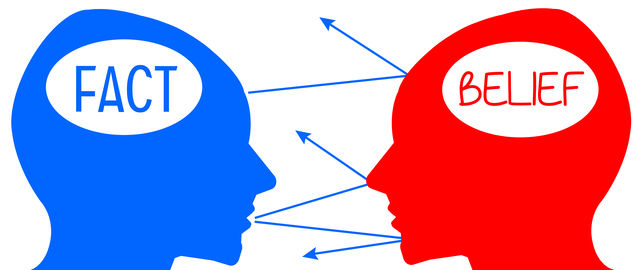
There are a lot of psychological terms for the fact that people don't like to change their minds; "motivated reasoning", "confirmation bias", "cognitive dissonance". But you don't need academic semantics to know that trying to get somebody to see things your way is tough if they go into the argument with another point of view. You argue the facts, as thoughtfully and non-confrontationally as you can, but the facts don't seem to get you anywhere. The wall of the other person's opinion doesn't move. They don't seem to WANT it to move. 
What's going on there? Why do people so tenaciously stick to the views they've already formed? Shouldn't a cognitive mind be open to evidence...to the facts...to reason? Well, that's hopeful but naïve, and ignores a vast amount of social science evidence that has shown that facts, by themselves, are meaningless. They are ones and zeroes to your mental computer, raw blank data that only take on meaning when run through the software of your feelings. Melissa Finucane and Paul Slovic and others call this "The Affect Heuristic" , the subconscious process of taking information and processing it through our feelings and instincts and life circumstances and experiences...anything that gives the facts valence - meaning...which turns raw meaningless data into our judgments and views and opinions. 
Okay, but why do we cling to our views so tenaciously after they are formed? Interesting clues come from two areas of study... self-affirmation, and Cultural Cognition. Both areas suggest that we cling to our views because the walls of our opinions are like battlements that keep the good guys inside (us) safe from the enemy without (all those dopes with different opinions than ours). Quite literally, our views and opinions may help protect us, keep us safe, literally help us survive. Small wonder then that we fight so hard to keep those walls strong and tall. 
Self-affirmation conditioning studies find that if, before you start to try to change somebody's mind, you first ask them to remember something that gave them a positive view of themselves, they're more likely to be open to facts and to change their opinions. People who feel good about themselves are more likely to be open-minded! (That's far more simplistic than any academic would ever put it!) One study, in press, was done back in 2008 and asked people about withdrawing troops from Iraq. Most Republicans at the time thought the troops should stay. Two separate groups of Republicans were shown statistics about the dramatic reduction of violence in Iraq following the "surge" in American troops. One group was asked to do a self-affirmation activity (they were asked to remember a time when they felt good about themselves by living up to a moral value they held). The other group was just shown the violence statistics, with no self-affirmation. Then both groups were asked whether the dramatic reduction in violence in Iraq was a reason to withdraw U.S. troops. The Republicans who did the self-affirmation activity, the folks who were primed to feel good about themselves, were more likely to change their minds and say that the reduction in violence in Iraq was a reason to begin pulling out of Iraq. The group that had not done the self-affirmation remained adamant that the troops should stay. 
Cultural Cognition is the theory that we shape our opinions to conform to the views of the groups with which we most strongly identify. That does two things. It creates solidarity in the group, which increases the chances that our group's views will prevail in society (e.g. our party is in power). And it strengthens the group's acceptance of us as members in good standing. (Like the lithmus test some conservative Republicans have proposed that candidates must pass, making sure their views conform to conservative doctrine before those candidates get party support.) 
Strengthening the group, helping it win dominance, and having the group accept us, matters. A lot. Humans are social animals. We depend on our groups, our tribes, literally for our survival. When our group's views prevail, and our group accepts us, our survival chances go up. So the Cultural Cognition motivation to conform our opinions to those of the groups/tribes with which we identify is powerful. And it would be consistent with that interpretation that the more threatened we feel, by economic uncertainty, or threats of terrorism, or environmental doom and gloom, the more we circle the wagons of our opinions to keep the tribe together and keep ourselves safe... and the more fierce grow the inflexible "Culture War" polarities that impede compromise and progress. The self-affirmation research seems to support this. It appears that the less threatened we feel, the more flexible our opinions are likely to be. 
So the next time you want to have a truly open-minded conversation on a contentious topic with someone who disagrees with you, don't launch right into the facts. Ask them to tell you about some wonderful thing they did, or success they had, or positive feedback they got for something. And try to remember something like that about yourself. Then you might actually have a conversation, instead of the argument you're headed for instead. 
The psychology of risk perception referred to above is described in detail in David Ropeik's new book, How Risky Is It, Really? Why Our Fears Don't Match the Facts.


What Actually Is a Belief? And Why Is It So Hard to Change? Ralph Lewis, Psychology Today. Oct. 7, 2018.

Beliefs evolved as energy saving shortcuts. Restructuring them is costly.

“For some of our most important beliefs, we have no evidence at all, except that people we love and trust hold these beliefs. Considering how little we know, the confidence we have in our beliefs is preposterous—and it is also essential.”2002 Nobel Laureate Daniel Kahneman 1


Source: Alain Lacroix/Dreamstime

Beliefs are a slippery concept. What actually are they? Philosophy has long struggled to define them.2 In this post-truth and ideologically polarized world, we need a better understanding of beliefs. As a psychiatrist, my job frequently involves identifying distorted beliefs, understanding how they formed, and helping people to learn to be more skeptical of their own beliefs. 
Let’s consider a helpful evolutionary framework for making more coherent sense of what beliefs really are, and why mistaken beliefs can sometimes be so hard to change. Then we’ll talk about how to gain a more accurate grasp of reality, and how, ultimately, to advance society. 
Beliefs as energy saving shortcuts in modeling and predicting the environment 
Beliefs are our brain’s way of making sense of and navigating our complex world. They are mental representations of the ways our brains expect things in our environment to behave, and how things should be related to each other—the patterns our brain expects the world to conform to. Beliefs are templates for efficient learning and are often essential for survival. 
The brain is an energy-expensive organ, so it had to evolve energy-conserving efficiencies. As a prediction machine, it must take shortcuts for pattern recognition as it processes the vast amounts of information received from the environment by its sense organ outgrowths. Beliefs allow the brain to distill complex information, enabling it to quickly categorize and evaluate information and to jump to conclusions. For example, beliefs are often concerned with understanding the causes of things: If ‘b’ closely followed ‘a’, then ‘a’ might be assumed to have been the cause of ‘b’. 
These shortcuts to interpreting and predicting our world often involve connecting dots and filling in gaps, making extrapolations and assumptions based on incomplete information and based on similarity to previously recognized patterns. In jumping to conclusions, our brains have a preference for familiar conclusions over unfamiliar ones. Thus, our brains are prone to error, sometimes seeing patterns where there are none. This may or may not be subsequently identified and corrected by error-detection mechanisms. It’s a trade-off between efficiency and accuracy
In its need for economy and efficiency of energy consumption, the default tendency of the brain is to fit new information into its existing framework for understanding the world, rather than repeatedly reconstructing that framework from scratch.

Seeing is believing 
It seems likely that the processes in the brain involved in abstract belief formation evolved from simpler processes involved in interpreting sensory perception
Since we experience the external world entirely through our senses, we find it hard to accept that these perceptions are sometimes subjectively distorted and that they are not necessarily reliable experiences of objective reality. People tend to trust their physical senses and to believe their perceptions even when they are hallucinating and no matter how bizarre their perceptual distortions. People will layer explanations on top of their perception of reality to explain away contradictions. 
We give our subjective experience too much credence, and so too our beliefs. We will more readily explain away evidence that contradicts our cherished belief by expanding and elaborating that belief with additional layers of distorted explanation, rather than abandoning it or fundamentally restructuring it. 
Homeostasis – maintaining stability 
Primitive nervous systems evolved in simple organisms in part to serve the function of homeostasis—a dynamic physiological state of equilibrium or stability, a steady state of internal conditions. Homeostasis is structured around a natural resistance to change, following the same principle as a thermostat.

The lower, primitive parts of our human brains maintain homeostasis of breathing, heart rate, blood pressure, temperature, energy balance (via appetite) and a variety of endocrine processes. So too, beliefs preserve a kind of cognitive homeostasis—a stable, familiar approach to processing information about our world. 
We should expect that the homeostatic function that defined primitive brains would likely have been preserved as an organizing principle in the evolution of more complex brains. Certainly, complex brains are geared toward reacting, learning and adapting, but just like primitive brain functions, these adaptations are ultimately in the service of maintaining homeostasis in an ever-changing environment. 
Radically restructuring our belief system and creating a new worldview engages parts of the brain involved in higher reasoning processes and computation, and is consequently more effortful, time- and energy-consuming. The brain often cannot afford such an investment. This would explain why, when we experience cognitive dissonance, it is easier to resolve this discomfort by doubling down on our existing belief system—ignoring or explaining away the challenging, contradictory information
A consistent sense of self, and personal investment in one’s beliefs 
Another important factor accounting for resistance to changing our beliefs is the way our beliefs are so often intertwined with how we define ourselves as people—our self-concept. Indeed, beliefs are associated with a part of the brain integrally involved in self-representation—the ventromedial prefrontal cortex.3 We want to feel that we are consistent, with our behavior aligning with our beliefs. We constantly try to rationalize our own actions and beliefs, and try to preserve a consistent self-image. It’s embarrassing and quite often costly in a variety of ways to admit that we are fundamentally wrong.

In many cases, people have a lot invested personally in their belief system. They may have staked their reputation on a particular belief. Not infrequently, people structure their whole lives around a belief. And this investment may go far beyond a sense of self, extending to large material and financial investments or a life’s career. A change of belief for such a person would obviously involve a monumental upheaval and may entail intolerable personal losses. 
No wonder it’s so hard to change our cherished and entrenched beliefs. 
The social dimension of belief 
A lot of our belief framework is learned at an early age from parents and other adult authority figures. Many human beliefs are the cumulative products of millennia of human culture. Children are strongly predisposed to believe their parents, and, as adults, we are inclined to believe authorities. 
It's not surprising that our brains have evolved to more readily believe things told to us than to be skeptical. This makes evolutionary sense as a strategy for efficient learning from parents, and as a social, tribal species it promotes group cohesion. 
People can be swayed by persuasive individuals or compelling ideas to override and reject their previously received authority. Sometimes, this is rational. But sometimes, it is not—people are susceptible to influence by charismatic ideologues and by social movements. Especially when these offer new attachments and new self-identities imbued with more powerful affiliation, validation, esteem and sense of purpose than the individual previously had in their life. 
Science and the excitement of proving ourselves wrong 
Science values the changing of minds through disproving previously held beliefs and challenging received authority with new evidence. This is in sharp contrast to faith (not just religious faith). Faith is far more natural and intuitive to the human brain than is science. Science requires training. It is a disciplined method that tries to systematically overcome or bypass our intuitions and cognitive biases and follow the evidence regardless of our prior beliefs, expectations, preferences or personal investment. 
The increasing application of the scientific method in the last four centuries ushered in unprecedented, accelerating progress in humanity’s quest to understand the nature of reality and vast improvements in quality of life. Discovering just how mistaken we collectively were about so many things has been the key to sensational societal progress.4 
Imagine if each of us as individuals could cultivate a scientific attitude of rigorous critical thinking and curiosity in our personal lives, and could experience an exhilarated feeling of discovery whenever we find we have been wrong about something important. Perhaps it’s time to stop talking admiringly about faith and belief as if these were virtues.
Faith is based on belief without evidence, whereas science is based on evidence without belief.

References

1. Daniel Kahneman, Thinking, Fast and Slow, New York: Farrar, Straus and Giroux, 2011, p. 209.

2. See for example Schwitzgebel, Eric, "Belief", The Stanford Encyclopedia of Philosophy (Summer 2015 Edition), Edward N. Zalta (ed.), https://plato.stanford.edu/archives/sum2015/entries/belief/

3. Harris, S., et al., The neural correlates of religious and nonreligious belief. PLoS One, 2009. 4(10): p. e0007272; Harris, S., S.A. Sheth, and M.S. Cohen, Functional neuroimaging of belief, disbelief, and uncertainty. Ann Neurol, 2008. 63(2): p. 141-7. The ventromedial prefrontal cortex is also involved in emotional associations, reward, and goal-driven behavior. [CLICK 'MORE' TO VIEW FOOTNOTE 4]

4. Democracy also loosely employs the scientific method of conjecture and criticism. Each election platform is an hypothesis, each elected government an experiment, subjected to the peer review process of a free press and the next election. The combination of science and democracy has been the key to human progress. To be sure, this progress has not been smooth or without calamitous derailments in modern history. But the overall trend over time has been definitively and spectacularly positive, and it is indisputably the most successful system humans have invented to date.


Reason Won’t Save Us. Robert Burton, Nautilus. Oct. 17, 2019.
It’s time to accept the limits of how we think.
In wondering what can be done to steer civilization away from the abyss, I confess to being increasingly puzzled by the central enigma of contemporary cognitive psychology: To what degree are we consciously capable of changing our minds?
... 
aliens would be equally befuddled by watching political debates on climate change or universal healthcare. They would observe humans ignoring data that strongly warn of impending catastrophic consequences for their species, apparently preferring and even enjoying conflict, anger, self-righteous indignation, and a wide variety of self-defeating behaviors. They would quickly conclude what most of us also suspect but often fail to acknowledge: Though our genes follow the laws of natural selection to optimize survival of the species, as individuals we are not necessarily similarly inclined.
... 
There is no compelling evidence to suggest that public debate on virtually any subject can ever be resolved through reason. We migrate toward what we feel is best.
... 
If this argument sounds harsh or offensive, so is watching present day failure of discourse between those with differing points of view, yet persisting with the unrealistic hope that we could do better if we tried harder, thought more deeply, had better educations, and could overcome innate and acquired biases. 
If we are to address gathering existential threats, we need to begin the arduous multigenerational task of acknowledging that we are decision-making organisms rather than uniquely self-conscious and willfully rational. Just as we are slowly stripping away pop psychology to better understand the biological roots of mental illnesses such as schizophrenia, stepping back from assigning blame and pride to conscious reasoning might allow us a self-image that reunites us with the rest of the natural world as opposed to declaring ourselves as unique. Only if we can see that our thoughts are the product of myriad factors beyond our conscious control, can we hope to figure out how to develop the necessary subliminal skills to successfully address the world’s most urgent problems.


Wednesday, November 13, 2019

Its Not OK. And its not going to be OK. And its not OK to think so.

It’s Not OK To Think Everything Is OK Or Getting Better and Better. Ian Welsh. Nov. 13, 2019.

I’ve discussed the better than ever world argument before. I find it questionable, for a number of reasons and if that interests you read the linked article and the articles it links to.

What I’ve been watching is WHO likes and buys the argument.

They fall into two groups: the first are techies; the second are neoliberals.

Neoliberals want to claim that everything’s going great so they don’t have to make serious changes. If even the poorest are getting better off rapidly (50K a week, I saw as a recent claim, for improvements in “dire poverty), then all that is required to the current system are tweaks: it’s working.

More importantly, the people who have the most don’t have to give anything up: not money or power or the way they do things. What they’re doing is basically working, their being rich and powerful isn’t hurting the poor. It’s lifting them up.

So statistics have to show that poor people are getting better off, and if a few show that the poor in parts of the 1st world aren’t (like certain groups in the US having decreased life expectancy), well that cost has been far outstripped by all the people lifted out of poverty elsewhere and why care more about Americans than people objectively worse off in other countries?

The world order is basically fine. No need to do more than “bend the curve” and Obama famously said.

Techies have some of the same reasons, especially those who are doing well, like the ones who run Silicon Valley, or who are very well paid. The world is fine, no need to change what’s working.

But there’s something deeper to it. Neoliberals want to defend neoliberal capitalism, which is why noting that China used mercantalist capitalism to lift people out of poverty offends them. Almost all poverty gains, no matter how you slice the numbers, were in China and China DID NOT do what economic orthodoxy says you’re supposed to do.

Techies don’t care about that. Instead they want to defend their legacy and current actions. Forget capitalism, communism, fascism and all that guff: really, virtually all the gains of the last 250 years come down to using hydrocarbons to power various engines.

Technological progress is the actual driver of what’s happened. Modern techies identify with the engineers and scientists of the past, especially now that programmers like to call themselves engineers.

Likewise, the computer/internet/telecom revolution which has been driving new industries (I wouldn’t quite say “growth”) since the mid 70s or so is their child: their project. They either worked on it or are still working on it. The world must be doing well because they created or are creating, or maintain the technology it runs on: the technology that is really responsible for welfare gains.

They are good people, who do good work, therefore the results of their work must be good.

We all want to believe that the order we are responsible for; the work we do; the economics that works to our benefit, is justified, because we want to believe we are good people.

Neoliberals, elites and techies feel they have created this world. Therefore this world must be a good one.

And techies want to think that technology can solve everything, because it’s what they’re good at. And hey, it does demonstrably work. It’s just not clear that it can do everything, or do everything soon enough, since we all, well, die.

Anyway, the larger point is simple: we argue over these things because they are about legitimacy and people’s self-esteem and self-image.

Of course those (like myself) who oppose the current neoliberal order want these figures to be BS. We want to be able to argue that change is urgent, and needed, and that the order has failed.

It’s good to understand that, no matter what side you’re on. What do you WANT to believe. Then see if you’re still justified.

Of course, I think I am. This doesn’t mean there’s been no progress, there has, I just think the numbers are wildly over-inflated outside of China and non-sustainable because of climate change and environmental collapse. I can live like a king if I have a 10 million dollar credit card limit, but if I can’t pay it back, eventually that ends.

Also I grew up in the development community. My father worked for the UN’s Food and Agriculture Organization (FAO) in Bangladesh, and had worked before in various other developing countries. I spent time in India, and so on. I listened to development workers talk about worked and (mostly) what didn’t. There are more cynical, or rather, realistic, groups in the world, but not many.

So there’s always been an off-smell to these numbers to me. I know what works for development (mercantalist policies with the cooperation of the current hegemonic powers, and virtually nothing else, unless you’re a city state) and what doesn’t (anything orthodox development economists tell you to do.)

I know who’s been allowed to actually bootstrap up and industrialize (American allies and China, because they bribed American leaders), and who hasn’t (almost everyone else.)

And I know something else: if you’re forced off your land into a slum, you make more money, but you’re worse off. The economics and Western obsession with $$$$ as the measures of good is unwise. Even calories (though better) are not great, because for example, when NAFTAs tortilla manufacturers were bought out after NAFTA, nutritional content plummeted.

So it all smells off, to me.

But even if it didn’t, even if it was all true, radical change is needed because Climate Change and Ecological Collapse are on their way, with the leading edge already causing problems. We can’t even keep industrializing the way we have been. If every developing country was allowed to industrialize properly, and given what they needed to do it, we’d just bury ourselves deeper.

The fundamental WAY we have run our economies: both in terms of capitalism of any kind (and Communism back when, but they’ve been gone for 30 years, so grow up) and in terms of technology is fucked. Fucked. It cannot continue or we risk civilization collapse. Worse case scenarios are great die-offs which take us down too. Good case scenarios are a billion or two deaths.

And no matter what we are past the point where we aren’t going to change the environment in a way that it is fundamentally warmer and different from the environment and climate which existed for the entirety of human civilization.

That’s not an economic or technological system which is more or less OK, producing more or less good results even IF the triumphalists were right about everything.

It requires change, and radical change, if we are to avoid, not disaster (we’ve already had those), but multiple catastrophes of civilization shaking levels.

It’s not OK to think everything is OK.

Tuesday, November 12, 2019

Economics, like science, will progress theoretically and methodologically, or else disappear with humans themselves, “one funeral at a time”

from Ikonoklast, in comments re
Economists like Krugman, Wren-Lewis or Stiglitz are nothing but die-hard defenders of mainstream economics. Lars Syll, Real World Economics Review Blog. July 22, 2019.

Ikonoklast:

The new minds of young people will be open to the new empirical evidence.

The methodological ideology of conventional economics will be destroyed by its failure in the current and ongoing collisions of its recommendations and applications with real systems. This is already happening as Herman Daly illustrates in his paper “Growthism: Its Ecological, Economic and Ethical Limits.”

In turn economics, like science, will progress theoretically and methodologically, or else disappear with humans themselves, “one funeral at a time” as not only current conventional economists die but as millions to hundreds of millions or even billions of other humans die due to ecological and civilizational collapse. The latter catastrophic possibility is what people seldom want to think about. Certainly, we should strive to avoid that outcome if we can. The genuine and imminent fear of ruin and death will certainly motivate people in a new way. Old theories about endless growth economics free from natural limits will be scorned. Those who persist with promulgating such theories will find a metaphorical academic or political “tarring and feathering” could be the mildest of the things that could happen to them.

The current generation of conventional economists will all have to go, by natural senescence and death, into dissolution and their ideas must and will go with them. Currently, science and logic cannot quite yet win the ideological and power war of political economy, at least not against mature devotees of that ideology. These devotees, who are so heavily intellectually and financially invested that they cannot change their minds, will simply have to pass away. Natural processes will achieve that.

However, science and logic do matter for the new minds of young people who are coming up and can be educated in new thinking. With no inherent intellectual investment nor motivated thinking in favor of the current physically and logically refuted ideology ad political economy, they will be open to the new empirical evidence which is constantly arriving even now. Then real change will become possible. People like Lars Syll are torch-bearers of new truths and will be fully vindicated in the long term.

Monday, November 11, 2019

War and Empire Links: November 11, 2019

Because what would Remembrance Day be without a US-led coup? Lest we forget, my ass.

MSM Adamantly Avoids The Word “Coup” In Bolivia Reporting. Caitlin Johnstone. Nov. 11, 2019.
There has been a military coup in Bolivia backed by violent right-wing rioters and the US government, but you’d hardly know this from any of the mainstream media headlines. 
“Bolivian President Evo Morales steps down following accusations of election fraud” proclaims CNN. 
“Bolivia’s Morales resigns amid scathing election report, rising protests” reports The Washington Post. 
“Bolivian Leader Evo Morales Steps Down” says The New York Times. 
“Bolivian President Evo Morales resigns amid fraud poll protests” declares the BBC. 
“President of Bolivia steps down amid allegations of election rigging” we are informed by Telegraph. 
“Bolivia’s President Morales resigns after backlash to disputed election” says the Sydney Morning Herald. 
So there you have it. The indigenous leader of a socialist South American government which has successfully lifted masses of people out of crushing poverty, which happens to control the world’s largest reserves of lithium (which may one day replace oil as a crucial energy resource due to its use in powering smartphones, laptops, hybrid and electric cars), which has an extensive and well-documented history of being targeted for regime change by the US government, simply stepped down due to some sort of scandal involving a “disputed election”.
As is usual, mass media’s reporting on this story is in full alignment with the US State Department,
...

The US-centralized empire just keeps throwing coup attempts at unabsorbed governments until they stick. The coup in Venezuela failed in 2002 and again in 2019, but they’ll just keep attempting them until one takes hold. A kickboxer throws strikes in combinations with the understanding that most attacks will miss or do minimal damage against a trained opponent, but eventually one will get through and score the knockout blow. Imperialist regime change agendas employ the same punches-in-bunches philosophy: just keep attacking and undermining at every possible turn, and eventually something will stick. 
And the empire can afford to do this. When you have all the power and resources, you can bide your time, knowing that if the current attempt at toppling the government in a sovereign nation fails, there’s always tomorrow. 
At a United Nations Security Council meeting last year, President Morales summed up the true nature of America’s role in the world very accurately, and, it turns out, very presciently. 
“I would like to say to you, frankly and openly here, that in no way is the United States interested in upholding democracy,” Morales said. “If such were the case it would not have financed coups d’etat and supported dictators. It would not have threatened with military intervention democratically elected governments as it has done with Venezuela. The United States could not care less about human rights or justice. If this were the case, it would have signed the international conventions and treaties that have protected human rights.It would not have threatened the investigation mechanism of the International Criminal Court, nor would it promote the use of torture, nor would it have walked away from the Human Rights Council. And nor would it have separated migrant children from their families, nor put them in cages.”
“The United States is not interested in multilateralism,” Morales continued. “If it were interested in multilateralism it would not have withdrawn from the Paris Agreement or given the cold shoulder to the global compact on migration, it would not have launched unilateral attacks, nor have taken decisions such as illegally declaring Jerusalem to be the capital of Israel. This contempt for multilateralism is motivated by the thirst of the United States for political control and for the seizing of natural resources.” 
“Each time that the United States invades nations, launches missiles, or finances regime change, it does so behind a propaganda campaign which incessantly repeats the message that it is acting in the course of justice, freedom and democracy, in the cause of human rights or for humanitarian reasons,” Morales also said. 
“The responsibility of our generation is to hand over a fairer and more secure world to the following generation,” Morales concluded. “We will only achieve this dream if we work together to consolidate a multipolar world, a world with common rules that are respected by and defended from all the threats ranged against the United Nations.” 
Indeed, the only reason the US is able to wage its endless campaign of regime change agendas against unabsorbed governments is because the unipolar world order it rules has allowed it the power, resources and leisure to do so. A multipolar world would enable the citizenry of this planet to have a say in what happens to them in a way that is not dictated by a few sociopaths in and around Washington, DC. A multipolar world is to democracy as a unipolar world is to monarchy. The citizens of the world should oppose this unipolarity.
Bolivia’s Evo Morales Forced Out Of Presidency. Ian Welsh. Nov. 11, 2019.
Morales was virtually the last South American left winger leader. They’ve almost all been swept from power over the last few years. This is because commodity prices crashed. Their prosperity was based on high commodity prices.

Nonetheless, Morales dropped poverty rates by half, and unemployment by a third. He was unquestionably good for most Bolivians.

Because, with the exception of Venezuela, and to a lesser extent Peru, they never secured the state’s coercive apparatus, they were relatively easy to get rid of. The ludicrous sight of Brazil’s Lula forbidden to run (because they knew he’d win) on corruption charges, then the prosecutor who charged him joining the new government, for example.

Left-wing governments need to control the key parts of the state apparatus: military, police, courts. They also need a press which is at least neutral. If they don’t control this, losing power often leads to horrible consequences: firebombings, imprisonment, death squads, rape and torture.

This isn’t a game. The people on the other side are rich and ruthless and scared, and they will do anything to keep power. They don’t play by the “rules.”
Bolivian Coup Comes Less Than a Week After Morales Stopped Multinational Firm's Lithium Deal. Eoin Higgins, CommonDreams. Nov. 11, 2019.

After Evo, the Lithium Question Looms Large in Bolivia. Vijay Prashad, CounterPunch. Nov. 13, 2019.

Lessons To Learn From The Coup In Bolivia. Moon of Alabama. Nov. 12, 2019.
The coup in Bolivia is devastating for the majority of the people in that country. Are their lessons to be learnt from it?

How Far Will They Go? James Howard Kunstler, Clusterfuck Nation. Nov. 4, 2019.
... How media giants like Ms. Stahl can keep mouthing this malarkey designed to stoke a new cold war is one of the great mysteries of our national psychology these days. You’d think they’d learned something from the train wreck of the Mueller Investigation, the Brett Kavanaugh fiasco, and the current debacle of Adam Schiff’s imploding Ukraine whistleblower caper — namely, that spouting lies will eventually get you found-out and disgraced.

But the coup team is now dangerously stuck tripling and quadrupling down on its fairy tale narrative as the reckoning of its dark deeds approaches and its star players await their turns on the witness stand. Half the country has been waiting patiently for authorities-of-standing to put an end to this Hitchcockian campaign of seditious fog that has driven us close to the brink of a second civil war. That half of the country has actually been reading the evidence of this treason and sedition — underwritten by Hillary Clinton and her allies — on the back-channels of the Internet. None of that evidence has been posted through the main media outlets wholly owned by the coup team, gospel to the other half of America, and soon millions of credulous bystanders who got high on three years of CIA-issued RussiaGate Kool-Aid will get the surprise of their lives when they discover how deeply they were played.
The CIA and the FBI are in a fight for their lives now. The evidence shows pretty clearly that these rogue agencies conducted all the election “meddling” of 2016 and that the RussiaGate hysteria was an engineered smokescreen to hide their tracks and cover their asses when the certainty of a Hillary election triumph nauseatingly resolved unfavorably in the cold, gray dawn of 11/8/16. Despite the chatter about an “insurance policy,” they were quite unprepared for the exposure that loomed. They also badly underestimated the resources of what is now a very sturdy alt.media which has managed to weave the real story of what happened over the past three years into a shocking tapestry of massive subversion and treachery.

A big part of the true story is how amazingly incompetent the RussiaGate coupsters were. Did they really believe they could conceal the ties between their agencies and Glenn Simpson’s Fusion GPS operation, and its feckless front man, British ex-spy Christopher Steele, and the whole outfit’s connection to Hillary Clinton and the Democratic National Committee? Did they suppose they could pass off Stephan Halper and Joseph Mifsud as Russian agents when the two have consorted with US and allied intelligence for decades? The US Department of Defense even holds Mr. Halper’s million-dollar pay stubs and Mr. Mifsud appears in photographs of every Western cloak-and-dagger cocktail get-together of spook officialdom for the last twenty years.

The latest, and most desperate gambit is the UkraineGate whistleblower, a CIA employee blatantly playing errand-boy for his mentor John Brennan and deeply tied to 2016 election shenanigans emanating from Ukraine, featuring his former employer, ex-Vice-President Joe Biden. This shadowy figure, pegged as Eric Ciaramella, 33, may shortly find himself in a grand jury chamber answering for his role in this charade. Ciaramella has just been hung out to dry by his sponsor, Rep. Adam Schiff in a desperate attempt to dissociate himself from the huggermugger within his House Intel Committee that preceded the falsely blown whistle. 
It’s not an overstatement to say that many of the figures behind this gigantic web of lies and deceit ought to answer charges up to and including treason. The question is whether Messers Barr & Durham have the cojones to cater the banquet of consequences that this huge cast of characters should be made to feast from. Another question is whether these desperate characters and the agencies they represent will go all the way now and attempt to enlist the military brass in an outright overthrow of the executive. There are already intimations of this. It would be answered by the kind of civil violence that has broken out in other parts of world where other Deep States have worn out their welcome — and their legitimacy.

It’s the DNC, Stupid: Democratic Party, Not Russia, Has Delegitimized the Democratic Process. Elizabeth Vos, Consortium News. Nov. 4, 2019.
Establishment Democrats and those who amplify them continue to project blame for the public’s doubt in the U.S. election process onto outside influence, despite the clear history of the party’s subversion of election integrity. The total inability of the Democratic Party establishment’s willingness to address even one of these critical failures does not give reason to hope that the nomination process in 2020 will be any less pre-ordained. 
The Democratic Party’s bias against Sen. Bernie Sanders during the 2016 presidential nomination, followed by the DNC defense counsel doubling down on its right to rig the race during the fraud lawsuit brought against the DNC, as well as the irregularities in the races between former DNC Chairwoman Debbie Wasserman Schultz and Tim Canova, indicate a fatal breakdown of the U.S. democratic process spearheaded by the Democratic Party establishment. Influences transcending the DNC add to concerns regarding the integrity of the democratic process that have nothing to do with Russia, but which will also likely impact outcomes in 2020. 
The content of the DNC and Podesta emails published by WikiLeaks demonstrated that the DNC acted in favor of Hillary Clinton in the lead up to the 2016 Democratic primary. The emails also revealed corporate media reporters acting as surrogates of the DNC and its pro-Clinton agenda, going so far as to promote Donald Trump during the GOP primary process as a preferred “pied-piper candidate.” One cannot assume that similar evidence will be presented to the public in 2020, making it more important than ever to take stock of the unique lessons handed down to us by the 2016 race. ...

Trump’s Impeachment Lures Democrats Into a Cold War Mentality. Aaron Maté, The Nation. Nov. 4, 2019.
The hawkish mindset that liberals have embraced threatens not just their own political fortunes but also global peace.

Resistance (At All Costs): Kimberley Strassel’s Home Run. Jeffrey Lord, The American Spectator. Nov. 7, 2019.
From the FBI’s unprecedented counterintelligence investigation into the Trump campaign, to state defiance of the president’s federal immigration law, to media partisanship, to the drive-by character assassination of Trump Supreme Court nominee Brett Kavanaugh, the president’s foes have thrown aside norms, due process, and the rule of law.”

So begins the cover of Kimberley Strassel’s new bestseller, Resistance (At All Costs): How Trump Haters Are Breaking America.

Strassel, a star Wall Street Journal columnist, zeroes in on the decidedly serious problem that all this insane, foaming hatred of a duly elected president has brought to the country.

There is nothing wrong, Strassel correctly notes, with being a Trump critic. Presidents have always had critics, something that comes with the job. But the spread of a virulent Trump hatred is something quite different, and is, Strassel writes, “proving far more corrosive to our institutions and rule of law than anything of which it has accused the president.”

The Bell Is About to Toll. R. Emmett Tyrrell, Jr, The American Spectator. Oct. 30, 2019.
The real malefactors of election interference are soon to be exposed.
My colleague George Neumayr and I have been studying the Obama administration’s spying on Trump for over three years. While most of the mainstream media searched desperately for a smoking gun carried by one of President Trump’s people or even by the president himself, we looked elsewhere. We looked at the politicized atmosphere within the FBI and the CIA. We even looked at British intelligence. No one else seemed interested, but we found evidence of criminal misbehavior by the former head of CIA, John Brennan, the former head of national intelligence James Clapper, and former head of the FBI, James B. Comey.
... 
Seized with Trump Derangement Syndrome, the three stooges — Brennan, Clapper, and Comey — had convinced themselves that Trump, a sui generis American businessman known for his patriotism, was a plant for the Russians. 
... 
The most perverse irony in all of this is that the American officials who bleated the loudest about “malicious actors interfering in the election” presided over a government that actually did. It was members of the U.S. government who spied upon Trump’s campaign and sought to sabotage it through entrapment schemes and criminal leaks. It was Brennan who turned to foreigners for dirt on Trump to throw the election. They failed, but not for lack of trying. 

Gabbard and Trump Jr. Change America’s View of The View. Tom Luongo. Nov. 10, 2019.
The View, like so much of televised media, is a pillar of the system of control to shape what you think, who you think these thoughts at and what to say to someone who doesn’t think them.  
It exists to reinforce whatever narrative the self-serving Western oligarchy wants the women of America to think about politics.

The Imperial Propaganda Machine: Notes From The Edge Of The Narrative Matrix. Caitlin Johnstone. Nov. 5, 2019.
It’s important to avoid fake news, Russian media or conspiracy theorists. We must only trust those reputable news outlets who tell us that neoliberalism is working fine, that US foreign policy is perfectly sane, and that protests are only happening in Hong Kong and nowhere else.

The difference between state media and western media is that in state media the government controls what information the public is given about what’s going on in the world in order to prevent political dissent, whereas in western media this is instead done by billionaires.

Any attempt to understand the world which fails to take into account the fact that extremely powerful people are pouring massive amounts of money and resources into manipulating your understanding of the world will necessarily result in a distorted worldview.


Understated Threat

THOUGHTS ON WHY THE EARLY IPCC ASSESSMENTS UNDERSTATED THE CLIMATE THREAT. Eugene Linden. Nov. 11, 2019.

An op-ed involves extreme compression, and so I thought I’d expand on why I think the initial IPCC reports so underestimated the threat. Make no mistake, the consensus in the summaries for policy makers in the first two assessments did underestimate the threat. The consensus was that permafrost would be stable for the next 100 years and also that the ice sheets would remain stable (there was even a strong sentiment at that time that the East Antarctic sheet would gain mass). Moreover, in 1990, the concept of rapid climate change was at the periphery of mainstream scientific opinion. 


All these things turned out to be wrong.
Of course, there were scientists at that time who raised alarms about the possibility of rapid climate change, collapse of the ice sheets, and nightmare scenarios of melting permafrost, but, fairly or not, the IPCC summary for policy makers was and is taken to represent the consensus of scientific thinking.

In my opinion such documents will always take a more conservative (less dramatic) position than what scientists feel is justified. For one thing the IPCC included policy makers, most of whom were more incentivized to downplay the threats. For another, many of the national governments that were the customers for these assessments barely tolerated the exercise and gave strong signals that they didn’t want to see anything that called for dramatic action, and this being the UN, there was a strong push to present a document that as many governments as possible would accept.

And then there is the nature of science and the state of climate science at that point. There is an inherent structural lag built in to the nature of science. For instance, the 1980’s were marked by the rapid development of proxies to see past climate changes with ever more precision. By the mid-late 80’s the proxies and siting had been refined sufficiently that the GISP and GRIP projects could confidently get ice cores from Greenland that they felt represented a true climate record and by then they also had the proxies with the resolution to see the rapid changes that had taken place in the past. Given the nature of data collection, interpretation, peer-review and publishing, it wasn’t until 1993 that these results were published.

It took nearly another decade for this new, alarming, paradigm about how rapidly global climate can change to percolate through the scientific community, and, even today, much of the public is unaware that climate can change on a dime.

As for the ice sheets, when I was on the West Antarctic Ice Sheet in 1996, there was talk about the acceleration of ice streams feeding the Thwaites and Pine Island glaciers, but the notion that there might be a significant increase in runoff from the ice sheet over the next hundred years was still very much a fringe idea.

With permafrost, the problem was a sparsity of data in the 80s and early 90s and it is understandable that scientists didn’t want to venture beyond the data.

The problem for society as a whole was that the muted consensus on the scale of the threat diminished any sense of urgency about dealing with the problem

Perhaps the best example of this was the early work of William Nordhaus. Working from the IPCC best estimates in the early 1990s Nordhaus published one paper in which he predicted the hit to the US GDP from climate change in 2100 would be about ½ of 1%. Nobody is going to jump out of their chair and demand action if the hit to the economy was going to be 0.5% of GPD a hundred years later. Libertarians such as William Niskanen seized on this and testified before Congress that there was plenty of time to deal with global warming if it was a threat at all.

And then there was the disinformation campaign of industry, particularly fossil fuel lobbyists, as well as pressure from unions (the UAW in particular) and the financial community. These highly motivated, deep-pocketed interests seized on scientific caution to suggest deep divisions among scientists and that the threat was overplayed. Little wonder then that the public failed to appreciate that this was a looming crisis that demanded immediate, concerted action.