Showing posts with label Greer. Show all posts

Wednesday, October 2, 2019

Climate Links - October 2019 #1

If you're keeping track, planet earth had the hottest June ever recorded, the hottest July, the 2nd-hottest August, and now the hottest September. Please join the fight for a livable future.

Bill McKibben. Twitter.

Global Climate Emergency: after COP24, climate science, urgency, and the threat to humanity. Barry Gills and Jamie Morgan, via TandFonline. Sep. 24, 2019.

We live in a time of Climate Emergency. Nevertheless, our collective actions do not yet approximate a real understanding nor fully appropriate actions. We are not yet acting as if we are facing an urgent and life threatening Emergency. What does ‘Climate Emergency’ actually mean? According to David Attenborough:
It may sound frightening, but the scientific evidence is that if we have not taken dramatic action within the next decade, we could face irreversible damage to the natural world and the collapse of our societies.    (Attenborough, Our Planet)
History is written later, but the future is written now. Perhaps the central message of contemporary climate sciences consists in the realization that the entire planet is deeply interconnected. There are no isolated ecosystems. There are no ecosystems that are safe from the effects of climate change. All life on this planet is profoundly interrelated. What happens in one area of the globe has far reaching, but as yet insufficiently understood, effects upon and consequences for even far distant regions. . . .

In other words, the present Global Climate Emergency demands a profound historical transformation of our civilization. We have not only been pouring greenhouse gases (GHGs) into the atmosphere; we have been collectively exceeding the regenerative capacity of the earth’s natural resources and ecological systems. Earth Overshoot Day, the day in the annual cycle when humanity’s demands for resources exceeds the capacity for regeneration of those resources, has advanced by two whole months over the past twenty years. This year Earth Overshoot Day took place on 29 July 2019. It now requires the equivalent of 1.75 planets to sustain us. Humanity is damaging the whole system upon which our lives, and that of all other species depends.


'I would like people to panic’ – Top scientist unveils equation showing world in climate emergency. Joanna Roberts, Horizon. Sep. 24, 2019.

A new equation showing that the world is ‘deep in a climate emergency’ was unveiled on 24 September by Professor Hans Joachim Schellnhuber, one of the world’s leading authorities on climate change, who said that people still don’t want to see the truth about the state we’re in.

‘Based on sober scientific analysis, we are deeply within a climate emergency state but people are not aware of it,’ he told Horizon on the sidelines of the European Research and Innovation Days event in Brussels, Belgium. ‘We don’t want to see the truth. As Greta Thunberg would say, I would like people to panic and take action according to the state of emergency we are in.’


Interview: Vaclav Smil: ‘Growth must end. Our economist friends don’t seem to realise that’. Jonathan Watts, the Guardian. Sep 21, 2019.

The scientist and author on his latest book – an epic, multidisciplinary analysis of growth – and why humanity’s endless expansion must stop.


The Delusion and Danger of Infinite Economic Growth. Christopher Jones, The New Republic. Oct. 1, 2019.
How economists came to ignore the natural world.
 “Fairytales of eternal economic growth.” That’s how climate activist Greta Thunberg depicted the dominant mindset at the United Nations last week. “How dare you,” she said, admonishing them for “empty words” instead of concrete actions to preserve the planet.
She’s right. One of the reasons nations fail to address climate change is the belief that we can have infinite economic growth independent of ecosystem sustainability. Extreme weather events, melting arctic ice, and species extinction expose the lie that growth can forever be prioritized over planetary boundaries.

It wasn’t always this way. The fairytale of infinite growth—which so many today accept as unquestioned fact—is relatively recent. Economists have only begun to model never-ending growth over the last 75 years. Before that, they had ignored the topic for a century. And before that, they had believed in limits. If more people saw the idea of infinite growth as a departure from the history of economics rather than a timeless law of nature, perhaps they’d be readier to reimagine the links between the environment and the economy.

In 1950, the economics profession had surprisingly little to say about growth. That year, the American Economic Association (AEA) asked Moses Abramovitz to write a state-of-the-field essay on economic growth. He quickly discovered a problem: There was no field to review.

The founding fathers of economics shared a belief that growth was finite, and that the reason for limits lay in the natural world.

Yes, John Maynard Keynes had offered a theory of stagnation, demonstrating the need for government spending to stimulate an economy mired in recession, and Austrian political economist Joseph Schumpeter had studied creative destruction, highlighting the importance of entrepreneurs and innovation. Wesley Mitchell, founder of the National Bureau of Economic Research, had looked at business cycles and others had analyzed monetary forces. But no one had put it all together in a theory of growth. Modern work was “fragmentary” and had “remained on the periphery of economics,” Abramovitz explained to AEA members. Development economist W. Arthur Lewis agreed, noting in 1955 that “no comprehensive treatment of [economic growth] has been published for about a century.”

It was an interesting turn for a field originally quite interested in growth, but convinced it was bounded. The founding fathers of economics—luminaries including Adam Smith, David Ricardo, and John Stuart Mill—shared a belief that growth was finite, and that the reason for limits lay in the natural world.


Why are economists letting down the world on climate change? Andrew Oswald and Nicholas Stern, voxeu. September 17, 2019.
Action on climate change is arguably the greatest challenge for public policy of our times. But despite economic forces being the major driver of the carbon dioxide problem, this column argues that economists have so far been too silent on the subject. For example, the Quarterly Journal of Economics, the most-cited journal in economics, has never published an article on climate change. Good economics can and should play a fundamental role in guiding the policy framework that will influence investment decisions in the coming years, so it is important that the profession dramatically increases its work now.


Out of Time: Listening to the climate’s clock. Astra Taylor, Lapham's Quarterly.
Twelve years, or so the scientists told us in 2018, which means now we are down to eleven. That’s how long we have to pull back from the brink of climate catastrophe by constraining global warming to a maximum of 1.5 degrees Celsius. Eleven years to prevent the annihilation of coral reefs, greater melting of the permafrost, and species apocalypse, along with the most dire consequences for human civilization as we know it. Food shortages, forest fires, droughts and monsoons, intensified war and conflict, billions of refugees—we have barely begun to conceive of the range of dystopian futures looming on the horizon. 
One person who looks squarely and prophetically at the potential ramifications of climate change and insists on a response is Greta Thunberg, the sixteen-year-old Swedish environmentalist who launched a global wave of youth climate strikes. In April 2019 she gave a tour de force address in the British Parliament, invoking not just her peers who were regularly missing class to protest government inaction but those yet to be born. “I speak on behalf of future generations,” Thunberg said. “Many of you appear concerned that we are wasting valuable lesson time, but I assure you we will go back to school the moment you start listening to science and give us a future.” 
Thunberg accepts what many influential adults seem unable to face: the inevitability of change. Change is coming, either in the form of adaptation or annihilation; we can respond proactively or reactively to this discomfiting fact. Perhaps she can accept this because she is so young. Eleven years, a little over a decade, is the time for a human infant to become a preteen and for a preteen to become a young adult. For Thunberg, eleven years is more than two-thirds of her life, a veritable expanse that, projected forward, will involve crossing the threshold from adolescence to the first stage of maturity. Yet for a relatively contented middle-aged or elderly adult, eleven years isn’t as substantial—not quite the blink of an eye but a continuation of the present, a deeper dive into one’s golden years. At a certain point, stasis is the goal, to ward off decline. But decline awaits us all—as the economist John Maynard Keynes bluntly put it, “In the long run we are all dead.” Everyone’s time on earth must come to an end. The question is, What do we do with such knowledge?

Can We Still Dodge the Progress Trap? Ronald Wright, TheTyee.ca. Sep. 20, 2019.
Author of 2004’s ‘A Short History of Progress’ issues a progress report.


Waiting for the Next Panic. John Michael Greer, Ecosophia. Oct. 2, 2019.
... Those of us who expected the shale oil boom to turn into a bubble and then a bust were wrong. We were wrong because we forgot the first law of petroleum: when it comes to oil, politics always trumps economics. Access to petroleum is so crucial for industrial nations, and especially for extremely wasteful industrial nations such as the United States and Canada, that all other factors get to sit in the waiting room when decisions about petroleum are made. That’s why Canadian PM Justin Trudeau, for all his environmental rhetoric, has backed a petroleum pipeline meant to get Canadian crude from the tar sands to the Pacific coast. He knows perfectly well that when push comes to shove, Canadian voters love to give the environment lip service but don’t want environmental protections to affect their lifestyles, which is why Canada is one of the only countries on Earth that uses more energy per capita than the United States.

That’s also why shale oil producers have continued to drill and pump away in blithe disregard for the fact that in terms of strict economics, their activities don’t make enough money to keep them from going broke. It doesn’t matter, because the US government sees to it that a steady stream of cheap credit makes up the difference.  Having another seven million more barrels of oil per day is important enough to the US economy that gimmicking the money system to cover it is a small price to pay, and so an unspoken bipartisan consensus supports the necessary gimmicks. That was the point that we missed back in the day, and I missed it as much as anyone.

Unpacking Extinction Rebellion — Part III: The Fourth Industrial Revolution. Kim Hill, Damn The Matrix. Sept. 26, 2019.
Part I of this series investigated the corporate interests and fossil fuel companies behind the rebellion’s goal for net-zero emissions. In Part II we looked at XR’s goals, tactics and proposed solutions to the climate crisis, which are all serving capital at the expense of the natural world. In Part III, we dive in to the history of the climate movement, the tactics being used by the elites to co-opt activist movements into supporting corporate agendas, and what those agendas entail. 
This article is largely a synthesis of the extensive research of Cory Morningstar into the manipulations of the climate movement by corporations and nonprofits, which is well worth reading, at Wrong Kind of Green, to get a deeper understanding of the actors involved and their elaborate marketing strategies

The Global Climate Strikes: No, This Was Not Co-Optation. This Was and Is PR. A Brief Timeline. Cory Morningstar, Wrong Kind of Green. Oct. 6, 2019.

TAKE AWAY POINTS

We dance to the tune of our oppressors

“The ruling class exists, it’s not a conspiracy theory. They operate as a class, too. They share the same values, the same sensibility and in Europe and North America they are white. They act in accordance with their interests, which are very largely identical. The failure to understand this is the single greatest problem and defect in left discourse today.”
— John Steppling

  • Climate change is real – but capitalism is the crisis.
  • The structure of the system is working exactly as it is designed to. The NPIC exists to insulate the current power structures and capital itself.
  • Economic growth is sacrosanct – to those in power, and those it serves. Economic growth trumps all priorities including life itself.
  • The Thunberg campaign belongs to the ruling class, not to the people.
  • A decade of social engineering (“together”) has effectively erased class analysis, which is a massive blow, and even a betrayal, to the working class and peasantry.
  • The West is under the rule of a corporatocracy, therefore voting is a massive distraction and spectacle that will never solve or mitigate our ecological crisis.
  • The same system that created the crisis will not and cannot now rectify the crises. The same people that protected and defended this system will do anything and exploit anyone to keep it intact.
  • The NGOs comprising the NPIC must be isolated, shamed and abandoned. The exact methods they use against radical activists and radical grassroots groups. Without the support of the people, they lose all power and influence (and then funding).
  • A litmus test must be placed on all organizations that claim to fight for ecological and social justice: They must be united in opposition to imperialism/colonialism, militarism, white supremacy and patriarchy – all leading drivers of climate change and ecological devastation.
  • Capitalism will destroy everything in its path. Either we kill capitalism, or capitalism will kill us.


315 billion-tonne iceberg breaks off Antarctica. Jonathan Amos, BBC. Sep. 30, 2019.
The Amery Ice Shelf in Antarctica has just produced its biggest iceberg in more than 50 years. The calved block covers 1,636 sq km in area
but, not to worry:
The Scripps researcher stressed that there was no link between this event and climate change. Satellite data since the 1990s has shown that Amery is roughly in balance with its surroundings, despite experiencing strong surface melt in summer. 
"While there is much to be concerned about in Antarctica, there is no cause for alarm yet for this particular ice shelf," Prof Fricker added.


Saturday, August 3, 2019

John Michael Greer: The Long View

The Long View. John Michael Greer, Ecosophia. July 3, 2019.


For more than three years now, the themes of these online essays of mine—here, and in my previous blog The Archdruid Report—have had a relatively tight focus on the events of the present day. That hasn’t been accidental by any means. In 2016, strains that had been building for years within Western industrial civilization burst out into the open, upsetting a great many political and cultural applecarts and standing the conventional wisdom on its head. I trust I don’t have to whisper the words “Brexit” and “Trump” to make my point.

None of that was a surprise to those who understand that history is a circle and not a straight line, that civilizations have a life cycle and similar events occur at corresponding points along the great arc of rise and fall. Oswald Spengler, for one, wrote about the events splashed across recent headlines more than a century ago in the pages of The Decline of the West. He noted with dry Teutonic amusement how democracy turns into plutocracy as soon as the well-to-do learn to use money to manipulate the political system, how this leads to the rise of clueless elites too busy lining their pockets to notice what the policies that enrich them are doing to the rest of society, and how ambitious men—as often as not from within the plutocratic class—realize they can rise to power by championing the cause of the deplorables of their time.

Spengler called the charismatic populism that results from this process Caesarism, after one of the more memorable examples of the species. (It’s a running joke here on Ecosophia to refer to our current American example as the Orange Julius.) The conflict between institutionalized plutocracy and insurgent Caesarism, Spengler showed, is an inescapable historical event once a society finishes its millennium or so of growth and settles into its mature form. He predicted back in 1918 that this conflict would be the defining theme of politics across the western world after the turn of the 21st century. Look at today’s news and it’s hard to escape the realization that he was right.

Arnold Toynbee, at once more cautious and more meticulous than Spengler, avoided prophecy and contented himself with precise description of the way the process worked out in the past. In his analysis, successful societies thrive because their governing classes form what he called a creative minority—a group that wins the respect and emulation of the rest of society because it is able to come up with creative solutions for the problems that face a civilization in the course of its history. Too often, though, the governing classes stop innovating in any way that matters, and become more interested in trying to force problems to fit their preferred set of solutions than in adapting solutions to fit the current set of problems. They then become what Toynbee called a dominant minority, which no longer inspires respect and settles instead for grudging obedience.


Once a society is saddled with a dominant minority, there’s a set of standard moves that people within the society use to try to deal with problems that the people in charge are no longer trying to solve. Unless you live under a damp rock, dear reader, you already know all of them. Toynbee calls them detachment, transcendence, futurism, and archaism. Detachment abandons society to its fate by going back to the land, or off to another part of the world, or inward to a subculture airtight enough to shut out current events. Transcendence is the turn to religion—Spengler calls it the Second Religiosity—which comes in the latter days of every civilization, as people frustrated by this world place their hopes on another. Futurism is the attempt to build, or at least daydream about, a perfect society in the future. Archaism, finally, is the quest to Make (insert name of society here) Great Again by rejecting a failed status quo in favor of policies that worked in the past.

Toynbee had his preferences among these—he was a devout Christian, and it showed—but all four of the standard moves can be viable options, and futurism and archaism in particular can be political dynamite. The managerial upper middle class of modern Western industrial society, the creative minority turned dominant minority that runs the institutionalized plutocracy of our time, took over from an older generation of plutocrats in the wake of the Great Depression by way of futurism, borrowing the charisma of technological change by defining the changes that would give them more power as “social progress.” In the usual way of things, the first moves in that direction worked fairly well, the later moves not so much; for forty years now it’s been an open secret—outside the airtight bubbles the privileged inhabit, at least—that things have been getting steadily worse for most Americans in a galaxy of ways. The inevitable blowback followed.

In the long run, in other words, it doesn’t actually matter much whether or not Donald Trump wins a second term in next year’s election. (In the shorter run it matters a great deal, which is why I expect a bitterly fought election with plenty of vote fraud on both sides.) Trump has shown a rising generation of populist politicians that the neoliberal consensus can be defeated, and that there’s a growing and vocal constituency for politicians who reject the neoliberal habit of making token gestures toward environmentalist and social justice ideologies whenever the costs can be pushed off on the working classes, while shilling for the intertwined interests of corporate and government bureaucracies on every issue that matters. There’s still a lot of turbulence ahead, and plenty of tectonic shifts will jolt the political landscape in the years to come, but the neoliberal era is dead and a cartoon frog is hopping over its grave.

That being the case, this is a good time to step back and take the long view again for a while.

Now and again, since my blogging took its detour from discussions of the future, I’ve fielded questions about how well my predictions in past years have stood up. Of course a good many of the people who’ve asked those questions have based them on colorful misunderstandings of what I’ve predicted; for example, it’s far from unusual for people to ask me, in tones ranging from baffled to sneering, why society hasn’t collapsed yet as a result of peak oil. Since I never said peak oil would bring about a fast collapse, this has been a source of wry amusement for me, but it’s also pointed up one of the constants of our predicament: the frankly weird way that so many people can’t imagine a future that isn’t either perpetual progress or overnight apocalypse.

Yes, I’ve written about this before. The Archdruid Report in its day had several posts in which I set out to analyze that odd mental hiccup and suggest ways to get around it and think clearly about the future. Back then, at least, it was entertaining to watch people listen and nod and then pop right back into the same bizarre conviction that the only alternative to continuing progress is total catastrophe—as though stagnation and decline, the everyday experiences of most people in most industrial nations for forty years now, can’t possibly happen. The one thing I found that seemed to do a reliable job of shaking people out of that weird mental fog was to talk turkey about what we can expect in the future barrelling down upon us—so that’s what we’ll do here.

What gives this a special piquance, at least to me, is that we can do this by turning back the clock to those not particularly thrilling days of yesteryear, the last time that the hard limits to economic growth were being talked about—yes, that would be during and after the oil price spike of 2008-2009. Veteran readers of The Archdruid Report and the other long-vanished peak oil forums of those days will recall one very large and vocal group of people, online and off, who insisted that technological innovation would surely save the day, and sometime soon we’d power our absurdly extravagant lifestyles by way of something other than fossil fuels. They will recall another very large and vocal group of people, online and off, who insisted that Transition Towns or some parallel ideology would save the day, and sometime soon we’d enthusiastically embrace lifestyles that, oddly enough, none of the proponents seemed all that interested in taking up here and now. Finally, they will recall yet another very large and vocal group of people, online and off, who insisted that some vast apocalyptic event would make the whole matter moot, and sometime soon a handful of shell-shocked survivors would be scavenging for raw materials or reverting to hunter-gatherer lifestyles while the other seven billion of us, as the colorful French saying has it, chewed dandelions from the root end.

There were a few of us who said something much less popular. We predicted that the grand technological breakthroughs were not going to happen, and the grand social awakenings were not going to happen, and the grand apocalyptic catastrophes were not going to happen. What’s more, we offered solid reasons why none of these things were going to happen. We predicted instead that demand destruction and an assortment of temporary gimmicks would keep things rolling on, that measures of quality of life would continue to slide downhill, that politics and society would become increasingly fractured and irrational as people frantically tried to pretend that nothing was wrong, and that the prolonged and ragged process of decline I’ve called the Long Descent would continue to pick up speed.

We got denounced six ways from Sunday for saying these things. I can’t speak for the other people who made such points, but it was a routine amusement for me to have one and the same post denounced in blistering terms as mere nasty pessimism by believers in technofixes and great social transformations, and as mere blind optimism by believers in overnight apocalypse. At this point, though, looking back over the decade and a bit that’s passed since oil prices took off for the Moon in 2008, two things are quite clear. The first is that the people who busied themselves with these denunciations were wrong. The second is that those of us who stuck to our guns and disagreed with those wildly popular claims were right.

And now? I trust it won’t be an unbearable surprise to my readers when I predict that the decades ahead are going to see much more of the same thing.

To begin with, the hard realities of our predicament have not changed. On the day before I posted this essay, humans burned around 100,000,000 barrels of crude oil, 21,000,000 tons of coal, and 9,000,000,000 cubic meters of natural gas. We burned around the same amount the day before that, too, and we’ll burn the same amount today, tomorrow, and the day after. The vast majority of all the energy human beings use—well over 80%, including nearly all transport fuel—comes from those three forms of fossil carbon. (Solar power and windpower, despite all the ballyhoo, account for only about 3% of total energy production worldwide.) All that carbon has to come from somewhere, and all of it goes somewhere else once it’s burnt.


Where nearly all of that carbon comes from is the world’s steadily depleting fossil fuel reserves. Are fossil fuel companies scouring the globe to find new reserves? You bet. Do the new reserves they find each year equal the annual rate at which old reserves are being sucked dry? Not by a long shot. If you were spending a couple of hundred thousand dollars a year and your income was only ten thousand a year, even if you had a fair amount in savings to start with, you’d be in trouble sooner or later. The same logic applies to fossil fuels.

Does that mean that sometime soon industrial civilization is going to crash to ruin because it’s run out of fossil fuels? No, though you’ll hear that claim made at high volume in the years ahead as the price of oil climbs further and then spikes. Does it mean that the solar and wind technologies that provide so small a trickle of global energy production today will miraculously become able to power our absurdly extravagant lifestyles all by themselves, or that some exciting new energy technology will pop up out of nowhere to solve all our problems? No, though you’ll also hear those claims being made at high volume. Those same claims got made during the energy crises of the 1970s and the 2000s, too, and I encourage my readers to look around and see how accurate they turned out to be.

No, what will happen is that energy prices will spike, people will panic, economies will lurch and shudder and go through troubled times. Then another round of frantic jerry-rigging will find some liquid fuel source even dirtier and more costly than shale oil and another round of demand destruction will push more people into poverty, so that the charade can keep going. The price of fuel will never go down to what it was before the spike, energy costs will become an even greater drain on economic activity, the global financial system will be twisted into ever more baroque shapes to preserve the fiction of a free market, and more of what used to count as a normal lifestyle will become inaccessible to more people.

Meanwhile, the people who are expecting grand technological breakthroughs or grand social movements or grand apocalyptic disasters will be left in the dust by events, wondering what happened…just as they did when those same things failed to appear in the wake of the last two oil price spikes. Yes, they’re exactly the same things, too, right down to the details; it’s a reliable source of amusement to me that the technologies being promoted these days as game-changing energy innovations—wind power, solar photovoltaic power, breeder reactors, nuclear fusion, and the list goes on—have been promoted in exactly the same terms since my boyhood. Nor, to be frank, has there been any more noticeable innovation in grand social movements or grand apocalyptic disasters. As usual in our culture, the more bleeding-edge and innovative an idea is supposed to be, the more certain you can be that it’s an utterly unoriginal rehash of something that was already old hat when today’s nonagenarians were born.

But I digress. Where nearly all of the carbon goes, in turn, is the earth’s atmosphere, where it messes with the delicate balance of the global climate. It’s going to be a couple of decades before it’ll be possible to talk about this and not get mired in endless misunderstandings, because the climate activists have not only done a stunningly bad job of making their case, they’ve allowed their cause to be hijacked and distorted by special interests with a range of unhelpful agendas. It was an act of impressive scientific stupidity, for that matter, to lump the complex shifts we face under the simplistic label “global warming”—Thomas Friedman’s label “global weirding” was much more accurate, but it didn’t fit the narrative the activists were pushing.

The Earth’s climate, reduced to simplest terms, is a heat engine that runs off the difference in temperature between the Sun and deep space. Back in 1772, James Watt launched the industrial revolution by figuring out that he could boost the efficiency of the crude steam engines then in use, and so get more work out of them, by reducing the rate at which heat was lost from the engine to the environment. Adding greenhouse gases to the atmosphere does exactly that, and the work that the Earth’s climate does is called “weather.” Thus the result of greenhouse gas pollution isn’t a steady increase in temperature—it’s an increase in all kinds of extreme weather events, coupled just now with a shift in climate bands that’s warming the poles.

Does that mean that sometime very soon industrial civilization is going to crash to ruin because of some climate-related catastrophe? No, though you’ll hear that claim made at high volume in the years ahead. Does it mean that solar and wind power or some new energy technology will save the day? No, though you’ll also hear those claims being made at equally high volume. Here again, those same claims got made during the previous energy price spikes of the 1970s and the 2000, with equally dubious results.

No, what will happen is that the annual cost of weather-related disasters will move raggedly upward with each passing year, as it’s been doing for decades, loading another increasingly heavy burden on economic activity and putting more of what used to count as a normal lifestyle out of reach for more people. With each new round of disasters, less and less will get rebuilt, as insurance companies wriggle out of payouts they can’t afford to make and government funding for disaster recovery becomes less and less adequate to meet the demand. Rural areas in the US that are unusually vulnerable to weather-related disasters will quietly be allowed to return to 19th century conditions, and poor neighborhoods near the coastlines will be tacitly handed over to the slowly rising seas. Meanwhile, the people who are expecting grand technological breakthroughs or grand social movements or grand apocalyptic disasters will be left in the dust by events, wondering what happened.

That’s the shape of our future. It bears remembering, too, that fossil fuels aren’t the only nonrenewable resources that are being extracted at a breakneck pace just now with no thought for tomorrow. For that matter, the global climate isn’t the only natural system on which we depend that’s being disrupted by human pollution in ways that are already circling around behind us and kicking us in the backside. As Kenneth Boulding pointed out a long time ago, the only people who think that you can have limitless economic expansion on a finite planet are madmen and economists. In the real world—the world the rest of us, willy-nilly, are constrained to inhabit—actions have equal and opposite reactions, and trying to push the pedal of economic growth all the way to the metal all the time simply means that you run out of gas sooner.

That’s the logic of the Long Descent: the slow, ragged, unevenly paced, but inexorable process by which a civilization that’s overshot its resource base winds up in history’s compost bin. The Western world has been on that trajectory now for just over a century, and probably has another couple of centuries to go before things bottom out in a deindustrial dark age. Over the months ahead, with the usual interruptions, I plan on surveying what’s happened along each of the trajectories that are dragging us down. Two weeks from now we’ll talk about the first of those: the imminent return of peak oil.


see also: 

Progress and Amnesia. July 17, 2019.


and:
The Twilight of the Monofuture. July 31, 2019.


I’m pleased to say that my post here two weeks ago, on the way that belief in progress depends on a certain kind of historical amnesia, got a lively and mostly thoughtful response. Oh, I fielded and deleted some saliva-flecked denunciations, to be sure, but that always happens when I try to pose hard questions about the faith-based mythology of perpetual progress that plays so important and unexamined a role in mass culture nowadays.

The dream…


Faith in progress really is the established religion of our time. Most people nowadays believe in the inevitability of progress just as fervently as medieval peasants believed in saints and angels. What’s more, when the great majority of people talk about progress these days, they don’t simply mean that the technology of the future will be different from, and somewhat more complex than, the technology of today. No, it’s much more precise than that. Just as Joseph Campbell lopped and stretched all the world’s diverse mythologies into a single pattern he called the Monomyth, our collective imagination has done the same thing with the extraordinary range of possible futures our species might have, shrinking it down to a suffocatingly narrow and strictly enforced consensus we might as well call the Monofuture.

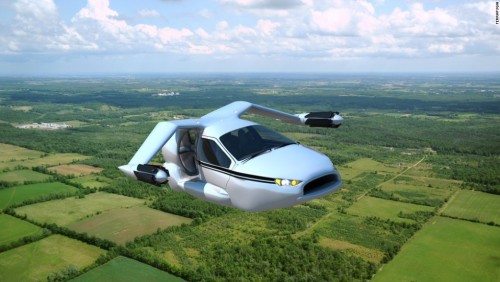
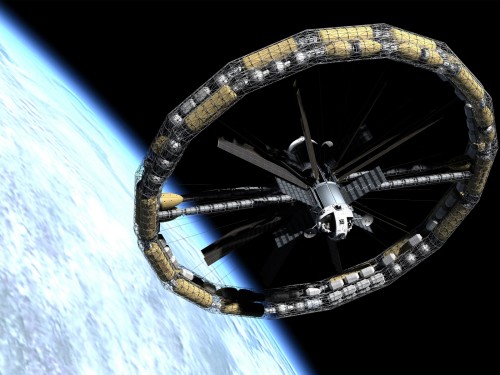
You know the Monofuture, dear reader. It’s been splashed across the media for decades, turned into the background of an endless stream of repetitive movies and novels and video games, used just as repetitively to justify the downsides of the present. The Monofuture is when we finally get routine spaceflight, orbital habitats, colonies on other worlds—all the things my generation was promised in its childhood and hasn’t gotten yet. The Monofuture has fusion power or some other limitless clean energy source, it’s got equally limitless supplies of raw materials, and replicators or robot factories or some other gimmick so that everyone gets all the consumer goods they want. It’s got flying cars, of course, and humanoid robots, and superhumanly intelligent AIs, and all the other technological wet dreams that have been squirted across the imagination of the industrial world for decades now. For a place that doesn’t exist, it has immense emotional power, and one measure of that power is just how upset believers in the Monofuture get if you point out that it’s not going to happen.


…and the reality:


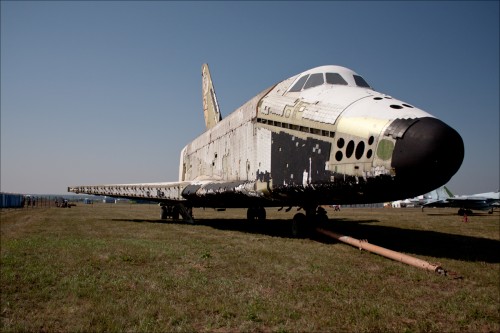
Probably the easiest way to see this in operation is to suggest in public that human beings are never going to colonize other planets. If you do that, I can promise you that you’ll get an impressive degree of pushback. As it happens, there are a great many good reasons to think that human beings are in fact never going to colonize other planets. We can start with the nightmarish economics of establishing self-supporting colonies on the frozen, airless, bleach-laced deserts of Mars, go from there to the bleak fact that no other habitable body in the solar system besides Earth has a magnetic field capable of protecting vulnerable human tissues from the torrents of hard radiation blasting out from the vast unshielded thermonuclear reactor at the center of the solar system, and proceed through all the other reasons why manned space flight has turned out to be nothing more than an expensive and temporary hobby of rich nations.

Of course there are plenty of arguments in circulation as to why none of these things matter. It’s entertaining, if nothing else, to test these arguments against something that isn’t part of the Monofuture. For example—to return to a point that’s been made in this blog already—all the arguments that have been made for the colonization of Mars can be made with even more force for the colonization of central Antarctica. Compared to Mars, Antarctica is practically a tropical paradise: the climate’s significantly warmer, water and oxygen are much easier to come by, there’s a planetary magnetic field screening out most of the Sun’s dangerous radiation, mineral resources are at least as abundant, the soil’s not saturated with toxic perchlorates, getting there is easy with existing technology, and if something goes wrong, help can get there in a day or two—it’s not nine long and silent months away if Earth and Mars happen to be in the right orbital configuration just then, and anything up to twice that if you’re not so lucky.


What we were promised…


You can make equally sound arguments why colonizing the top of Mount Everest, the bottom of the Marianas Trench, the waterless and windswept Takla Makan desert of central Asia, or just about any other environment on Earth makes more sense than colonizing Mars. All of them are better suited to human habitation than Mars, and Mars is better suited to human habitation than any other body in the solar system other than Earth. Why aren’t colonists signing up to colonize Antarctica, then? Because the colonization of Antarctica isn’t part of the Monofuture, and so most people can do the math and figure out that an Antarctic colony makes no sense.

Such clarity is rarely to be found when it comes to the Monofuture. What you get instead is a remarkable degree of devout enthusiasm propped up with some of the most colorfully absurd thoughtstoppers to be found in captivity. I lost track a long time ago, for example, of the number of people I’ve heard insist in this context that “anything that people can conceive, they can achieve.” That’s absurdity on a truly grand scale—I can conceive quite readily of a working perpetual motion machine, a Paddington Bear stuffie the size of the entire cosmos, a four-sided triangle, and colorless green ideas that sleep furiously, just for starters—but if you question the weary fantasy of space colonization, you can count not only on hearing it, but on watching those who propose it scramble around for reasons why a claim so obviously false in every other context must be true in this one.


…and what we got.


You can have serious fun with those who insist on the thoughtstopper just cited, if that interests you. Ask someone who believes in it whether human beings will ever be able to predict the future by observing the movements of the planets, for example, and you can be sure of getting an indignant denial! Astrology, while it’s quite easy for people to conceive—and indeed many millions of people today do so—isn’t part of the Monofuture, and so it’s not defended by the belief system we’re discussing. I’ve referred to that belief system as faith in progress, but again, the word “progress” has to be understood in a very nuanced way. Figuring out how to predict the future by observing planetary movements would be a very remarkable sort of progress indeed, but believers in progress aren’t interested in that. The kind of progress in which they place their faith is much more narrowly defined; it consists solely of progress toward the Monofuture.

And the Monofuture itself, with its space colonies and flying cars, its superintelligent computers and clever humanoid robots, its life-extension technologies and replicators churning out consumer goods from thin air at the push of a button, its limitless pollution-free energy sources and gleaming cities where people of every race and gender have exactly the same lifestyles and beliefs and opinions about everything that matters—where did it come from? How come this single, suffocatingly narrow notion of what the future has to be like has become such an item of faith in the industrial world that many people can’t imagine any other future at all—besides, that is, some masturbatory fantasy or other of apocalyptic mass death?

Here I have to hang my head and scuff my feet a little, because I’m pretty sure that the culprit is one of my favorite genres of literature. Yes, we’re talking about science fiction.


Where we were supposed to be…

It’s only fair to say that science fiction didn’t start out talking about the Monofuture, or for that matter any of its standard-issue components such as space travel. Many historians of the genre agree that the first work of science fiction—the first story that centers on a scientific or technological development that hasn’t yet been achieved, and makes the consequences of that development central to the plot—is Mary Shelley’s Frankenstein, and that’s not about space travel or any of the other standard features of the Monofuture. For that matter, the next two really great names in the history of science fiction, Jules Verne and H.G. Wells, devoted relatively little of their prodigious literary output to space travel or other Monofuturistic gimmicks.

What’s more, if you go on to the next golden age of science fiction, the pulp era between the wars, and read the stories as they appeared in the magazines of that era, you’ll find that a great many of the stories went out of their way to ignore the Monofuture or anything like it. Plenty of those stories were set in the ordinary world of the 1920s and 1930s, just as Frankenstein was set in the ordinary world of the late 18th century, and the discoveries and inventions described in the stories don’t change the world in the least. While most of those stories have sunk into oblivion at this point—some deservedly, some not—it occurs to me that a few of my readers may have read C.S. Lewis’s science fiction novel Out of the Silent Planet, which is cut from the same cloth.


…and where we are.


Lewis’ story is a tale of space travel. The mad scientist who is an important character (and also, of course, one of the stock figures of the pulp SF era) has achieved the major technological breakthroughs needed to cross interplanetary space, and the protagonist of the series, an Oxford philologist named Elwin Ransom—yes, he was modeled by Lewis on a friend of his, another Oxford philologist named J.R.R. Tolkien—thus finds himself taking an unexpected journey to Mars. Does the world change utterly as a result? Not at all. When Ransom eventually gets back to Earth, he goes to the nearest pub to buy a pint in the serene certainty that nothing much on Earth has changed, or will change, as a result of the journey.

Mind you, stories already in print when Out of the Silent Planet was first published had begun the process of inventing the Monofuture, and you can find plenty of anthologies of old SF stories that cherrypick Monofuturistic tales out of the great mass that had nothing to do with space ships and flying cars. (That’s why it’s such an education to go back to the magazines as they appeared, and get a sense of what else science fiction was doing in those days.) Nor was the Monofuture the only game in town for a long time thereafter. If anything, as science fiction matured after the Second World War, the range of futures it was willing to explore broadened dramatically.


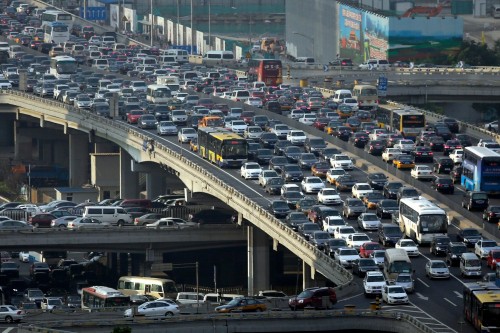
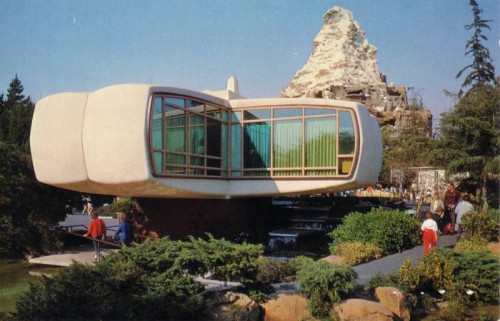
Is this your neighborhood?…


Now of course part of that had to do with something most people in SF won’t talk about these days—the huge crossover between pre-1980s science fiction and occultism. The takeover of science fiction fandom by materialist pseudoskeptics of the CSICOP variety in the early 1980s marked a radical shift in the genre. Before that time, a great many SF fans and no small number of important SF authors were up to their eyeballs in popular occultism. That’s why you’ll find a tolerably good description of parts of an early Wiccan initiation ritual in Heinlein’s novel If This Goes On…, why more than half the big names in 1950s and 1960s SF wrote novels in which psychic powers were the mainspring of the plot, and why the classified ads in the back of SF magazines were full of advertisements for occult correspondence courses. (It’s also why the first science fiction convention I ever attended, back in 1978, included workshops on Tarot divination—not something you found in such venues much after that.) It was a different world, a lot more open to alternative realities.

Still, there was a great deal more to it than that. Science fiction authors vied with each other in those days to come up with future societies that varied as wildly as possible from the world we inhabit today. Read Vonda McIntyre’s Dreamsnake, John Crowley’s Beasts, Brian Aldiss’ Hothouse, Susan Coon’s Rahne, M. John Harrison’s The Pastel City, and Poul Anderson’s The Winter of the World—just to cite the examples that come first to mind—and in each case you’re so far away from the Monofuture that you’d need a high-powered Macroscope to spot its traces way out there in the intergalactic distance.


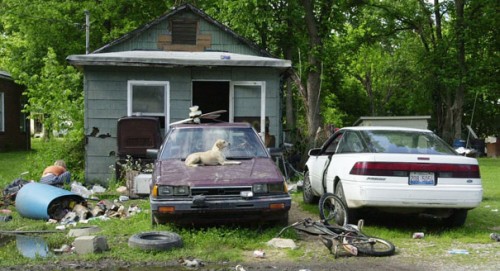
... or is this?


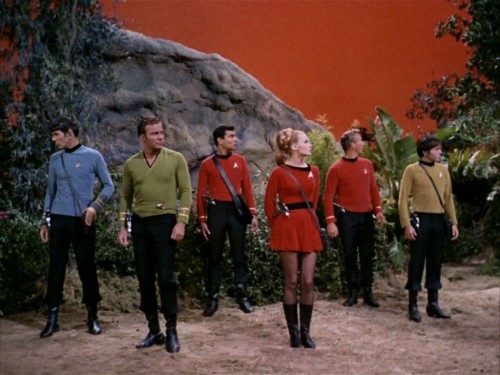
Exactly what happened to science fiction in the decades immediately thereafter is a complex question. I suspect that part of it had to do with the space probes that brought back picture after picture of a solar system far less welcoming to human beings than anyone in the golden age of SF had ever speculated. Part of it, too, had to do with the awkward discovery that none of the many attempts to make space-based manufacturing pay for itself came close to breaking even, and let’s not even talk about living up to the enthusiastic handwaving in Arthur C. Clarke’s The Promise of Space and its many equivalents. Another part, surely, had to do with the mutation of SF from fringe literature to mass-market media property, a process set in motion by the frankly hokey if durable Star Trek franchise and propelled to warp speeds by the immense financial success of such Hollywood cash cows as Star Wars and E.T.: The Extraterrestrial.

Whatever the concatenation of causes, though, what had been one of the most innovative of literary genres became by and large as rigidly formulaic as Harlequin romances, with the Monofuture playing the role of the ruggedly handsome male lead and humanity as the female lead swooning into his cybernetically enhanced arms. One measure of that descent into formula was the chorus of outrage that rose in SF fandom a little while back when Kim Stanley Robinson, one of the best of the current crop of SF authors, published a frankly brilliant novel titled Aurora about a failed attempt at interstellar colonization. Such stories were entirely acceptable back when SF was open to a wider range of futures—John Brunner’s harrowing Total Eclipse and John Crowley’s lyrical Engine Summer are only two of many novels that used it as a theme—but the reaction to Robinson’s book? Here again, Harlequin romances offer the best equivalent: it’s exactly the sort of reaction you’d expect if Harlequin published a well-written romance novel in which the heroine, after meeting the hero and going through the usual plot twists, decided that she really did prefer to stay single after all.


This was the fantasy.


That parallel, I suspect, points straight toward the reason why the monofuture has become stuck sideways in the collective imagination of our time. People don’t read Harlequin romances because they want realistic accounts of love; they read Harlequin romances because they want to enjoy a particular kind of fantasy that’s satisfying precisely because it doesn’t imitate real life. That’s what formulaic genre fiction does—and there’s nothing wrong with that. If readers feel a little better about themselves and the inevitable frustrations of their lives because they have the chance to wallow in lush daydreams about rich and ruggedly handsome guys who fall in love with ordinary women, or heroic adventures in which a mismatched bunch of protagonists wield the Magic McGuffin of Doom to save Upper Lower Southeast Central Earth from Lord Blorg the Bad, or cozy mysteries in which the middle-aged owner of the You Know You Want One More Chocolate Bonbon Shop single-handedly catches one diabolical murderer after another, or what have you, why, that’s one of the basic human needs that literature has always served.

Most of us, though, realize that our own romantic encounters aren’t going to have much of anything in common with what goes on between the covers of a Harlequin romance. Most of us understand that our chances of being called forth on a heroic quest to liberate Upper Lower Southeast Central Earth from Lord Blorg the Bad are significantly lower than our chances of winning the Publishers Clearing House Sweepstakes, and that if we end up witnessing a serious crime, the closest we can expect to get to feats of brilliant detection is a series of long sessions repeating the same eleven facts to bored detectives in a downtown office building. That is to say, we understand the difference between imaginative literature and the real world, and don’t pretend that the latter is under some kind of obligation to imitate the former.


This is where its taken us...


That, in turn, is exactly where the contemporary myth of progress toward the Monofuture has run off the rails. It’s not just that there are solid reasons why we will never colonize other planets, or that flying cars have been built and tested repeatedly since 1917 and consistently turn out to be a lousy idea, or that fusion power was twenty years in the future when I was born and will still be twenty years in the future when the distant descendants of chipmunks study our fossilized bones. It’s that by most measurements, the quality of life for a majority of people in the US and a good many other industrial countries has been moving raggedly but remorselessly downhill since the 1970s and show no sign of changing direction.

Leave the enclaves where the comfortable preen themselves on how progressive they are, and go walk the mean streets of Pittsburgh, Baltimore, Manchester, Glasgow, the decaying industrial faubourgs that ring Paris—well, I could go on at length, but the point stands: from those places, it’s easy to see that the Monofuture isn’t coming closer at all. It’s moving further off, heading to whichever elephant’s graveyard dreams seek out when it’s their time to die. That’s why so many people insist in such shrill terms that the Monofuture is still on its way, just you wait and see. As social psychologists have been pointing out for a good long time, it’s when a belief system no longer does an adequate job of explaining the world that people cling to it most dogmatically and get most irritable when it’s questioned.

One of my readers in a recent open post mentioned that in the circles he frequents, at least, the New Age belief system that was once so widespread has become rare enough that it’s a source of surprise when someone starts talking about creating their own reality and the rest of it. What happened there was no surprise to those who were paying attention. New Age teachers made a series of claims about what their teachings would do, and by and large, those claims didn’t pan out. The impressive number of people who tried to use New Age guru Rhonda Byrne’s “Law of Attraction” to get rich flipping real estate in the years immediately before the 2008-2009 crash, and lost their shirts as a result was just the last and biggest of a series of comparable fiascos.


... and it may end up taking us here:


Since the normal human response to that kind of failure is to double down at least once, what happened after the 2008-2009 crash is that a huge number of New Agers staked everything on the supposed end of the Mayan calendar on December 21, 2012. When that day came and went without incident, in turn, the New Age movement quietly dissolved. There are still people who believe in its teachings, to be sure, and in fact little enclaves of true believers are the normal aftermath of a failed prediction of this sort, but as a significant cultural force, it’s finished.

Exactly what will do the same thing to the cult of the Monofuture is an interesting question. That something will pull the plug on Tomorrowland sooner or later, though, is baked into the cake at this point. Science fiction, delightful though it is, is no more about real futures than romance novels are about real relationships, and the fate of the New Age movement demonstrates clearly enough what happens when true believers insist that the universe is obligated to cater to an overdeveloped sense of entitlement and fork over the future they think they deserve, just because they think they deserve it. What sequence of events will deliver that awkward but inescapable lesson to believers in the Monofuture is an interesting question; all things considered, though, I don’t think we’ll have to wait indefinitely to find out.

Tuesday, August 22, 2017

July stormwatch by JMG


July 2017 Stormwatch: Climate Change. John Michael Greer, Ecosophia. July 5, 2017.


Many years ago, not long after I first got onto the internet, I created a website to try to encourage community groups to make preparations for the hard times to come. It was titled “The Stormwatch Project” — why, yes, I was a Jethro Tull fan back in the day; how did you guess? 😉 — and it never did get any noticeable traction, so I let it go the way of all websites in due time. Yet the name, not to mention the underlying image of eyes turned to the turbulent heavens, watching for signs of trouble to come, seemed worth keeping, so I’ll be repurposing it here.

I considered just doing a monthly link roundup, but there are already quite a few good sites that provide that service on a daily basis — two that I visit regularly are Naked Capitalism and the Collapse subreddit — so reinventing that particular wheel didn’t seem like a good idea. Instead, I’m going to try a monthly post with links from the internet and commentary from me, focusing on one theme at a time. This month we’re going to talk about the current pace of anthropogenic climate change.

That’s perhaps the most massive story of our time; it’s happening a good deal faster than I expected — though in all fairness, a great many climate scientists have been caught flatfooted by the pace of change as well. It’s a measure of how drastic the situation has become that so many people have fled into a flat denial that anything of the kind is taking place, or the equal and opposite insistence that we’re all going to die soon so it doesn’t matter. That’s understandable, as the alternative is coming to terms with the impending failure of the myth of progress and the really messy future we’re making for those who come after us.

On that note, fellow stormwatchers, don your waterproof boots; we’re going to visit a planetwide flood zone.

One of the dismal advantages of the way we’ve treated the atmosphere as a gaseous trash can is that scientists now get to learn much more than they want to learn about the complex interactions between the atmosphere, the oceans, and the planet’s waning ice caps. Ars Technica has a useful summary of one of the feedback loops now under way: as arctic sea ice melts, the climate balance shifts in ways that drive more melting. Similarly, a paper released by www.phys.org shows that the collapse of the Greenland ice sheet is going into overdrive as a result of fewer clouds and more summer sunshine due to shifting climate belts. Meanwhile, down in Antarctica, the rate of melting is such that plants and insects are beginning to colonize the once-frozen landscape.

(A while ago, if I may interject something relevant, I fielded a diatribe from a climate denialist who insisted that there were trees growing on the shores of Antarctica when the Robert Scott expedition arrived there in 1911. That’s what is known in the business as a bald-faced lie. There are plenty of good photographs of Scott’s base camp; I’m looking at some of them right now in a book I own. It’s one of the volumes of the Life Nature Library, The Poles, which was published before anybody but a few physicists thought that anthropogenic climate change was an issue, and it shows that Scott’s camp on the shores of McMurdo Sound was set in a wasteland of snow and bare ground, without a tree or even a patch of moss in sight. Anyone who wants to argue that point had better be prepared to show something more than empty rhetoric.)

Okay, back to the changing climate. Remember those craters that started appearing in the Siberian tundra a few years back? They’re still appearing, and witnesses have watched the methane explosions that cause them as they happen. As far as I know, this is still purely a Siberian phenomenon — this is not surprising, as Siberia has heated up faster than any other land mass bordering the Arctic Ocean — but as permafrost continues to melt and methane to bubble up, expect more loud booms from the Alaska north slope and arctic Canada.

Speaking of loud booms, an iceberg the size of the state of Delaware is poised to drift off into the southern seas in the months immediately ahead. Longtime watchers of the climate change scene will remember the ballyhoo a few years ago when the first two parts of the Larsen Ice Shelf, unimaginatively labeled Larsen A and Larsen B, turned out to be unstable. They’re gone now — as in drifted free, broke up, and melted — and it’s now the turn of the much bigger Larsen C sheet. There’s more in line once that’s gone.

Rounding out the loud boom category, the west coast of Greenland was hit by a tsunami, which killed four people and washed away eleven houses. That in itself doesn’t signal anything out of the ordinary — tsunamis happen all the time — but if it turns out to be the first of many, the North Atlantic basin is in deep trouble. The weight of all that ice pushed the portion of the Earth’s crust we call Greenland more than a thousand feet down into the mantle; as the ice melts, what geologists call isostatic rebound will raise the crust back up, and any geological fault under strain has a sharply heightened change of pupping an earthquake as that happens. The result, to judge by what happened at the end of the last ice age, will be tsunamis hammering the coasts of eastern North America and western Europe at unpredictable intervals — another good reason, dear reader, to be sure you live on high ground if you’re anywhere near the ocean.

Here in the US, as a result of rising sea level, the number of high tide-related floods has nearly doubled — 520 last year, according to NOAA, as compared to the usual average of 275 a year. In response, real estate investors in the greater Miami area are quietly moving to higher ground, relocating away from beachfront property into formerly poor neighborhoods that are a few more feet above sea level. Fort Lauderdale, meanwhile, is having to raise fees for drainage in order to deal with the increased cost of flooding. Expect much more of this in the years ahead. Nobody’s yet willing to deal with the reality of the situation, which is that most of Florida will have to be abandoned to the sea in the decades ahead of us.

Elsewhere, the Earth’s zone of tropical climate is steadily expanding as climate belts shift, and heatwaves severe enough to kill people in large numbers have become steadily more common since 1980. Europe spent much of June baking beneath unaccustomed heat as a direct result. As the climate shifts, furthermore, diseases and parasites spread accordingly; five counties in Florida now have populations of the unappealingly named rat lungworm, which can eat your brain — no, I’m not making that up. It’s a nasty tropical parasite that afflicts humans as well as rats. Expect much more of this, too, as climate zones shift and living things follow them.

There’s much more along the same lines, but these are indicative. Meanwhile President Trump has insisted that he’s going to take the US out of the Paris climate accords. The mainstream media has duly lambasted him for that, wihtout ever quite mentioning that the Paris climate accords don’t actually commit anyone anywhere to decrease the amount of greenhouse gases being dumped into the atmosphere. Dr. James Hansen, arguably the dean of climate scientists researching the mess we’re in, has thus described the Paris accords as “a fraud.”As usual in today’s America, the choices offered us by the two parties consist of business as usual on the one hand, and business as usual with a few futile face-saving gestures on the other. If you want a different option, dear reader, you’re going to have to make it yourself.

What we’re heading toward, in the absence of meaningful leadership from either side of the political scene, is a future most people alive today can’t even imagine. Ironically, they could learn a lot about it by reading up on recent research into the end of the last ice age. Scottish and Norwegian researchers have tracked the way that the ice sheets of the last glaciation collapsed, flooding millions of square miles of once-dry land and kicking off a cascade of climatic and ecological changes. Another team of researchers has figured out how relatively modest shifts in atmospheric CO2 turn the north Atlantic currents on and off like a switch, as happened during previous bouts of global warming.

It’s a real mess. It’s probably necessary to point out, though, that it’s not the end of the world. It may be the end of your personal world, if you happening to be vacationing on Cape Cod when a forty-foot tsunami comes rolling in from the southern end of Greenland, or one of those rat lungworms decides that your brain is its next meal. It may be the end of your economic world, if your job depends on overseas trade at a time when rising sea levels are making the infrastructure of every seaport in the world an example of (literally) sunk costs, or you still have your net worth invested in Florida real estate when enough people realize that the ocean’s just going to keep rising. It may be the end of your social world, if your nation gets torn apart by the inevitable conflicts of a world in chaos, or the neighborhood where you’ve put down roots happens to be a little too low-lying and you have to flee to higher ground.

It’s certain to be the end of a world of mythic narratives, the one in which Man the Conqueror of Nature bestrides the planet on his way to his purported destiny out there among the stars, and we can ignore what we’re doing to the only planet we can live on because somebody will surely think of something to solve the problems we’re creating. For a great many people, that will be at least as traumatic as any of the other ends I’ve just mentioned; people very often find the loss of their lives, their wealth, and their social setting less difficult than the loss of the stories that give meaning to their existence. Coming to terms with a future in which human beings have to give up their supposed status as destiny’s darlings is going to be painful for many of us, but it’s not the end of the world.

A couple of centuries from now, when the American West from the Great Plains to the Cascades and the Sierra Nevada is uninhabitable desert, when jungle wraps a Gulf coast a couple of hundred miles further north than it is today, when apples grow in Greenland and magnolias bloom in Ohio, and when modern industrial civilization and the abundant resources and climatic stability that made it possible are fading memories, the descendants of that very small fraction of us whose genetics will survive the bottleneck ahead will be living in the world that we’ve made for them. I suspect that’s why climate denialism and its Siamese twin, climate apocalypticism, are so popular these days. It’s easier to pretend that nothing’s wrong or, conversely, that everybody’s going to die anyway so none of it matters, than to grapple with the future we ourselves are bringing about.


In comments from Gene;
Imagine what an individual needs to do here. Accept that human activity is making the planet uninhabitable for humans and all other life. Know that you are contributing to nearly unimaginable suffering but if you stop, even completely, it will not make any difference. Understand that everyone has to stop but that you can only change yourself. Censor your words and public behavior to get along with everyone else, almost all of whom will think you are crazy, self-righteous and/or stupid for not simply taking as much as you can get of whatever is available. If you are lucky enough to have people who matter to you share your beliefs and your behavior, take some solace there but still be subject to the effect of the actions of the masses. After all, you live in their world. Spend a large proportion of your emotional energy beating back anger and frustration that the world you live in is insane and you can prove it but no one wants to hear it. Constantly question your own hypocrisy, knowing that you are not and cannot do enough. Wake up each day and repeat

Sunday, August 20, 2017

John Michael Greer

The Twilight of Anthropolatry. John Michael Greer, ecosophia. Jun 21, 2017


During the last three months, while on hiatus from blogging, I’ve looked back over the eleven-year run of The Archdruid Report. As my regular readers know, the point of that prolonged experiment in online prose was my attempt to explore the primary historical fact of our time—the accelerating decline and impending fall of industrial civilization—from every angle I could think of, including some I never imagined addressing at all when I started blogging back in 2006.

Those changes of angle happened partly because it gets boring to talk about the same thing in the same way over and over again, of course, but there was a deeper factor as well. I started off discussing what I thought was the straightforward point that you can’t fuel infinite economic growth by drawing down a finite resource base. Sounds like basic common sense, doesn’t it? It did to me, too, but it nonetheless fielded a remarkable amount of pushback. A great many people seemed to be unable to get their minds around the fact that each ton of coal, barrel of petroleum, or cubic foot of natural gas burned to fuel their lifestyles really does go away forever.

So I began discussing that issue from different angles of approach, and over time the blog gathered an online community of people who found one or more of those angles interesting. We talked about systems ecology, economics, history and the cycles by which civilizations rise and fall; we hauled the appropriate-technology movement of the Seventies out of the memory hole to which it’s been consigned for the last thirty years, and unpacked some of the things it had to offer, now that we’re experiencing the future that the movement’s spokespeople warned about.

En route, we strayed into an assortment of strange byways, from faith in progress as an ersatz religion to the possibilities open to science fiction once it gets back to work discussing the kind of futures we’re actually going to get. Tolerably often, the results were interesting enough to be worth reprinting in book form—that’s where ten of my nonfiction books, three novels, and a newly released collection of short stories came from. In the process, the community around the blog grew to a degree I’d never anticipated, with up to a third of a million readers a month dropping in to check out the latest post.

All the while, though, the pushback continued—and the attitude behind it became more and more entrenched in the wider world. The rise and fall of climate change activism, for example, makes a good proxy measurement for the failure of industrial civilization as a whole to engage in basic reality testing. With each year that passes, the annual cost of weather-related disasters rises, the broader financial impacts of climate change take a bigger bite out of the global economy, and such unsubtle signs as seawater flooding the streets of Miami Beach, methane explosions blasting craters in the Siberian permafrost, and freighters steaming through the formerly impassable Northwest Passage sound nature’s equivalent of a warning klaxon.

Yet even among those people who think they take climate change seriously, you’ll have to look long and hard to find the very few who take it seriously enough to stop making the problem worse with their own actions. I had a pleasant email exchange with one of those few a couple of weeks ago. His name is Peter Kalmus; he’s a scientist who researches climate change; he decided, after careful assessment of the data, to give up air travel in order to cut back on his own contribution to the problem he studies; and he’s written a thoughtful book, Being the Change, which will be published later this year, and which talks in forthright terms about the way that change has to begin with our own lifestyles, if it’s going to begin at all.

Kalmus made a midsized splash in the sustainability end of the blogosphere a while back, when he published an essay suggesting that climate scientists might want to take the lead in giving up the carbon-intensive lifestyle habits that all of us are going to have to give up in order to keep the planetary climate from spinning hopelessly out of control. A few of his colleagues have taken up the gauntlet he threw down—last I heard, the number is up to half a dozen or so, out of the tens of thousands of scientists currently researching climate change. The rest keep on flying carbon-spewing jets to conferences where they talk learnedly about how we all have to stop spewing carbon, and then wonder why so few people take them seriously.

Think about that for a moment. If climate scientists—the people who have the most reason to understand what we’re doing to the Earth’s climate by using its atmosphere as a gaseous trash can for our wastes—aren’t willing to change their own behavior in response to that knowledge, how can they expect anyone else to do so? Again, this is basic common sense, but you’ll find any number of people doing their level best to evade it these days.

Check out any other issue where the survival of industrial society is at stake, and you’ll see the same thing. In case after case, it takes very little work to identify the habits and lifestyle choices that are dragging our civilization to ruin, and only a few moments of clear thinking to realize that the way to avert an ugly future has to begin with giving up those habits and lifestyle choices. Yet that last step is unthinkable to most people. It’s not just that they refuse to take it, for whatever reason; it’s that they don’t seem to be able to wrap their brains around the idea at all.

That incomprehension isn’t something that the movements to save industrial civilization from itself have yet really grappled with. Many activists still seem to think the difficulty is purely a matter of knowledge: if only they can explain what’s happening and what has to be done about it to enough people, they think, people will change their ways and everything will be fine. This approach hasn’t worked well, in case you haven’t noticed. If even climate scientists, who are as thoroughly informed as anyone about what their lifestyles are doing to the planet, aren’t able to take the very simple step from there to changing those lifestyles, knowledge is clearly not enough.

Among those activists who’ve grasped the failure of earnest explanation, the next step is usually to frame the discussion in ethical terms: if only they can get people to see that what they’re doing is wrong, they think, people will change their ways and everything will be fine. That hasn’t worked either. There are complex reasons for that, reaching back to the broader failure of ethics as currently understood to have much of an effect on human behavior—a theme we’ll be discussing at some length in later posts. Yet even those who have convinced themselves that the fate of the Earth is a moral issue of compelling importance seem, by and large, to be unable to go from that ethical realization to the obvious next step of giving up habits and lifestyle choices that actively harm the global ecosystem. Thus ethics are clearly not enough.

Among those few climate activists who have grasped the failure of knowledge and ethics, it’s common to hear the difficulty framed as a matter of will: if only they can find some way to motivate people to do what’s necessary, they think, people will change their ways and everything will be fine. That hasn’t worked any better than the other two notions. There are good reasons why it hasn’t worked; notably, most activists try to motivate people by threatening them with a really ugly future if they don’t change their ways, and this sort of rhetoric has been done to death for so long that it’s lost what clout it once had. Yet again, the issue of personal lifestyle choices casts a useful light: if activists who are perfectly willing to devote long hours on their own nickel to the cause can’t apply the same focused will to the task of changing their own lifestyles, will is clearly not enough.

It’s easy to dismiss all this as a matter of simple hypocrisy, but this doesn’t cover the territory either. We live in a hypocritical age, and one advantage that accrues from that fact is that most of my readers will be very familiar with the manifestations of hypocrisy in action. We’ve all seen hypocrites respond in plenty of different ways when they’re called on the mismatch between their words and their actions: the disarming smile, the sudden rage, the elaborate cover story, the sudden effort at distraction, and so on. A blank look like a cow staring at a passing train isn’t one of these—and yet that’s what I tend to get consistently when I bring up the failure of people to make the changes in their own lives their own rhetoric demands that others make.

The problem isn’t knowledge, then; it’s not ethics, and it’s not will. What remains?

Some decades ago, in a book far more often cited than read, historian of science Thomas Kuhn pointed out the role of paradigms in the process of scientific research. A paradigm, in Kuhn’s sense, is a particular scientific achievement that counts, in the eyes of scientists in one or more fields, as “good science.” For the scientific movement as a whole, for example, the research program carried out by Isaac Newton in the late seventeenth century, culminating in his epochal book Principia Mathematica, was for several centuries the paradigm par excellence, the epitome of good science; students in most sciences treated it as a model for imitation, not only in its procedures, but in the kinds of questions that it asked and the kinds of answers it got.

The difficulty with paradigm-driven science, though, is that no matter how good the procedures, questions, and answers mandated by any paradigm may be, sooner or later they stop yielding useful insights into nature. At this point whatever scientific field has relied on the paradigm in question slams facefirst into crisis; you see the endless circular debates, the frantic elaboration of existing theory, and all the other signs of a discipline that’s lost its way. In due time, somebody succeeds in solving some key problem the old paradigm couldn’t address, their achievement by and large becomes the new paradigm, and the cycle begins anew.

We’ll be discussing Kuhn and his book, The Structure of Scientific Revolutions, a great deal in posts to come, as it points out some of the crucial reasons why science remains stuck in so many unproductive ruts in our time. (Straightforward corruption by corporate and ideological interests accounts for most of the others.) The point I’d like to make here, though, is that Kuhn’s insight can be applied far beyond the boundaries of the sciences.

In every human society, every aspect of life is mapped out according to a paradigm of some kind, which defines what’s important, what’s relevant, what’s possible, and what’s unthinkable in that part of the world of human experience. This is by no means a wholly conscious process; it’s more akin to the habits of hearing by which most of us can tell when a musical note is out of tune, say, or the visceral discomfort most of us feel when some norm of our culture is violated. The more successfully a paradigm addresses its area of life, the less it’s likely to be noticed; it’s only when crisis comes, and the only way to deal with some pressing problem is ruled out by the paradigm of those who must confront that same problem, that the paradigm itself becomes fully conscious—and when it does, it generally loses its power to shape human behavior.

In every human society, in turn, all these subsidiary paradigms relate in one way or another to a more basic pattern—the society’s ur-paradigm, its concept of what it means to be a human being, which every member of that society either imitates or deliberately rejects. Concepts of this kind vary far more from culture to culture than most people ever quite grasp, and a good many of the failures in understanding between people of different cultures happen because each party tries to apply their own sense of what it means to be human to a person who doesn’t share that sense. Like scientific paradigms, though, these social ur-paradigms eventually stop yielding useful insights into the basic questions of existence; crisis comes, and a new paradigm has to be found.

We’re in the midst of exactly such a process in the industrial world today. Our core assumptions about what it means to be human, how we relate to the universe and how it relates to us, are well past their pull date; they no longer yield useful insights into the problems that beset us today. It’s because of that failure that the paradigm itself is becoming visible to us at last.

We could talk about that paradigm in a great many ways, but I’m going to suggest a deliberately edgy label for it: anthropolatry, the worship of humanity as a god.

Think about the blank looks I mentioned earlier in this post, the ones that show up on cue when I suggest the necessity of personal change to people—even to people who are well informed about the environmental crisis of our time, who grasp the moral issues involved, and who show in every other aspect of their lives the presence of adequate willpower to change their lives in response to a clearly recognized need. What lies behind those blank looks? A paradigm that insists that human beings are above nature—in the full literal sense of the word, supernatural—and therefore can’t possibly need to rethink their own choices for nature’s sake.

More broadly, think of the rhetoric that’s been lavished on our species over the years, especially back when you could get away with referring to the lot of us collectively as Man: Man the measure of all things, Man the summit of creation, Man the conqueror of nature, and so on in an embarrassing parade of self-praise that lavishes on humanity pretty much all the characteristics that most other cultures have traditionally assigned to their gods.

The irony, and it’s a rich one, is that the scientific worldview that’s so often brandished by believers in the cult of anthropolatry contradicts this overblown image in every particular. Pay unbiased attention to the evidence from science, and it’s impossible to avoid realizing that humanity is simply a species of megafauna native to a single not very important planet. Like rats, crows, and feral swine, we’re invasive, omnivorous, and adaptable; we’ve evolved some unusual cognitive and behavioral tricks, but we’re not above or outside nature in any sense that matters. (Does that statement upset or offend you, dear reader? If so, why?)

We evolved from other species long after life emerged on this planet, and we’ll go extinct long before life dies out. However important we may be to ourselves and each other—just as rats are important to other rats, for good reason, and swine to other swine—in the greater scheme of things, we’re a temporary perturbation in the damp film that covers one small rocky world in an ordinary solar system on the fringes of an ordinary galaxy, and that’s all we will ever be. (Here again, dear reader, if that last statement upsets you, it may be worth asking yourself why.)

Most traditional religions embraced a similarly modest sense of our place in the cosmos, though the details differed for a range of reasons. The contemporary cult of anthropolatry, by contrast, insists that humanity is destined to bestride the stars, outlive the sun, give meaning and purpose to the cosmos, and so on. That enthusiastic embrace of the quality the ancient Greeks called “hubris” is its distinctive feature. It’s also its distinctive flaw, because—as an honest scientific assessment of our limited gifts and vast dependencies could have predicted a long time ago—the project of living like gods isn’t working too well for us these days. Despite the increasingly shrill claims of Man’s devout worshippers, what’s more, it shows no signs of working any better in the foreseeable future—quite the contrary, in fact.

The paradigm of anthropolatry thus faces a familiar crisis. Over the months to come, we’ll take a closer look at the way that humanity got assigned the dubious status of an ersatz god, explore the ongoing unraveling of that improbable ideology, and consider some of the possibilities for a new paradigm that fits our species with a less embarrassingly oversized role in the scheme of things.