Getting Real About Green Energy. Chris Martenson via PeakProsperity.com, Oct. 4, 2019.
An honest analysis of what it can't promise...
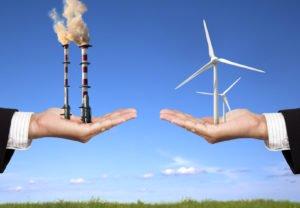
I want to be optimistic about the future. I really do.
But there’s virtually no chance of the world transitioning gently to an alternative energy-powered future.
These Are The ‘Good Old Days’
I’m often asked where I stand on wind, solar and other alternative energy sources.
My answer is: I love them. But they’re incapable of enabling our society to smoothly slip over to powering itself by other means.
They’re not going to “save us”.
Some people are convinced otherwise. If we can just fight off the evil oil companies, get our act together, and install a national alternative energy system infrastructure, we’ll be just fine. Meaning that we”ll be able to continue to live as we do today, but powered fully by clean renewable energy.
That’s just not going to happen. At least, not without a lot of painful disruption and sacrifice.
The top three reasons why are:
I walk through the detail below. I’m doing so to debunk the magical thinking behind the current “Green Revolution” because I fear it offers a false promise.
Look, I’m a huge fan of renewable energy. And I’m 1,000% in favor of weaning the world off of its toxic addiction to fossil fuels.
But we have to be eyes wide open about our future prospects. Deluding ourselves with “feel good” but unrealistic expectations about green energy will result in the same sort of poor decisions, malinvestment, and crushed dreams as fossil-based system has.
As we constantly repeat here at Peak Prosperity: Energy is everything.
Without as much available, the future is going to be exceptionally difficult compared to the present. Which is why I call the time we’re living in now The Good Old Days.
Now is the time to prepare for what’s coming. To acquire the skills, the land, and make the financial, physical and emotional adjustments in your lifestyle that will boost your resilience for a future of less and more expensive energy.
The Vision We Need
The answer to the post-fossil fuel era is not an alt-energy system capable of providing us with the same way of life. Because that’s just not feasible.
The answer lies in doing more with less.
We already know how to build structures that will last for hundreds of years and which require almost no energy to operate for heating and cooling. But those are very rarely built today, because they cost more.
We already know how to build small, light vehicles and operate mass transit very energy effectively. But society prefers its huge cars and trucks, because they’re affordable (while debt is cheap) and convenient.
We already know how to grow more food, closer to home, that is far healthier for humans and the ecosystem. But it’s still only done on a boutique basis because it costs a little bit more.
This is why people need to be told the truth and inspired with a vision that we can all share. With a grand cause, anything is possible. Without one, nothing will be done.
The vision we need will align what needs to be done with proper incentives to get those things done. We’ll be told the truth, what is expected, and our role in the project. It will imbue many lives with a sense of meaning and purpose that are currently missing in the lives of most people.
However, given the enormity of the challenge, and the fractured, divisive social and political landscape, you really need to plan for nothing happening. That no vision is coming along, no savior will appear, and that we’re going to merrily continue along until we run out of time and resources to do anything more than regret our mistakes.
Odds are we’re going to keep heading straight along our current trajectory. Until — clunk! — we go right over the edge.
An honest analysis of what it can't promise...
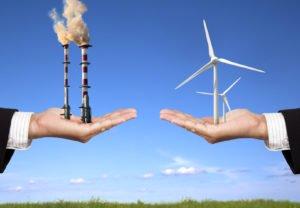
I want to be optimistic about the future. I really do.
But there’s virtually no chance of the world transitioning gently to an alternative energy-powered future.
These Are The ‘Good Old Days’
I’m often asked where I stand on wind, solar and other alternative energy sources.
My answer is: I love them. But they’re incapable of enabling our society to smoothly slip over to powering itself by other means.
They’re not going to “save us”.
Some people are convinced otherwise. If we can just fight off the evil oil companies, get our act together, and install a national alternative energy system infrastructure, we’ll be just fine. Meaning that we”ll be able to continue to live as we do today, but powered fully by clean renewable energy.
That’s just not going to happen. At least, not without a lot of painful disruption and sacrifice.
The top three reasons why are:
- Math
- Human behavior
- Time, scale, & cost
I walk through the detail below. I’m doing so to debunk the magical thinking behind the current “Green Revolution” because I fear it offers a false promise.
Look, I’m a huge fan of renewable energy. And I’m 1,000% in favor of weaning the world off of its toxic addiction to fossil fuels.
But we have to be eyes wide open about our future prospects. Deluding ourselves with “feel good” but unrealistic expectations about green energy will result in the same sort of poor decisions, malinvestment, and crushed dreams as fossil-based system has.
As we constantly repeat here at Peak Prosperity: Energy is everything.
Without as much available, the future is going to be exceptionally difficult compared to the present. Which is why I call the time we’re living in now The Good Old Days.
Now is the time to prepare for what’s coming. To acquire the skills, the land, and make the financial, physical and emotional adjustments in your lifestyle that will boost your resilience for a future of less and more expensive energy.
Math
Let’s start with the math.
Suppose we agree on the goal to entirely replace fossil fuel energy by 2050. (We’re going to have to do it by some point, because oil, coal and natural gas are all depleting finite resources.)
With 2050 as a starting point we can run some simple math.
We start by converting the three main fossil fuels – coal, oil and natural gas – into a common unit: the “millions of tons of oil equivalent” or Mtoe.
A million tons of oil = 1 Mtoe, obviously. And there’s an amount of coal, if burned that has the same energy as 1 Mtoe. Ditto for natural gas. If we add up all of the fossil fuels burned in a given year, then we can express that as a single number in the many thousands of Mtoe.
Roger Pilke has run the math for us in his recent article in Forbes:
So that’s our starting point. Whatever future alternative energy systems get installed will have to replace around 12,000 Mtoe.
Now, it bears noting that 12,000 Mtoe is a truly massive amount of energy.
To visualize this, let’s use gigantic oil-bearing cargo ships. Here’s a picture of the Ultra Large Crude Carrier, the Oceania, which can hold a bit more than 3,000,000 barrels of oil at a time. That’s a staggeringly massive ship. Ginormous.
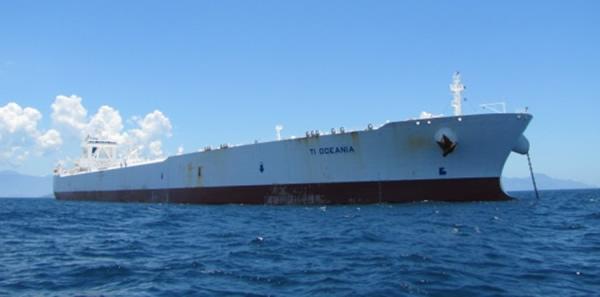
We’d need 2.4 of these massive ships to hold 1 Mtoe. Which means we’d need a fleet of approximately 30,000 of these tankers to hold 12,000 Mtoe. (By the way, there are currently only 4 ships in the world of this size).
Because these truly gigantic ships are 1,246 feet in length, our fleet of 30,000 would stretch over 7,000 miles if parked stern to nose in a line.
Are you getting a sense yet for how mind-bogglingly large the world’s annual fossil energy consumption is?
So, what would it take to replace those 12,000 Mtoe with alternative fuels by 2050?
Pilke answers that for us:
Yikes! More than 1 Mtoe of alt-energy systems would have to be installed every single day? Between now and Jan 1 2050? No resting on Sundays even?
But that’s only half of the story.
We’d also have to decommission and retire an equivalent 1 Mtoe amount of still-functioning fossil fuel property, plant and equipment. Do you have any idea how much money and embedded capital is contained in all the world’s current energy infrastructure — including our cars and homes — that’s built around fossil fuel use?
Somehow, the world would have to replace the equivalent of the energy contained within 2.4 Ultra Massive crude ships. Every. Single. Day. For 11,000 days straight, without missing a single day. A 7,000 mile long cargo train of ultra massive ships retired at the rate of 2.4 per day for the next 30 years.
What would that take? Again from Pilke:
So to dismantle that 7,000 mile long conga-line of ultra massive crude carriers, we’d have to build and commission 3 new nuclear plants every 2 days. Or 1,500 very large wind towers installed across 300 square miles every day.
It’s just not going to happen.
Even if the world got totally, completely serious about doing this, it remains an exceedingly improbable task. That’s being kind, too. When something strays this far over the line of improbability, it’s really an impossibility.
Oh, and I started writing this article on Tuesday. Since it’s now Friday, that means we’re already behind by 9 nuclear plants. We’ll need to hurry to catch those up.
But maybe you’re still holding out hope. If all the countries of the world suddenly made this their #1 priority, could we have a shot?
This brings us to complicating factor #2: human behavior.
Let’s start with the math.
Suppose we agree on the goal to entirely replace fossil fuel energy by 2050. (We’re going to have to do it by some point, because oil, coal and natural gas are all depleting finite resources.)
With 2050 as a starting point we can run some simple math.
We start by converting the three main fossil fuels – coal, oil and natural gas – into a common unit: the “millions of tons of oil equivalent” or Mtoe.
A million tons of oil = 1 Mtoe, obviously. And there’s an amount of coal, if burned that has the same energy as 1 Mtoe. Ditto for natural gas. If we add up all of the fossil fuels burned in a given year, then we can express that as a single number in the many thousands of Mtoe.
Roger Pilke has run the math for us in his recent article in Forbes:
In 2018 the world consumed 11,743 Mtoe in the form of coal, natural gas and petroleum. The combustion of these fossil fuels resulted in 33.7 billion tonnes of carbon dioxide emissions. In order for those emissions to reach net-zero, we will have to replace about 12,000 Mtoe of energy consumption expected for 2019.
(Source)
So that’s our starting point. Whatever future alternative energy systems get installed will have to replace around 12,000 Mtoe.
Now, it bears noting that 12,000 Mtoe is a truly massive amount of energy.
To visualize this, let’s use gigantic oil-bearing cargo ships. Here’s a picture of the Ultra Large Crude Carrier, the Oceania, which can hold a bit more than 3,000,000 barrels of oil at a time. That’s a staggeringly massive ship. Ginormous.

We’d need 2.4 of these massive ships to hold 1 Mtoe. Which means we’d need a fleet of approximately 30,000 of these tankers to hold 12,000 Mtoe. (By the way, there are currently only 4 ships in the world of this size).
Because these truly gigantic ships are 1,246 feet in length, our fleet of 30,000 would stretch over 7,000 miles if parked stern to nose in a line.
Are you getting a sense yet for how mind-bogglingly large the world’s annual fossil energy consumption is?
So, what would it take to replace those 12,000 Mtoe with alternative fuels by 2050?
Pilke answers that for us:
Another useful number to know is that there are 11,051 days left until January 1, 2050.
To achieve net-zero carbon dioxide emissions globally by 2050 thus requires the deployment of >1 Mtoe of carbon-free energy consumption (~12,000 Mtoe/11,051 days) every day, starting tomorrow and continuing for the next 30+ years.
Achieving net-zero also requires the corresponding equivalent decommissioning of more than 1 Mtoe of energy consumption from fossil fuels every single day.
Yikes! More than 1 Mtoe of alt-energy systems would have to be installed every single day? Between now and Jan 1 2050? No resting on Sundays even?
But that’s only half of the story.
We’d also have to decommission and retire an equivalent 1 Mtoe amount of still-functioning fossil fuel property, plant and equipment. Do you have any idea how much money and embedded capital is contained in all the world’s current energy infrastructure — including our cars and homes — that’s built around fossil fuel use?
Somehow, the world would have to replace the equivalent of the energy contained within 2.4 Ultra Massive crude ships. Every. Single. Day. For 11,000 days straight, without missing a single day. A 7,000 mile long cargo train of ultra massive ships retired at the rate of 2.4 per day for the next 30 years.
What would that take? Again from Pilke:
So the math here is simple: to achieve net-zero carbon dioxide emissions by 2050, the world would need to deploy 3 [brand new] nuclear plants worth of carbon-free energy every two days, starting tomorrow and continuing to 2050. At the same time, a nuclear plant’s worth of fossil fuels would need to be decommissioned every day, starting tomorrow and continuing to 2050.
I’ve found that some people don’t like the use of a nuclear power plant as a measuring stick. So we can substitute wind energy as a measuring stick. Net-zero carbon dioxide by 2050 would require the deployment of ~1500 wind turbines (2.5 MW) over ~300 square miles, every day starting tomorrow and continuing to 2050.
So to dismantle that 7,000 mile long conga-line of ultra massive crude carriers, we’d have to build and commission 3 new nuclear plants every 2 days. Or 1,500 very large wind towers installed across 300 square miles every day.
It’s just not going to happen.
Even if the world got totally, completely serious about doing this, it remains an exceedingly improbable task. That’s being kind, too. When something strays this far over the line of improbability, it’s really an impossibility.
Oh, and I started writing this article on Tuesday. Since it’s now Friday, that means we’re already behind by 9 nuclear plants. We’ll need to hurry to catch those up.
But maybe you’re still holding out hope. If all the countries of the world suddenly made this their #1 priority, could we have a shot?
This brings us to complicating factor #2: human behavior.
Human Behavior
One huge reason that an easy, seamless transition to alternative energy won’t happen is because our biological wiring is terrible at responding to such big, complex, long-range predicaments.
A snarling saber-toothed tiger crouching right in front of us? That we know how to respond to. Filling our bellies from a ripe fruit tree to sate our hunger? We’re absolutely wired for solving problems like that.
But organizing ourselves against a faceless distant threat? Not in our wiring. Trying to convince people to make sacrifices today for no immediate or visible reward? Really not at all in our biological wheelhouse.
When united towards a common goal, humans can do amazing things. Simply brilliant and astonishing works exist that inform us of what’s possible when we set our collective minds to a shared mission. The great pyramids. Towering middle-age cathedrals. The Great Wall of China. The Apollo missions.
But far less is possible when we’re fractured and divided. As we are now. We’re currently having trouble trying to agree on which gender(s) should use a particular bathroom. Or being civil when standing in line for a discounted TV.
Given this, it’s impossible to imagine the increasingly-divided populations in the UK, France, America or Germany agreeing on much of anything, let alone a gigantic and massively expensive energy transition.
Each country is currently struggling with its own brew domestic social and political problems (of their own making, I should add). They have neither the appetite or ability to take on the much more challenging task of a 30-year global energy infrastructure re-build.
Making this energy transition will require an enormous diversion of effort – away from this and towards that.
It will be hard. It will take a lot of political capital and expert leadership. Huge pain and suffering will result as entire industries are shut down and new ones are started up.
Just drive through any former mill or mining region and you can still see the bitter remnants of its abandoned industries. Some have not yet recovered, even hundreds of years after the initial loss.
When the coal mines died out, so did the cities:
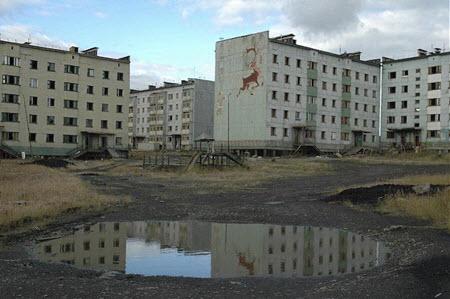
Centralia PA
When the mills left, so did the vitality.
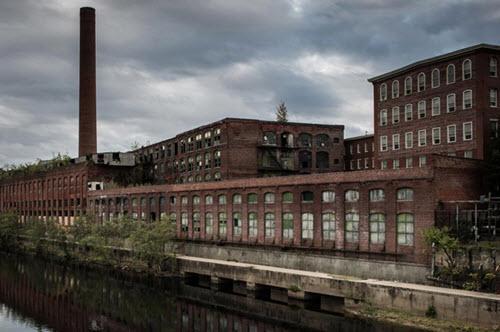
Lowell MA
(Source)
With an energy transition away from fossil fuels, there will be similar examples of ruined economic ideas littering the land. Places where refineries now stand with their thousands of jobs will become rusting derelicts. Ditto for hundreds of other dependent businesses, ranging from Jiffy Lube to Boeing to gas stations to airports.
Which brings us to complicating factor #3: time, scale and cost
One huge reason that an easy, seamless transition to alternative energy won’t happen is because our biological wiring is terrible at responding to such big, complex, long-range predicaments.
A snarling saber-toothed tiger crouching right in front of us? That we know how to respond to. Filling our bellies from a ripe fruit tree to sate our hunger? We’re absolutely wired for solving problems like that.
But organizing ourselves against a faceless distant threat? Not in our wiring. Trying to convince people to make sacrifices today for no immediate or visible reward? Really not at all in our biological wheelhouse.
When united towards a common goal, humans can do amazing things. Simply brilliant and astonishing works exist that inform us of what’s possible when we set our collective minds to a shared mission. The great pyramids. Towering middle-age cathedrals. The Great Wall of China. The Apollo missions.
But far less is possible when we’re fractured and divided. As we are now. We’re currently having trouble trying to agree on which gender(s) should use a particular bathroom. Or being civil when standing in line for a discounted TV.
Given this, it’s impossible to imagine the increasingly-divided populations in the UK, France, America or Germany agreeing on much of anything, let alone a gigantic and massively expensive energy transition.
Each country is currently struggling with its own brew domestic social and political problems (of their own making, I should add). They have neither the appetite or ability to take on the much more challenging task of a 30-year global energy infrastructure re-build.
Making this energy transition will require an enormous diversion of effort – away from this and towards that.
It will be hard. It will take a lot of political capital and expert leadership. Huge pain and suffering will result as entire industries are shut down and new ones are started up.
Just drive through any former mill or mining region and you can still see the bitter remnants of its abandoned industries. Some have not yet recovered, even hundreds of years after the initial loss.
When the coal mines died out, so did the cities:
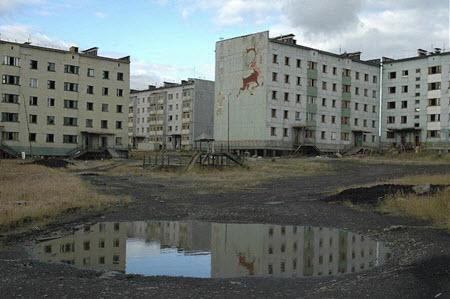
Centralia PA
When the mills left, so did the vitality.
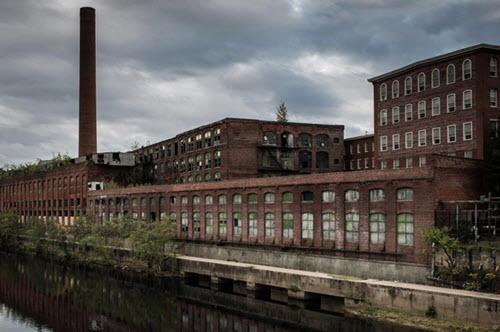
Lowell MA
(Source)
With an energy transition away from fossil fuels, there will be similar examples of ruined economic ideas littering the land. Places where refineries now stand with their thousands of jobs will become rusting derelicts. Ditto for hundreds of other dependent businesses, ranging from Jiffy Lube to Boeing to gas stations to airports.
Which brings us to complicating factor #3: time, scale and cost
Time, Scale and Cost
Suppose for a moment that we did decide This is it!, and began building 3 nuclear plants per day in earnest.
First: how much would that cost? Who would pay for it?
Second: are there enough skilled workers and manufacturing facilities to make and install all of the components?
Third: even after these nuclear plants were all up and running, is there even enough Uranium in the world to fuel the eventual 16,500 new, additional plants?
The answer to each of these questions is some form of “no, that isn’t really possible.”
In the third case, the entire amount of all known Uranium reserves are only currently sufficient to supply the existing ~400 reactors in the world of 90 years.
If we expanded the number of reactors by a factor of 41 (16,500/400), that 90 years of supply shrinks to just a bit over 2 years. Nobody is going to build a nuclear plant with just 2 years of Uranium around to supply it. (that said, I am a fan of researching the use and installation of Thorium reactors, which I’ve explored before)
Similar supply constraints arise if we calculate out the amount of resources required to build the amount of wind towers or solar panels that could replace these nuclear plants. The costs are staggering, the global resources too limited. There aren’t enough new hydro dam sites to even make a dent.
Also complicating things, each of these so-called alternative energy systems requires a huge amount of fossil fuels to mine, manufacture, install and maintain. The world has yet to see a single windmill or solar panel that was mined, manufactured and installed without using fossil energy.
Suppose for a moment that we did decide This is it!, and began building 3 nuclear plants per day in earnest.
First: how much would that cost? Who would pay for it?
Second: are there enough skilled workers and manufacturing facilities to make and install all of the components?
Third: even after these nuclear plants were all up and running, is there even enough Uranium in the world to fuel the eventual 16,500 new, additional plants?
The answer to each of these questions is some form of “no, that isn’t really possible.”
In the third case, the entire amount of all known Uranium reserves are only currently sufficient to supply the existing ~400 reactors in the world of 90 years.
If we expanded the number of reactors by a factor of 41 (16,500/400), that 90 years of supply shrinks to just a bit over 2 years. Nobody is going to build a nuclear plant with just 2 years of Uranium around to supply it. (that said, I am a fan of researching the use and installation of Thorium reactors, which I’ve explored before)
Similar supply constraints arise if we calculate out the amount of resources required to build the amount of wind towers or solar panels that could replace these nuclear plants. The costs are staggering, the global resources too limited. There aren’t enough new hydro dam sites to even make a dent.
Also complicating things, each of these so-called alternative energy systems requires a huge amount of fossil fuels to mine, manufacture, install and maintain. The world has yet to see a single windmill or solar panel that was mined, manufactured and installed without using fossil energy.
The Vision We Need
The answer to the post-fossil fuel era is not an alt-energy system capable of providing us with the same way of life. Because that’s just not feasible.
The answer lies in doing more with less.
We already know how to build structures that will last for hundreds of years and which require almost no energy to operate for heating and cooling. But those are very rarely built today, because they cost more.
We already know how to build small, light vehicles and operate mass transit very energy effectively. But society prefers its huge cars and trucks, because they’re affordable (while debt is cheap) and convenient.
We already know how to grow more food, closer to home, that is far healthier for humans and the ecosystem. But it’s still only done on a boutique basis because it costs a little bit more.
This is why people need to be told the truth and inspired with a vision that we can all share. With a grand cause, anything is possible. Without one, nothing will be done.
The vision we need will align what needs to be done with proper incentives to get those things done. We’ll be told the truth, what is expected, and our role in the project. It will imbue many lives with a sense of meaning and purpose that are currently missing in the lives of most people.
However, given the enormity of the challenge, and the fractured, divisive social and political landscape, you really need to plan for nothing happening. That no vision is coming along, no savior will appear, and that we’re going to merrily continue along until we run out of time and resources to do anything more than regret our mistakes.
Odds are we’re going to keep heading straight along our current trajectory. Until — clunk! — we go right over the edge.
Conclusion
Given the math, human tendencies, and the issues pertaining to time, scale and cost, the current green energy movement currently is little more than hot air. It’s just not going to happen in time.
We’re nowhere close to being able to build out the massive energy projects required. The equivalent of 3 nuclear plants every two days for the next 30 years? That’s a total pipe dream.
We lack the political will, the cultural readiness, the proper narrative. Even the appropriate resources.
Beyond those concerns, nearly everything about how we heat, move, cool and manufacture the components of our modern lives will have to be refashioned (and possibly jettisoned) as part of that project.
Such an ambitious undertaking has no historical analog. It’s a ridiculously complex set of problems (which have solutions) and predicaments (which don’t). It’s exactly the sort of situation that politicians will avoid as long as possible, after which it will be too late to do very much about it.
Which means you need to adjust your expectations and investment of your money and energy, accordingly. The entire world — which is utterly dependent on infinite growth — is only years away from grasping the impossibility of that approach. When it does, everything will change. Quickly.
This is why Peak Prosperity spends so much time and effort alerting people to these realities, and then helping them take informed individual actions that align with the future we all see (or feel) coming.
In Part 2: Reality Shock we examine the most compelling evidence I know of for why taking matters into our own hands is so important now. It explains everything from slowing global economic growth, to the widening wealth gap, to the rising rejection of globalization and the increasingly desperate mad dash (at any cost) for what remains of natural resources.
Humanity is in the early innings of a great transition. Losing access to abundant energy will change things more than you or I can appreciate at this time.
This future is barreling towards us at a furious — and accelerating — pace. Get prepared.
Given the math, human tendencies, and the issues pertaining to time, scale and cost, the current green energy movement currently is little more than hot air. It’s just not going to happen in time.
We’re nowhere close to being able to build out the massive energy projects required. The equivalent of 3 nuclear plants every two days for the next 30 years? That’s a total pipe dream.
We lack the political will, the cultural readiness, the proper narrative. Even the appropriate resources.
Beyond those concerns, nearly everything about how we heat, move, cool and manufacture the components of our modern lives will have to be refashioned (and possibly jettisoned) as part of that project.
Such an ambitious undertaking has no historical analog. It’s a ridiculously complex set of problems (which have solutions) and predicaments (which don’t). It’s exactly the sort of situation that politicians will avoid as long as possible, after which it will be too late to do very much about it.
Which means you need to adjust your expectations and investment of your money and energy, accordingly. The entire world — which is utterly dependent on infinite growth — is only years away from grasping the impossibility of that approach. When it does, everything will change. Quickly.
This is why Peak Prosperity spends so much time and effort alerting people to these realities, and then helping them take informed individual actions that align with the future we all see (or feel) coming.
In Part 2: Reality Shock we examine the most compelling evidence I know of for why taking matters into our own hands is so important now. It explains everything from slowing global economic growth, to the widening wealth gap, to the rising rejection of globalization and the increasingly desperate mad dash (at any cost) for what remains of natural resources.
Humanity is in the early innings of a great transition. Losing access to abundant energy will change things more than you or I can appreciate at this time.
This future is barreling towards us at a furious — and accelerating — pace. Get prepared.


