Showing posts with label food. Show all posts

Thursday, October 31, 2019

Safran Foer: We Are The Weather

We Are the Weather: Saving the Planet Begins at Breakfast. Alex Preston, The Guardian. Oct. 6, 2019.

Warning: Jonathan Safran Foer’s compelling new book is likely to alter your relationship to food for ever…


What would you do to save the world? Not the strapline for a Netflix series, but rather the question that sits behind Jonathan Safran Foer’s second work of nonfiction, We Are the Weather. The answer to the question appears to be “not very much”, given that despite the looming threat of global heating, despite the fact the next generation (and those that follow) will live more precarious lives, with food, water and clean air in ever-shorter supply, despite the fact that the future of our planet appears to be one of flooded cities, scorched forests and sulphurous skies, we continue to behave as if the climate crisis is someone else’s problem. In 2018, despite knowing more about climate change than we have ever known, we produced more greenhouse gases than we have ever produced, at three times the rate of global population growth.

Climate change, therefore, exists as a rhetorical challenge as much as a scientific one. The most pressing question is how to persuade people to act, and to act now, both on an individual basis and, particularly, collectively. Extinction Rebellion provides a blueprint for action, but what about the majority who aren’t about to chain themselves to the headquarters of Shell? One landmark in the rhetorical battle was Al Gore’s 2006 film An Inconvenient Truth, although it may surprise you to learn that Gore’s film, for all its rigour, didn’t mention the single largest contributor to global heating: livestock.

Now Safran Foer, best known for his astonishing magical-realist debut novel Everything Is Illuminated, but also the author of a bestselling 2009 book about factory farming, Eating Animals, has set about remedying that omission. In We Are the Weather, he demonstrates that, rather than being an insurmountable nexus of insoluble problems, there’s one small change that all of us can make that would have a sustained and far-reaching impact on the climate crisis: eating fewer animal products. “We cannot keep the kind of meals we have known and also keep the planet we have known. We must either let some eating habits go or let the planet go. It is as straightforward and as fraught as that.

First, a warning: this is a life-changing book and will alter your relationship to food for ever. I can’t imagine anyone reading Safran Foer’s lucid, heartfelt, deeply compassionate prose and then reaching blithely for a cheeseburger. There’s some dispute as to precisely what proportion of global heating is directly related to the rearing of animals for food, but even the lowest estimates put it on a par with the entire global transportation industry. A well-evidenced 2009 report by the Worldwatch Institute claimed that livestock-related emissions accounted for 51% of all greenhouse gases, “more than all cars, planes, buildings, industry and power plants combined”. Whichever the case, Safran Foer’s thesis is clear and compelling: by making “a collective act to eat differently” (he suggests “no animal products before dinner”) we can turn the tide of the climate crisis.

The book is made up of five sections, each divided into a series of sharp, hard-hitting chapters. Part two, How to Prevent the Greatest Dying, is a bombardment of facts that seeks to overwhelm the reader with evidence. “Humans use 59% of all the land capable of growing crops to grow food for livestock”; “60% of all mammals on Earth are animals raised for food”; “There are approximately 30 farmed animals for every human on the planet”; “In 2018, more than 99% of the animals eaten in America were raised on factory farms”; “Animal agriculture is responsible for 91% of Amazon deforestation”; “If cows were a country, they would rank third in greenhouse gas emissions, after China and the United States.”

These facts, though, are part of the problem, rather than the solution. The point is, we know this stuff, we just don’t believe it. And so the rest of the book is dedicated to persuading us that it is our duty to act, just as, Safran Foer suggests, it was the duty of Jewish leaders in the US to act when Jan Karski, a member of the Polish underground, came to them in June 1943 with news of the murder and persecution of Jews in Europe. The Jewish leaders, and particularly the supreme court justice Felix Frankfurter, didn’t act. “I am unable to believe what you told me,” Frankfurter told Karski. History now judges Frankfurter as it will judge us.

The final chapter is structured as a letter from Safran Foer to his children. The author’s grandmother, who herself fled Poland just before it was too late to do so, has just died. Most of her family were killed in the Holocaust and Safran Foer powerfully interweaves her story of action with his own history of inaction in the face of global warming. Reversing climate change, he says, “requires an entirely different kind of heroism”. This heroism is “perhaps every bit as difficult” as the sacrifice his grandmother made “because the need for sacrifice is unobvious”. That sacrifice begins, as the book’s subtitle suggests, at breakfast.


Things Are Bleak! Kate Aronoff, The Nation. Oct. 29, 2019.

Jonathan Safran Foer’s quest for planetary salvation.

Foer does not propose that an accumulation of individual lifestyle choices will in and of itself solve the problem, which requires (by his admission) large-scale government action. He doesn’t pretend he has One Quick Trick to Save the Planet. But he contends that change cannot come without an accumulation of individual lifestyle choices: Be the emission reductions you want to see in the world. “Humankind takes leaps,” he writes, “when individuals take steps,” noting also that “of course it’s true that one person deciding to eat a plant-based diet will not change the world, but of course it’s true that the sum of millions of such decisions will.” Like so many well-intentioned liberals, Foer individuates a collective problem. Planetary salvation is possible only if we each, on our own, begin to become better people—and better eaters.

...

What’s so unsettling and even tragic about Foer’s book is that his moralizing is illustrative of a broader self-flagellating despair among many liberals who are troubled by the ominous climate forecasts but who have absorbed right-wing nostrums that it’s a problem of our shared making.

When it comes to Foer’s specific remedies for climate change, it is worth noting that there are compelling ethical and scientific cases to be made for constraining meat, dairy, and egg consumption—many of which Foer presents in Eating Animals.

...

For many reasons, we should all eat fewer animal products. Yet Foer never makes it entirely clear how giving up yogurt and BLTs will lead to any significant change in the atmospheric temperature in the short time frame that the Intergovernmental Panel on Climate Change has given us to mitigate climate catastrophe. The high-​consumption lifestyles of those lucky enough to have them are conditioned by much larger forces, from the agribusiness companies that lobby to maintain a broken food system to the fossil fuel executives who have funded disinformation campaigns to spread doubt about the reality of climate change. Driving to work in a gas-guzzling vehicle isn’t a choice so much as a necessity for people living in places where austerity has deprived them of functional public transit and for whom 30-plus years of wage stagnation has put Priuses and Teslas out of reach. A less meat-intensive diet may well be easier and cheaper than we make it out to be, but without systemic changes to erode the power of industrial agricultural—to better value the work of farmers and make healthy food accessible to all—it won’t be worth much to the planet.

...

And therein lies the problem. For Foer, climate change is first and foremost an issue of personal morality, not corporate power. 

...

“We” are not all the deniers that Foer makes us out to be. As even Bittman, who has long promoted the benefits of a mainly vegan diet, has noted, decades of writing and advocacy urging people to make more climate-friendly consumer choices hasn’t led to a meaningful decrease in emissions. That’s not likely to change based on a Jonathan Safran Foer book. Our best hope in the face of enormous odds is collective action of a different sort than he prescribes, pioneered by those listed above. As with the New Deal and even the mobilization for World War II, any adequate solution to the climate crisis will emerge from a head-on confrontation with those blocking progress and the kind of ambitious public policy that will allow countries and people to transform their consumption in the ways Foer advocates. In fighting the New Deal order, early neoliberals understood that changing public consciousness wasn’t a matter of having enough conversations about Hayek around the dinner table. It was about taking power.

If the world does manage to steer away from catastrophe, the credit will be owed to a critical mass of social movements, unions, and the elected officials accountable to them, working to take power back. No angst-filled breakfast or lunch can do the same.


see also:
Is Eating Meat Worse Than Burning Oil? Charles Kennedy, oilprice.com. Oct. 22, 2019.
Bad news for meat worshipers. Eating healthy isn't just good for your body--it’s good for the environment, too, according to a series of new studies, suggesting that only vegetarians can save the planet.  
The fight against climate change is already polarizing enough without adding the meat-plant divide.  
But new studies insist that what we eat has quite a lot to do with climate change. It’s not just about food security or species extinction, either.  
Today’s food supply chain creates around 13.7 billion metric tons of carbon dioxide equivalents and 26 percent of anthropogenic greenhouse gas (GHG) emissions.  
A further 2.8 billion metric tons of carbon dioxide equivalents (5 percent) are caused by nonfood agriculture and other drivers of deforestation.  
A study from 2017 found that if citizens in 28 high-income nations like the United States, Germany, and Japan actually followed the dietary recommendations of their respective governments, greenhouse gases related to the production of the food they eat would fall by 13 percent to 25 percent. But giving up meat is hard to do. ....


related video exposes here:

Mercy For Animals


also worth reading:


Sunday, October 27, 2019

Climate Links - Oct. 2019 #2

‘We really need to wake up quickly’: Al Gore warns of a looming food crisis caused by climate change. Amanda Little, WashPo. Oct. 22, 2019.
Some 40 panelists, most of them farmers and scientists, took the stage to discuss topics from healthy soil to carbon sequestration, but the main event was Gore's slide show, delivered with his characteristic mix of bravado and humility, detailing the impacts of climate change on food systems worldwide. 
"This is in Georgia; a heat wave cooked these apples before they could be harvested," he said, issuing forth rapid-fire examples alongside bone-chilling images and video. "This is the Australia wine region that's going to be untenable. . . . Rice yields in 80 percent of Japan have declined due to the rising temperatures. . . . In nearby Murfreesboro, Tenn., we'll see a quarter decline in soybean yields within the next 30 years." 
Gore spent the better part of 90 minutes detailing the pressures of drought, heat, flooding, superstorms, "rain bombs," invasive insects, fungi and bacterial blight on food producers. "We may be approaching a threshold beyond which the agriculture that we've always known cannot support human civilization as we know it," he declared in a low growl. "That's something we need to avoid." 
Alice Waters, who Gore said catalyzed his interest in food and who had volunteered to cook the vegetarian lunches served to attendees (using local, seasonal and organic ingredients, natch), said the presentation was bittersweet: "I am deeply depressed. But on the other hand, the solution seems so, so unbelievably transformational. . . . We can restore the health of the planet while also restoring the health of people and communities." 
Naomi Starkman, editor-in-chief of ­Civil Eats, which covers news on sustainable agriculture, was similarly fraught: "Gore spoke with such devastating and fierce clarity, connecting the dots between the ways agriculture is implicated in and impacted by the climate crisis. But it also felt like a hopeful moment wherein agriculture, and farmers in particular, are taking a front-and-central place in solving one of the most urgent issues of our time." 
Mark Bittman, the former New York Times food columnist, was more circumspect: "There are ways in which the conversation here isn't quite realistic. Regenerative agriculture is not about increased yield, it's about producing more of the right food in the right ways. ... But kudos to Al Gore for taking it on. There's no more important conversation to have."


Extinction Rebellion and the Birth of a New Climate Politics. David Wallace-Wells, NYMag. Oct. 15, 2019.

Not that long ago, you could count on the world’s Establishment institutions to give you a comforting if mistaken assessment of the risk of climate change. You could choose to see those demanding radical action to take hold of global warming as, by definition, extremists. And you could be reassured by the fact that none of the planet’s most powerful “responsible” parties were really freaking out much about the state of the crisis. 
Somewhat all of a sudden, that is no longer the case. Very much no longer the case. 
... 
One striking feature of these movements is that, unlike even recent bursts of environmental activism, their rhetoric is, with few exceptions, not out of line with the chorus of scientific consensus, which grows increasingly panicked by the day. A report published by the IMF this month summarizes that new consensus this way:  “There is growing agreement between economists and scientists that the tail risks are material and the risk of catastrophic and irreversible disaster is rising, implying potentially infinite costs of unmitigated climate change, including, in the extreme, human extinction.” This is the IMF, for Christ’s sake. 
When alarmist rhetoric and Establishment wisdom have collapsed into each other, what role is there for protest? It may be less about shifting the Overton window and more about simply insisting that those in power operate as though they believe what they say, rather than retreat into an already-familiar climate hypocrisy (declaring a climate emergency and then immediately approving a new oil pipeline, as Justin Trudeau, for instance, has done).


We Broke the World. Roy Scranton. The Baffler. Sept 2019.
Facing the fact of extinction. 
... 
It should be pointed out that neither the IPBES nor mainstream science supports the conclusion that we face near-term human extinction as a result of ecological collapse or global warming. The business-as-usual scenarios established by the IPBES and IPCC predict a hellish and chaotic future that will with high probability destabilize modern human civilization and likely lead to immense human suffering and death. Significant uncertainty surrounds even these scenarios, however, since contemporary scientists don’t have a good idea of what happens on short time scales with shocks to the global ecosystem as powerful as those we have triggered. Observed changes regularly exceed those predicted by current models: for instance, a recent study reported Arctic permafrost melting “exceeding modeled future thaw depths for 2090 under IPCC RCP 4.5,” that is, seventy years earlier than expected. 
The paleoclimate record can show us what happens in general when the global climate and environment undergoes abrupt transformation, which is often mass extinction, but the record lacks the precision to tell us exactly how abrupt. As geologist Marcia Bjornerud writes in her book Timefulness, discussing the Paleocene-Eocene Thermal Maximum (PETM), a period when the earth was up to 8 degrees Celsius warmer than today and which provides the nearest geological analogue to the climate we might eventually expect from global warming: “The sedimentary record of the PETM, with a resolution no better than a few millennia, does not allow us to distinguish between an essentially instantaneous release of carbon from a belching ocean and a longer-term (1,000-year) combustion of coal or peat.” Looking at observed changes in the earth’s geological record gives us only a fuzzy picture of how and how fast the earth’s biosphere and climate undergo rapid transformation. Climatic and geological changes like those which caused the End-Permian extinction, to take another example, including the release of enormous amounts of CO2 into the atmosphere, could have taken thousands of years, or they could have happened much more quickly, perhaps over centuries or even decades. The End-Permian saw up to 96 percent of marine life and up to 70 percent of terrestrial life on earth wiped out. It is thus conceivable that devastating the biosphere as we have and dumping as much carbon into the atmosphere as we have could initiate strong enough positive feedbacks to rapidly heat the earth beyond the point where it could sustain human life within a century or two, but the science is not yet telling us that we’re all going to die from climate change in the near term. 


U.S. Military Could Collapse Within 20 Years Due to Climate Change, Report Commissioned By Pentagon Says. Nafeez Ahmed, vice.com. Oct. 24, 2019.
The report says a combination of global starvation, war, disease, drought, and a fragile power grid could have cascading, devastating effects. 
According to a new U.S. Army report, Americans could face a horrifically grim future from climate change involving blackouts, disease, thirst, starvation and war. The study found that the US military itself might also collapse. This could all happen over the next two decades, the report notes. 
The senior US government officials who wrote the report are from several key agencies including the Army, Defense Intelligence Agency, and NASA. The study called on the Pentagon to urgently prepare for the possibility that domestic power, water, and food systems might collapse due to the impacts of climate change as we near mid-century.
...  
The report paints a frightening portrait of a country falling apart over the next 20 years due to the impacts of climate change on “natural systems such as oceans, lakes, rivers, ground water, reefs, and forests.” 
Current infrastructure in the US, the report says, is woefully underprepared: “Most of the critical infrastructures identified by the Department of Homeland Security are not built to withstand these altered conditions.” 
Some 80 percent of US agricultural exports and 78 percent of imports are water-borne. This means that episodes of flooding due to climate change could leave lasting damage to shipping infrastructure, posing “a major threat to US lives and communities, the US economy and global food security,” the report notes. 
At particular risk is the US national power grid, which could shut down due to “the stressors of a changing climate,” especially changing rainfall levels.
... 
The US Army report shows that California’s power outage could be a taste of things to come, laying out a truly dystopian scenario of what would happen if the national power grid was brought down by climate change. One particularly harrowing paragraph lists off the consequences bluntly:
“If the power grid infrastructure were to collapse, the United States would experience significant:
  • Loss of perishable foods and medications
  • Loss of water and wastewater distribution systems
  • Loss of heating/air conditioning and electrical lighting systems
  • Loss of computer, telephone, and communications systems (including airline flights, satellite networks and GPS services)
  • Loss of public transportation systems
  • Loss of fuel distribution systems and fuel pipelines
  • Loss of all electrical systems that do not have back-up power”

full report here:
Implications of Climate Change for the U.S. Army. United States Army War College.

Saturday, October 26, 2019

Mercy for Animals

13 Undercover Investigations Scarier Than a Horror Film. Mercy for Animals.


October is the month to enjoy horror movies, go through haunted corn mazes, and get chills reading about ghost encounters. While these make for some fun times, you can always remind yourself that they are not real. For farmed animals, however, blood, guts, and fear are the horrific reality every single day. Mercy For Animals’ brave undercover investigators and whistleblowers have conducted more than 60 investigations and exposés inside factory farms and slaughterhouses to expose the public to the truth.

Here are 13 MFA investigations and exposés that are scarier than any horror film you could watch.


1. Lilydale
Footage obtained by MFA found workers at several Lilydale chicken suppliers ripping off the heads and legs of live chickens; violently jamming birds into overcrowded transport crates; running over live birds with forklifts; and hitting, kicking, and throwing chickens.


2. McDonald’s Chicken McNuggets
The 2015 investigation at a McDonald’s chicken supplier exposed horrific cruelty to animals, including birds beaten, crowded in filthy sheds, stabbed to death with nails attached to makeshift clubs, and left to suffer and slowly die without proper veterinary care.


3. Andrus Farms
At Andrus Farms, a supplier to one of the largest cheese producers in the world, the investigator documented workers viciously beating, stabbing, and dragging sick and injured cows.


4. Leprino Foods Supplier
This investigation at Winchester Dairy, a supplier to major pizza cheese producer Leprino Foods, caught workers viciously kicking and punching cows, stabbing cows with screwdrivers, and violently whipping them with metal chains and wires.


5. Walmart Supplier
A 2013 undercover investigation exposed routine and sadistic animal abuse at a Tyson factory farm that supplied pork to Walmart. An investigator documented workers kicking, punching, and throwing pigs. Workers also gouged the eyes of mother pigs.


6. Catfish Corner
A startling glimpse into a fish slaughter facility in Mesquite, Texas, found fish suffocated, skinned, and dismembered while conscious and able to feel pain.


7. E6 Cattle Co.
This heartbreaking undercover investigation found workers bludgeoning calves’ heads with pickaxes and hammers (often five or six times before rendering the animals unconscious), beaten calves—still alive and conscious—thrown onto piles of dead animals, and workers kicking downed calves in the head and standing on their necks and ribs.


8. Butterball
In 2014 an MFA undercover investigator captured video footage of baby turkeys routinely mutilated without painkillers; ground up alive in macerating machines; and carelessly thrown, dropped, and mishandled.


9. Tyson Foods
Workers for Tyson Foods, a major chicken supplier to McDonald’s, KFC, Chick-fil-A, and more, were documented punching, throwing, and beating birds. The undercover investigation also found birds having their heads ripped off while still alive.


10. Mexico’s Government-Owned Slaughterhouses
An MFA investigation at government-owned slaughterhouses in Mexico documented egregious animal abuse, including terrified animals hooked in the mouth, stabbed in the neck, and bludgeoned to death with metal pipes—all while they were still conscious and able to feel pain.


11. Lilydale Turkey Supplier
The disturbing hidden-camera video revealed birds painfully shackled upside down, shocked with electricity, cut open while still conscious, and scalded to death in hot water tanks at a turkey slaughterhouse owned by Lilydale—one of the largest poultry producers in Canada.


12. Bettencourt Dairies
MFA’s investigation into Bettencourt Dairies, a major cheese supplier in Idaho, led to criminal animal cruelty charges for three workers, including the manager of the dairy. Hidden cameras captured workers—including management—viciously beating and shocking cows and violently twisting their tails to deliberately inflict pain; workers and management repeatedly shocking a downed cow and then dragging her by the neck using a chain attached to a tractor; extremely unsafe and unsanitary conditions, including feces-covered floors that caused cows to regularly slip, fall, and injure themselves; and sick or injured cows suffering from open wounds, broken bones, and infected udders left to suffer without veterinary care.


13. Maple Lodge Farms

Shocking hidden-camera footage recorded by an MFA whistleblower at a hatchery owned by Maple Lodge Farms exposed baby chicks ground up alive, roughly dropped onto machines, viciously killed by having their necks smashed against metal edges of factory equipment, and dumped into baskets and left to suffer for hours before death.

So while we may be enjoying tricks and scares, for animals at factory farms, the horror and the gore are real.
To help stop this nightmare from continuing, support our work and become an Investigator Ally today.

And remember: Leaving animals off your plate is the best thing you can do to end the atrocities animals face. Try a compassionate vegan lifestyle.


Tuesday, January 29, 2019

Topics: Agriculture, Factory Farming, Food, Meat, Vegetarianism

You wont believe what goes on at these farms. Lee Camp, redacted tonight.


Farm to Fridge.


Beef-eating 'must fall drastically' as world population grows. Damian Carrington, Guardian. Dec. 5, 2018.
Current food habits will lead to destruction of all forests and catastrophic climate change by 2050, report finds

Creating a Sustainable Food Future. World Resources Institute.
By 2050, nearly 10 billion people will live on the planet. Can we produce enough food sustainably? 
The synthesis report of the World Resources Report: Creating a Sustainable Food Future shows that it is possible – but there is no silver bullet. This report offers a five-course menu of solutions to ensure we can feed everyone without increasing emissions, fueling deforestation or exacerbating poverty. Intensive research and modeling examining the nexus of the food system, economic development, and the environment show why each of the 22 items on the menu is important and quantifies how far each solution can get us. 
Creating a Sustainable Food Future has been produced by World Resources Institute in partnership with the World Bank, UN Environment, UN Development Programme, and the French agricultural research agencies CIRAD and INRA.


The way we eat is killing us – and the planetFelicity Lawrence, Guardian. Jan. 28, 2019.
The global food system is causing an ecological and health catastrophe – individual action won’t be enough.

The distinguished medical journal The Lancet has issued not one but two apocalyptic warnings about our food in under a month. One of its special commissions reported earlier this month that civilisation itself was at risk from the effects of the current food system on both human health and the Earth’s ecosystems. 
This week comes the next instalment from another special Lancet commission which finds that pandemics of obesity and malnutrition are interacting with climate change in a feedback loop and represent an existential threat to humans and the planet. The modern western diet has become a highly damaging thing that needs a complete overhaul if we are to avoid potential ecological catastrophe. It concluded that we need to halve global meat consumption, and more than double the volume of whole grains, pulses, nuts, fruit and vegetables we eat. 
Cue howls of indignation from big food and its cheerleaders, the libertarian right. Those nanny statists have gone nuts eating their own double dose of nuts! Cue cries of distress from champions of local, low-impact agriculture who include grass-fed animals, and their meat and manure, in their sustainable mix. These self-appointed experts don’t understand farming! Cue grim food wheels with only a quarter of a rasher of bacon or a fifth of an egg a day. Those miserabilist medics want us all to go vegan!
Yet the evidence that our diets are the largest cause of climate change and biodiversity loss is now overwhelming. The global food system is responsible for up to 30% of total greenhouse gas emissions, the livestock sector on its own accounting for about half of that total or 14.5%. The modern western way of eating is also making very large numbers of people fat and sick as other parts of the world adopt it. Diet-related diseases now cause roughly 11 million deaths a year as preventable cancers, heart disease and strokes, obesity and diabetes have spread along with our way of eating. More than 800 million people are estimated to be chronically undernourished, and 2 billion suffer from micronutrient deficiencies, yet at the same time 2 billion are overweight or obese. In poorer counties you can even find obesity and stunting within the same family as calorie-heavy but nutrient-light processed industrialised foods are adopted. 
In other words, something has gone horribly wrong and we don’t have much time to fix it.


European farms could grow green and still be able to feed population. Rebecca Smithers, Guardian. Feb. 20, 2019.
Research shows loss in yields could be offset by reorienting diets away from grain-fed meat


Can We End Animal Farming Forever? Nathan J. Robinson, Current Affairs. Nov. 12, 2018.
A new book says we should stop killing animals altogether... and that it's possible.

Here is a bit of bad news: Humanity is committing an ongoing moral atrocity at an almost unthinkable scale.
 
There is, however, also some good news: We might be able to end it more easily than people assume. 
The moral problem with our current practice of killing and eating of animals is very clear. Non-human animals are quite obviously sentient and feel fear, pain, and sorrow. Most of us know this, which is why we object to animal cruelty when it’s perpetrated against puppies or kittens. But off in places we keep out of sight, billions of animals are being constantly subjected to unimaginable cruelty. Baby chicks are thrown away by the thousand to suffocate, animals are raised in crowded darkness, their entire lives consisting of never-ending stress and pain. This only begins to touch on the horrors
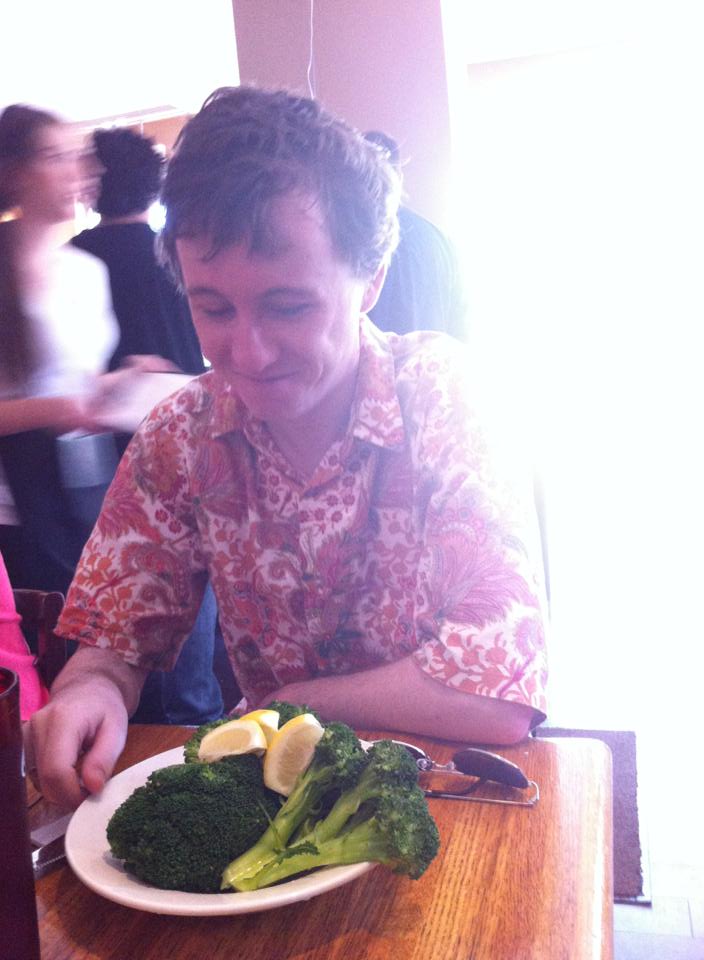
Even though many people are queasy about industrial farming, most of us do not make it one of our main causes. People think that human issues are more important, but they are also simply overwhelmed by the scale of the problem. Meat is such a core part of the average diet (only a tiny fraction of people are vegetarian), and there are so many people on earth, that it’s unclear how you could possibly eliminate, or even substantially reduce, animal suffering. You could convince people one by one to go vegan, since if everyone was a vegan there would be no problem. But as a practical matter, that seems unlikely to work: It’s good to create new vegans where possible, but knowing about the problem does not turn people vegan. (I am not a vegan myself, though I have been a vegetarian for 10 years. I have had to eat a lot of shitty food, and pass up a lot of delicious food, in order to keep it up. Once, when I went to a steak restaurant with some friends and asked for something vegetarian, I was brought nothing but an entire plate of almost-raw broccoli, stalks and all. Here I am looking at it. Many chefs hate vegetarians.) In the absence of a sudden mass conversion to a fruit and nut diet, are we stuck with this problem forever? 
In his new book The End of Animal Farming, Jacy Reese argues that we are not. Reese believes that with considerable effort, we can end animal farming altogether within 100 years, and that when we do, our era will come to seem as morally backward as the distant past now seems to us today.


How Can You Talk to Kids About Factory Farming? These Books Can Help. Reynard Loki, Truthout. Oct. 28, 2018.
Many children play with toys that evoke the bucolic life on a farm. And many will likely visit a small local farm, where animals have space and access to sunlight and the outdoors. But most kids are probably not aware that, for the vast majority of farmed animals, life is anything but happy.

Consider the life of a chicken trapped on a factory farm. If she is one of the 9 billion chickens who suffer and die on US factory farms for their meat, she is committed to a life of unending misery, fed an unnatural diet to spur abnormally rapid and painful growth. Perhaps she is one of the 26 to 30 percent of chickens raised for their meat who can’t even walk normally because their skeletons are not able to support their rapidly growing bodies. She will live an average of just 42 days. If she is one of more than 300 million chickens raised in factory farms every year for their eggs, most of her beak was cut off with a scalding hot blade when she was just hours or days old. As a hen, she lives her entire life in a tiny wire “battery” cage, with up to 10 other hens. She may be sick or injured, but she will receive no medical care. She is forced to live alongside dead and dying cagemates. After about two years of this unimaginable suffering, she is considered “spent,” and sent to a slaughterhouse. After her brief life, she must endure a terrible death as she is stunned in an electrified water bath before her throat is slit. (There is no law requiring chickens to be rendered unconscious before slaughter.)

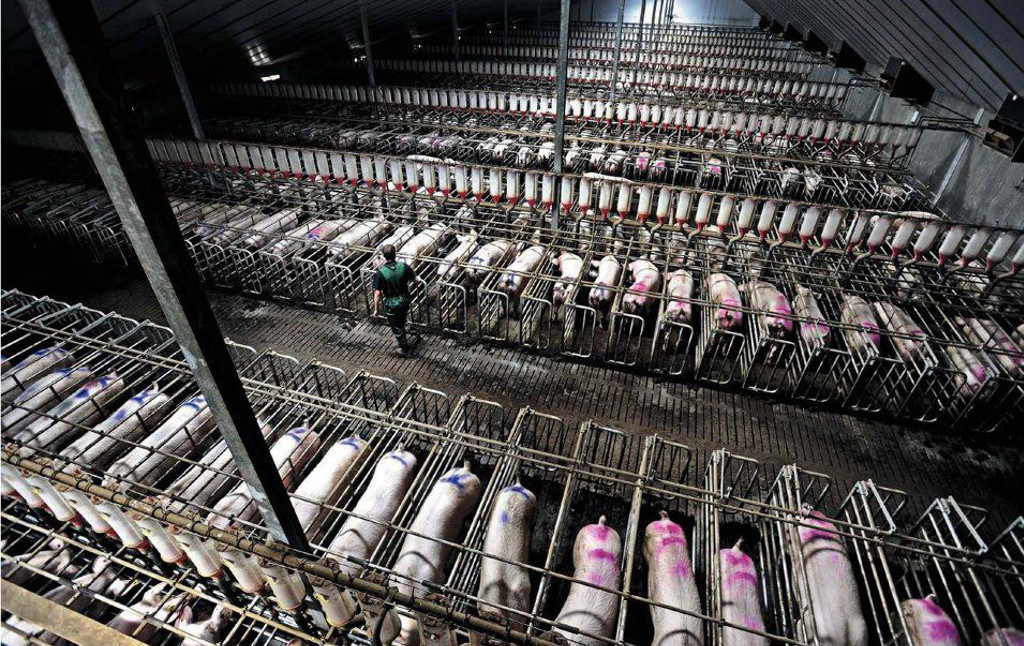
Consider also the life of a mother pig trapped on a factory farm, where she is confined to a gestation crate barely larger than her own body. She is unable to turn around or even lie down comfortably for almost her entire life. Once she gives birth, she is impregnated again, in a cruel cycle that goes on for up to four years before she is killed for her meat. Her piglets are ripped from her when they are just 10 days old, and their tails cut off and their teeth clipped. Her sons have their testicles ripped out without any anesthesia or painkillers.

These are the brutal realities for millions of animals trapped on factory farms. ...
... 
Q: What would you tell parents who want to avoid purchasing meat produced in factory farms, or parents who are considering switching their families’ diets to more plant-based eating? 
A: I’d tell them they are helping not only the planet but themselves and their children by encouraging them to eat more fruits, vegetables and grains. Factory farming heats up our planet, pollutes waterways and air, and eats up land used to grow the grain that feeds livestock — and lots of water too. It also hurts the people who live near and work at [the farms]. Even if a family isn’t vegetarian or vegan, just reducing the amount of meat and dairy we eat can make a difference, and there are so many good plant-based options these days, with many more coming to market every week.


Investigation Exposes Animal Abuse at US Supplier to World’s Largest Meat Company. Reynard Loki, Truthout. Sep. 8, 2018.
“From the day pigs are born until the day they are violently killed for JBS pork, their lives are filled with misery and deprivation,” said Matt Rice, president of MFA, in a press statement. “If JBS executives abused even one dog or cat the way their suppliers abuse millions of pigs, they would be jailed for cruelty to animals."

Death by Fertilizer. Nathanael Johnson, Grist. Oct. 2, 2018.
This breakthrough solution created a crisis as large as the one it solved. Since Haber’s discovery, humans have nearly doubled Earth’s natural flow of fixed nitrogen, overwhelming the capacity of ecosystems to remove it. The resulting buildup is poisoning the planet’s waterways, creating a crisis some consider even more threatening than the buildup of carbon dioxide in the atmosphere.

Time to Drive Factory-Farmed Food Off the Market. Ronnie Cummins & Martha Rosenberg, Organic Consumers Association. Truthout. Sep. 12, 2016.
Factory farming is a trillion-dollar industry that has a devastating impact on food quality, human health, animal welfare, farmworkers, rural communities, water quality, air pollution, biodiversity, and greenhouse gas emissions. Globally, two-thirds of all farm animals are now confined on factory farms. In the US the figure is even higher — 90-95 percent.

The overwhelming majority of US and global farmland today is used either to raise animals before they are sent to the CAFO feedlots, or to grow the GMO and chemical intensive crops such as alfalfa, canola, corn, cotton, soybeans and sugar beets.

The US factory farm meat, dairy and poultry industry is an out-of-control system based on cruel, filthy, disease-ridden and environmentally destructive animal prisons; GMO-and pesticide-tainted feeds; labor exploitation; false advertising; corporate corruption of government; and the use of massive amounts of dangerous pesticides, chemical fertilizers, antibiotics, hormones and growth promoters.

Factory-farm meat, dairy, poultry and fish are the number one cause of water pollution, soil degradation, greenhouse gas emissions diseases such as cancer, heart disease, diabetes, reproductive defects, hormone disruption and obesity.


More weight on less meat. Mark Bittman, NYT. July 18, 2011.

Meat eater's guide to climate change and health. Environmental Working Group.


Plant-Based Diets Can Help Us Reach The 2 Degree Threshold. Carolyn Fortuna, Clean Technica. Oct. 5, 2018.
A report from researchers Poore and Nemecek at the University of Oxford points to one significant solution to meet the 2 degree threshold — avoiding meat and dairy products. They say that this is the single biggest way to reduce our environmental impact on the planet. Meat and dairy provide just 18% of calories and 37% of protein, yet they use the vast majority – 83% – of farmland and produce 60% of agriculture’s GHG emissions. The report indicates that, without meat and dairy consumption, global farmland use could be reduced by more than 75%.
... 
“A vegan diet is probably the single biggest way to reduce your impact on planet Earth, not just greenhouse gases, but global acidification, eutrophication, land use and water use,” Joseph Poore, who led the research, said in an interview with The Guardian. “It is far bigger than cutting down on your flights or buying an electric car,” he said, as these only cut greenhouse gas emissions. “Agriculture is a sector that spans all the multitude of environmental problems. Really it is animal products that are responsible for so much of this. Avoiding consumption of animal products delivers far better environmental benefits than trying to purchase sustainable meat and dairy.”


Slaughter Age vs. Natural Life Span. Colleen Patrick Goudreau. Apr. 11, 2012.

Though we kill over 10 billion land animals every year to please our palates, we too often try to absolve ourselves by making what we want to believe are guilt-free choices, failing to recognize the paradox of “humane slaughter” and never really knowing what the whole experience is for an animal from cradle (domestication) to grave (our bodies).

Though modern animal factories look nothing like what is idealized in children’s books and advertisements, there are also many misconceptions about the practices and principles of a “humane” operation. When we think about it for just a moment, the idea of breeding animals only to kill them is absurd at best, and people are often surprised to learn that most of the animals sent to slaughter are just babies, whether they are raised conventionally or in operations that are labeled “humane,” “sustainable,” “natural,” “free-range,” “cage-free,” “heritage-bred,” “grass-fed” or “organic.”

Slaughter Age vs. Natural Life Span

Pigs: Slaughtered at 6 months young; Natural life span: 6 to 10 years

Chickens: Slaughtered at 6 weeks young; Natural life span: 5 to 8 years for those birds bred as "egg layers" such as Rhode Island Reds; 1 to 4 years for factory layer breeds such as leghorns; and 1 to 3 years for "meat" breeds.

Turkeys: Slaughtered at 5 to 6 months young; Natural life span: 2 to 6 years

Ducks/Geese: Slaughtered at 7 to 8 weeks young; Natural life span: domestic ducks: 6 to 8 years; geese from 8 to 15 years.

Cattle: “Beef” cattle slaughtered at 18 months young; dairy cows slaughtered at 4 to 5 years young; Natural life span: 18 to 25+ years

Veal Calves: Slaughtered at 16 weeks young; Natural life span: 18 to 25+ years

Goats: Slaughtered at 3 to 5 months young; Natural life span: 12 to 14 years

Rabbits: Slaughtered at 10 to 12 weeks young; Natural life span: 8 to 12+ years

Lambs: Slaughtered at 6 to 8 weeks young for “young lamb” and under 1 year for all other; Natural life span: 12 to 14 years

Horses/Donkeys: Slaughter age varies; Natural life span: 30 to 40 years 

When we tell ourselves we’re eating meat from “humanely raised animals,” we tend to refer to the conditions under which animals are raised—not killed. The slaughtering of an animal is a bloody and unpleasant act, and death does not come easy for those who want to live – whether done on a backyard farm or in a chaotic slaughterhouse where desensitized, stressed-out workers often commit unthinkable acts of cruelty – simply because they can. And this end is the same for all animals, whether they’re used for their flesh, milk, or eggs. Dairy cows and egg-laying hens are ultimately slaughtered for meat when the profits to be gained from their flesh outweigh the cost of keeping them alive.

In my opinion, the movement toward “humanely raised food animals” simply assuages our guilt more than it reduces animal suffering. If we truly want our actions to reflect the compassion for animals we say we have, then the answer is very simple. We can stop eating them.


The lives of beef cattle and dairy cows. Animal Defenders International. December 2018


Cattle are farmed either to produce milk or to produce meat but the two industries are intrinsically linked.

Cows reared for beef

In the UK, some beef cattle spend their time between living indoors in sheds during the winter months and outside for the rest of the year, others are reared indoors in intensive systems year-round. While calves in less intensive systems may stay with their mother until they are weaned, others are taken from their mothers as soon as 12 hours after their birth and are raised in pens on milk replacements and pellet feed. Within the first weeks of life male calves are castrated and have the buds of their horns burned off with no anaesthetic.
Outdoor reared cows feed on pastures before slaughter whilst others are transported to ‘fattening sheds’ and fed high-bulk cereals. The conditions in the fattening sheds are barren and crowded and may or may not have straw covering the slatted concrete floors; the cows often find it difficult to stand and may become lame as a result. They are sent for slaughter at approximately 10-12 months of age. Sometimes transported great distances, this adds to the stress they must endure, and the spread of disease. Once arriving at the slaughterhouse, the cattle are stunned (often ineffectively) using a captive bolt pistol before being shackled upside down by the leg and having their throat slit.

Cows reared for dairy

In the UK, dairy cows are most commonly kept in pastures during the summer months and indoors in the winter. However, the practice of keeping cows indoors all year round, known as zero-grazing, is becoming more prevalent. Cows naturally produce milk for their own babies after giving birth, but dairy cows are subjected to the same cruelty as in other intensive farming systems to constantly supply humans with milk. Maximum production is paramount to farmers and cows are bred to produce between 20 and 50 litres of milk each day; around ten times the amount her calf would suckle.

Calves are usually taken from their mothers within the first two days of birth, breaking the strong maternal bond and causing suffering, anxiety and depression for both mother and baby. Under natural circumstances, a calf would suckle between six months and a year. Cows are impregnated again approximately 60 days after giving birth to continue the cycle of milk production.

Despite being able to live up to twenty years of age, dairy cow milk production reduces after the first two or three years, and so they are sent to slaughter, usually at around 6 years of age. Their meat often ends up in low-grade burgers or pet foods.

Female infants taken from their mothers may also become dairy cows, going through the same process of impregnation and losing several babies, as their mother did. Male infants may be killed as soon as they are removed from the mother or grown for ‘low quality’ meat. Male or female calves could also be sold and reared as veal.

Action

You can help cows reared for meat and dairy by adopting a plant-based, vegan diet.


Options for keeping the food system within environmental limits. Marco Springmann et al, Nature. Oct. 10, 2018.
Abstract
The food system is a major driver of climate change, changes in land use, depletion of freshwater resources, and pollution of aquatic and terrestrial ecosystems through excessive nitrogen and phosphorus inputs. Here we show that between 2010 and 2050, as a result of expected changes in population and income levels, the environmental effects of the food system could increase by 50–90% in the absence of technological changes and dedicated mitigation measures, reaching levels that are beyond the planetary boundaries that define a safe operating space for humanity. We analyse several options for reducing the environmental effects of the food system, including dietary changes towards healthier, more plant-based diets, improvements in technologies and management, and reductions in food loss and waste. We find that no single measure is enough to keep these effects within all planetary boundaries simultaneously, and that a synergistic combination of measures will be needed to sufficiently mitigate the projected increase in environmental pressures.


Mighty Meat Proposes A World Where Meat Alternatives Are Better For You & The Environment. Kyle Field, CleanTechnica. Oct. 12, 2018.
Digging into the ingredients for Mighty Meat’s products will reveal that the core ingredients are a few types of legumes and mushrooms. From a protein standpoint, it is comparable with chicken and ranks positively on every single nutritional marker against any meat.

The Best Vegetarian and Vegan Meat Substitutes to Try. Jolinda Hackett, The Spruce Eats. May 31, 2018.


An electrifying idea. George Monbiot. Nov. 6, 2018.
The most important environmental action we can take is to reduce the area of land and sea used by farming and fishing. This means, above all, switching to a plant-based diet: research published in the journal Science shows that cutting out animal products would reduce the global requirement for farmland by 76%. It would also give us a fair chance of feeding the world. Grazing is no answer to the ecocide caused by grain-fed livestock: it is an astonishingly wasteful use of vast tracts of land that would otherwise support wildlife and wild ecosystems. 
The same action is essential to prevent climate breakdown. Because governments, bowing to the demands of capital, have left it so late, it is almost impossible to see how we can stop more than 1.5° of global warming without drawing carbon dioxide out of the atmosphere. The only way of doing it that has been demonstrated at scale is to allow trees to return to deforested land
But could we go beyond even a plant-based diet? Could we go beyond agriculture itself? What if, instead of producing food from soil, we were to produce it from air? What if, instead of basing our nutrition on photosynthesis, we were to use electricity, to fuel a process whose conversion of sunlight into food is ten times more efficient? 
This sounds like science fiction, but it is already approaching commercialization

...

We have allowed a mythical aesthetic to blind us to the ugly realities of industrial agriculture. Instilled with an image of farming that begins in infancy, as about half the books for very small children involve a rosy-cheeked farmer with one cow, one horse, one pig and one chicken, living in bucolic harmony, we fail to see the amazing cruelty of large-scale animal farming, the blood and gore, filth and pollution. We fail to apprehend the mass clearance of land required to feed us, the Insectageddon caused by pesticides, the drying up of rivers, the loss of soil, the reduction of the magnificent diversity of life on Earth to a homogenous grey waste.


3 simple tasks to improve your carbon footprint. Kyle Field, CleanTechnica. Dec. 14, 2018.


According to The Guardian, the meat and dairy industries produce 60% of agriculture’s greenhouse gases, but only 18% of the calories consumed by humans around the world. Additionally, it uses 83% of farmland, which is directly contributing to climate change and, “Loss of wild areas to agriculture is the leading cause of the current mass extinction of wildlife.” That’s a pretty tall side order to take in along with every portion of meat and dairy just by itself. 
Meat fans will list out the ways meat can be raised more responsibly, but it is simply on a different level entirely. It’s to the point where, “even the very lowest impact meat and dairy products still cause much more environmental harm than the least sustainable vegetable and cereal growing,” according to The Guardian. 
I’m not proposing that everyone give up meat entirely, though that is clearly the most sustainable, low carbon way to live. Instead, I think it’s easier to either give up meat most days during the week, or just eat meat as a special treat. Alternately, significant gains could be had from just dropping beef and opting for chicken or pork, which are responsible for just 1/4 of the emissions per serving compared to beef.


What’s the alternative to factory farms? Book review by Martin Empson, Climate & Capitalism. Jan. 20, 2019.

‘Farming, Food and Nature’ offers a powerful critique of industrial livestock production, but fails to challenge the profit-system that drives it.

Joyce D’Silva and Carol McKenna, editors
FARMING, FOOD AND NATURE: Respecting Animals, People and the Environment
Routledge, 2018