Saturday, August 10, 2019

Chia: Dear Extinction Rebels

Dear Extinction Rebels. Geoffrey Chia. June 29, 2019.


First of all, let me salute your fortitude to speak (what you think is) the truth, no matter how frightening.

Let me salute your resolve to do (what you think is) right, no matter how difficult.

Let me salute your courage to risk life, limb and liberty to oppose the omnicidal juggernaut of Industrial Capitalism, no matter how hopeless.

I understand your deep frustrations regarding the abject failure of our so-called leaders to do anything meaningful to address the obscene planetary devastation now spiralling out of control.

I understand you feel that your only remaining option now is mass civil disobedience.

I understand you believe that if only you can reach certain critical numbers within each population, you can drive urgent social change around the world to enact emergency measures to prevent global collapse of our life support systems.

In a world steeped in deceit, mendacity and narcissism, you strive for honesty, integrity and selflessness.

In a world steeped in vulgarity, materialism and avarice you stand for nobility, humanism and generosity

In a world steeped in viciousness, tribalism and brutality you practice kindness, inclusiveness and non-violence.

I have written open letters to various parties in the past, with little to no results.

I wrote to the Public Health department of the University of Queensland whose stated goal was to minimise morbidity and mortality in populations, pointing out they had paid scant attention to climate change and completely ignored Peak Oil. 1 George Monbiot is wrong if he thinks Peak Oil is no longer an issue, it remains an ever worsening threat but has been skilfully hidden by fraud and market distortion. 2 Nafeez Ahmed understands this well.

I wrote to Doctors for the Environment Australia whose focus on climate change was too limited in scope (they also ignored Peak Oil) and whose lobbying was too weak. 3

I wrote to The Zeitgeist Movement who claimed to promote science and sustainability but were more about science fiction and technocornucopian fantasy. 4

In contrast to the above groups however, you folks of the extinction rebellion are the ones I admire most. You are willing to risk imprisonment to try to save the lives of others too stupid and too venal to deserve being saved. That is noble and altruistic. But it is also misguided. I believe you are well meaning, morally righteous people with good intentions. But the road to hell is paved with good intentions. If you continue on this time and energy wasting path, you and your families will experience hell on earth. You deserve better. Others don't.

One of your demands is that official bodies tell the Truth and declare a climate emergency. You were told by the IPCC last year that humanity had 12 years before it would be too late to do anything. That was a LIE. The fact is that it was and is already far too late to prevent global catastrophe. There is NO carbon budget left. These realities were apparent even back in 2013 following the IPCC fifth assessment report, when the only scenarios the IPCC could imagine where disaster could be avoided required time travel into the past or technologies which did not exist and certainly could not be scaled up even if they did exist (as expressed by climate scientists Dr Kevin Anderson and Dr Hugh Hunt) 5. The science based facts behind these assertions are summarised here: 6.

Truth is determined by careful and comprehensive collection of accurate data, by hard objective scientific scrutiny using the principles of Physics, Chemistry and Biology, including mathematical analyses, which must not be polluted by political or economic vested interests. The IPCC processes had long been watered down by political interference, which seriously underestimated the magnitude and speed of global warming, in order to justify foot dragging by national so-called "leaders". 7

The reason we have not yet experienced the full horrific consequences of 415ppm CO2 (in reality, there is a much higher CO2 equivalent, around 500ppm) is because of time lag due to thermal inertia 8. Atmospheric temperature rises have been buffered by the cool oceans and the melting ice masses. Those buffers are being exceeded, they are being overwhelmed, as every second passes. If you think the unprecedented shocking weather extremes over the past 15 years were disastrous at barely 1 degree Celsius atmospheric global average temperature rise, there is far more and far worse to come. More than 4 degrees rise is irreversibly baked into the cake based on EXISTING greenhouse gas concentrations. That is as certain as the law of gravity. Hell is coming no matter what. The best thing you can do is get ready for it. But time is short and you must act NOW before the imminent global economic collapse steals away all your options.

Let us consider the absolute best imaginable outcomes for your group. What will happen if you are immediately 100% effective today in achieving all your social and policy goals?

Even if all carbon emissions cease today, the world is still committed to more than 4 degrees Celsius eventual global average temperature rise which will render large scale agriculture impossible. This means civilisation, the hallmark of which is the existence of cities, will no longer be possible. Small scale agriculture in a few selected climate resilient pockets may still be possible.

Large scale carbon sequestration is a fantasy and will never be undertaken because our bogus economic system will not allow for it and even if we can develop those technologies, we will not have the energy resources to do it. Geoengineering insanity will cause more problems than they address.

Immediate cessation of emissions will also mean immediate curtailment of global food production which is almost entirely dependent on fossil fuels. This will cause billions to starve. In the medical management of patients, knowingly inflicting harm is not an option. However allowing nature to take its course (in some cases – such as untreatable terminal cancer) is acceptable, indeed unavoidable. As a matter of course, billions will die this century due to oil/resource depletion, ecosystem collapse and climate catastrophe and the consequences thereof (warfare, epidemics etc). Inevitable near term economic collapse is also absolutely certain due to institutional fraud and impending energy collapse. 9 It is those events which will most effectively and drastically curtail carbon emissions, not your activism.

There is absolutely nothing you can do about the looming general die-off. You can however take steps to reduce the likelihood that you and your family and friends will die horribly in the next few decades. Please note that nobody's survival is guaranteed. All anyone can do is increase the probability of their survival.

There are certain toxic nihilists, the Extinction Promoters, who insist that near term climate extinction by 2030 or 2026 or some other arbitrary ridiculously short timeline is certain and that everyone should just give up and die. They are wrong. I have conclusively disproven their meme using basic Physics. NO credible climate scientist agrees with them. They are a vicious, nasty, misanthropic Death Cult. Their bogus ideology, inflicted upon psychologically vulnerable people, could contribute to premature deaths 10. Their false prophet, a former scientist, may have been a qualified ecologist (NOT a climate scientist) once upon a time, but somewhere along the way his fevered mind convulsed, contorted and congealed into lobotomised mush, catalysed by the self reinforcing feedback loops driven by his malignant echo chamber of ventriloquist dummy disciples 11 (who also ventured forth as rabid trolls to spread dismay and misery everywhere on the Net).

Dr Paul Beckwith, a true climate scientist and prolific educator who had the misfortune of associating with them in the early days has denounced them, as have I. You must ignore those toxic nihilists.

What then should you believe and what should you do?

Here is what you should NOT believe: Do NOT believe in the misleading pronouncements spouted by Politicians, Corporations, the mainstream Media (especially the Murdoch media), Economists and even the IPCC (which is more a political than scientific body). Be extremely critical of information coming from even Academia as they too may be subject to delivering corrupt, distorted messages.

What should you believe?

You must believe in reality. REALITY BEATS ANY RUBBISH IPCC DOCUMENTS ANY TIME, ALWAYS. The IPCC seriously underestimated true global warming be it Arctic ice melt, albedo loss, permafrost melt, Greenland ice loss etc. throughout its entire history. The arbiters of reality are climate science researchers who conducted real world measurements and observations and found all IPCC documents to be hopelessly out of date even before they were published. It is a standing joke among hundreds, even thousands of climate scientists (whose papers may have been shut out by the “low ball” IPCC selection procedures) that median IPCC projections have consistently grossly underestimated true observed warming in the world. Interested lay people should listen to the interviews conducted by Alex Smith (radioecoshock.org) and Stuart Scott (ScientistsWarning.TV) who have spoken directly to those multitudes of scientists over the years.

You must listen to those scientists with a track record of getting things right. The Limits to Growth Scientists got it right. Interestingly, insurance companies and military agencies such as the Pentagon and German Military have conducted a great deal of research into these matters and their documents may be worth perusing. This much is certain: Resource Depletion (especially that of vanishing high EROEI oil), Climate catastrophe and Ecological Collapse (especially the loss of living topsoil, death of the insects and of the oceans) each on their own guarantee the die-off of billions of people this century. Taken together, they ensure that massive human die-off will occur this century with certainty beyond any reasonable doubt. Die-off will be multiplied by epidemics and warfare.

What are uncertain and unknowable are the time scales with which die-off will proceed and the locations which will be affected hardest and earliest. However we can make educated guesses about those.

No part of the world will be completely spared but some places will be significantly less bad than others.

What should you do? That depends on your personal situation. Look around at the folks within your group, look to each other.

If you have no assets and no dependants and no intention or ability to change your lifestyle which is currently reliant on the fossil fool industrial paradigm, by all means continue your non-violent protests against the acceleration of carbon pollution, especially against unconventional oil/gas and new coal projects, which could be the nail in the coffin for our extinction. You may make a personal choice to go down with the Titanic and nobody can criticise you for that. However telling others to "abandon hopium", exhorting them not to board the lifeboats, so that they too will be dragged down and die alongside you, is completely unacceptable. Only a malicious turd, a "Kool Aid" Jim Jones type homicidal psychopath, would do such a thing.

If you have assets, liquidate them to purchase remote land in a climate resilient location with sufficient fresh water to grow food. Some location considerations can be found here: 12. Set up several tiny dwellings on your land, each powered by standalone off-grid solar electricity systems. You will need help establishing your permaculture homestead from young energetic Sapients who may be found among existing Extinction Rebellion and School Strike for Climate members. They can reside in the tiny dwellings and engage in an exchange economy without involving money.

If you are forced to continue working in a city to fund your remote homestead, ensure you have the means to bug out at short notice to travel to your “bolt hole”. Travelling by road post collapse may be difficult due to blockades, fuel constraints and rampaging zombie hordes. If your remote homestead is coastal, a sailboat may be the best way out, a literal lifeboat for you. Technocornucopians imagine cities to be the Elysian fields of the future, they picture driverless flying cars buzzing around skyscrapers covered with vertical gardens. They are wrong. Cities will be the killing fields of the future.

If you have no assets but are able to trade your "sweat equity", and especially if you have young dependants, make yourselves known to those setting up homesteads and develop skills so you can help grow food or provide useful services for your prospective off-grid community. You will be welcomed by landowners looking for help. After the collapse, successful homesteads will be largely egalitarian, any hierarchy will be determined by who contributes most in terms of water, food and energy provision to the community, not by anyone's (long evaporated) bank balance.

You will need to use fossil fuels to set up your homesteads. Do not agonise over that, just do it.

You must gather together like minded people and find the least bad place you can move to NOW.

If you are a pre-disaster migrant you can do many things. A post-disaster refugee will have no more agency than a piece of flotsam tossed around by storm blown waves.

This much is also certain: unless the survivors of the upcoming population cull are people who operate on the basis of truth and honesty and cooperation and learn how to live within the limits of Nature, human extinction will be guaranteed. It is important, nay essential, that the principal perpetrators of this global clusterfuck, the fossil fool fraudsters, the climate change deniers, the endless growth ideologues and their followers all die off. It is crucial for the survival of our species that all the clueless sheeple and their psychopathic sheeple herders perish. It is vital that Trump type Fascists and their demon spawn be wiped out and their germ line be extinguished forever, so they can no longer defraud, parasitise and threaten humanity. All those “players” will kill each other or die from disasters, famine or disease in the decades ahead, you just need to keep out of the way.

Only if the survivors of this cull are true Sapients, defined as being amenable to the ways of wisdom, will humanity and our ecosphere stand any chance.

But who are the Sapients?

YOU ARE. As members of the Extinction Rebellion you have identified yourselves to be Sapient. It is therefore your duty to save yourselves if you wish to save humanity, because folks like YOU represent the only hope that humanity will not go extinct.

Let me now propose an alternative name for you and an alternative and far more worthwhile path to take. You can transform yourselves into the "Extinction Resistance" and your task must be to get together as small communities, to set up off-grid homesteads in remote climate resilient locations, to wean yourselves off fossil fuels and to grow as much food for yourselves as you can. Not all will succeed. Trying will not guarantee success, but not trying will guarantee failure. Even if just a small minority succeed in the long term, that will be enough to form the best seed for humanity version 2.0

Do not try to save everyone. That is an impossible task and a fool's errand. But try to save as many as you can.

Bill Mollison, the co-founder of Permaculture, decried the "futility of revolutionaries who have no gardens, who depend on the very system they attack and who produce words and bullets, not food and shelter". You must be the revolutionaries who produce food and shelter, then your words will carry more weight.


CONCLUSIONS:

I have no reason to alter any of my recommendations written in this old post: 13 (see the lower heading "Advice for sustainability activists in 2015")

It is possible, perhaps even highly probable, that humanity may go extinct by the end of this century but it is by no means a certainty. Massive population die-off however is an absolute certainty, there is no credible scenario in which it can be avoided. Nevertheless our species has faced population collapse in the past (around 75,000 years ago), perhaps down to as few as a couple of thousand breeding pairs, and emerged past that population bottleneck. Can this happen again? Nobody knows for sure but I encourage you to resist extinction.

Ultimately, I think it is inevitable that humanity will try to emigrate to a thawing Antarctica which may be the last liveable location on the planet, should global average temperature reach 8 or 10 degrees Celsius above the Holocene. That will be the next great challenge.

G. Chia June 2019

Some Definitions:

I define an outcome as “certain beyond any reasonable doubt” if every single objective analysis shows no feasible possibility of that outcome being avoided. Of course it is possible that benevolent aliens from outer space or angels from heaven may intervene at the last minute to magically solve all our planetary problems, however such nonsensical thinking is best left to fantasy novelists – it is neither feasible nor realistic. Large scale “negative emissions” technologies belong in the same realm.

Even if an outcome is highly probable, but we are able to demonstrate just one single feasible scenario where that outcome can be avoided, then that outcome is NOT certain. This is the crux of the argument against the “ultra near term climate extinction” cocksure nihilists. In fact there are numerous scenarios, in multiple climate resilient locations, where ultra near term climate extinction can be avoided.


Footnotes:


https://cassandralegacy.blogspot.com/2017/12/an-open-letter-by-geoff-chia-to-school.html

http://www.doomsteaddiner.net/blog/2019/01/02/how-business-as-usual-has-been-pursued-since-2006-by-escalating-fraud-and-environmental-vandalism/#comment-10695

http://www.doomsteaddiner.net/blog/2016/04/21/open-letter-to-doctors-for-the-environment-australia/

http://www.doomsteaddiner.net/blog/2016/08/25/open-letter-to-the-zeitgeist-movement/

https://www.youtube.com/watch?v=8akSfOIsU2Y

https://www.youtube.com/watch?v=SfVphmxPOXo

http://www.doomsteaddiner.net/blog/2017/02/14/climate-slides-for-diners/

And to a lesser extent, global dimming due to sulphate and particulate emissions. There is a good BBC Horizon documentary about this https://vimeo.com/138779240

The astute reader will realise that every one of those components interacts with every other one via bidirectional feedbacks which I have graphically modelled in 3 dimensions: https://cassandralegacy.blogspot.com/2017/12/the-seneca-cliff-explained-as-network.htmland you can find a real world model “doom explained by confectionery abuse” on youtube: https://www.youtube.com/watch?v=hedXaMb42pk Probably the best commentators to tie together energy and economic matters are the brilliant polymath Nicole Foss and the venerable Richard Heinberg and Chris Martenson who have an abundance of podcasts, interviews and articles on the web. Probably the best authority on the military and geopolitical aspects of petroleum is Professor Michael Klare.

Michael Ruppert, already suffering from depression, swallowed this entire “imminent climate extinction” meme uncritically because it came from a “respected scientist”. Michael repeated this flawed meme almost verbatim in his commentaries and writing before his suicide, reflecting the influence he was under.

I acknowledge to have borrowed from certain commentators for the use of such colourful descriptors

http://www.doomsteaddiner.net/blog/2016/01/14/location-location-location/ unfortunately the graphics are not in sequential order in this article due to formatting issues

http://www.doomsteaddiner.net/blog/2015/01/20/doctors-scientists-for-sustainability-social-justice/

Thursday, August 8, 2019

Climate Links August 2019

Gaia exists! Here is the proof. Ugo Bardi, Cassandra's Legacy. Aug. 4, 2019.


Gaia is neither benevolent nor merciful. She is harsh and ruthless.

Environmentalists are sometimes defined as "Gaia worshippers," a term supposed to be an insult. That's a little strange because most people on this planet openly worship non-existing entities and that doesn't normally make them targets for insults. Maybe it is because there is an important difference, here: Gaia exists. Oh yes, she does exist!

Who or what is Gaia, exactly? The name belongs to an ancient Goddess, but the modern version is something completely different. As you probably know, the term was proposed for the first time by James Lovelock in 1972 and co-developed with Lynn Margulis. As it happens for many innovative ideas, it was the result of a simple observation: if the Sun radiative intensity increases gradually over the eons, how come that the Earth's surface temperature has remained approximately constant over the past 4 billion years or so? There has to be something that keeps it like that and Lovelock proposed that the mechanism was based on regulating the concentration of greenhouse gases, mainly CO2.

So, Gaia is not supposed to be benevolent nor merciful, and not even a Goddess. She is a feedback-driven process: we could say that She is what She is. She is what keeps the biosphere alive. But does She really really exist? Not everyone agrees on this point and entire books have been written to demonstrate that there is no such a thing as "Gaia." Indeed, in the beginning, the idea was mostly qualitative and not proven. Lovelock proposed a clever model called "Daisyworld" that showed how a simple biosphere could control the temperature of a planet. But the Earth's biosphere is not just made out of daisies and something more than that was needed. And, yes, over time proofs have accumulated to show that Gaia is much more than a qualitative hypothesis (or an object of worship by people believing in non-existing beings).

Let me show you some data from a 2017 paper by Foster, Royer, and Lunt that can be seen as the definitive proof of the existence of Gaia, even though they never mention the term. It is not about new discoveries, but it uses available data to look at how CO2 concentrations and sun irradiation varied over the past 400 million years, most of the eon we call the "Phanerozoic." It is somewhat technical, but clearly written and you can follow the argument even if you are not a specialist in atmospheric physics. Here are the main results:

...

So, the data are clear: the increasing sun irradiance over the Earth's geological history has been compensated mainly by a declining CO2 concentration that keeps the Earth's temperature nearly constant, although oscillating. And would you believe that this near-perfect compensation occurred by chance? Yes, chance happens, but can it keep happening for 400 million years?

Anyone said "Gaia"? Smile! The Lady is in front of you. She exists and we are lucky that She is what She is. Otherwise, the biosphere would have died long ago, burned or frozen.

At this point, the question is: what mechanism causes the CO2 concentration to decline as solar irradiance increases? And where does the removed CO2 go? Lovelock had proposed that it was just the biosphere that did the job, it seems now that we need a tight coupling of biosphere and geosphere to obtain the effect we see. In part, CO2 is removed from the atmosphere by photosynthesis and then transformed into the inert substance called "kerogen" (the precursor of fossil fuels) that is then buried into the crust. In part, CO2 reacts with silicates in the crust to form solid carbonates. Both reactions are slow and reversible: It is a long story and not everything is known, but things start to make sense.

Now, take a moment to reflect on what you just read. Do you realize the importance of these results? Yes, there are still uncertainties, yes, there are large oscillations. But the data are converging to prove the idea that Lovelock had proposed in 1972: CO2 is the main control of the Earth temperatures. Of course, there are other factors affecting climate: other greenhouse gases, changes of albedo, ocean currents, clouds, atmospheric particulate, orbital and axial oscillations. But they seem to play a minor role at the time scale of an eon.

Now, are events occurring over hundreds of millions of years relevant for us? Absolutely yes. The time scale may change, but the physics remains the same. There is no fiddling, here, with mysterious models. These are experimental data coupled with simple physical principles that have been known and established for at least a century. And we can easily calculate that the forcing that we are creating with our CO2 emissions (at present about 3 W/m2, and rising) is going to have a strong effect on the Earth's temperature.

If we keep going like this, we may well arrive at a total forcing that will propel us to a "hothouse Earth," 10-20 degrees warmer than it is today. It has happened in the remote past, it may well happen again. But it is not the kind of conditions in which humans could survive. Fortunately, we will collapse much before we arrive at emissions sufficient to reach that point and that may limit the damage. Still, what we have done already will cause a remarkable mess.

So, now that we know that Gaia exists, could She come to the rescue? Eventually, She will, but She operates on a time scale that's not the same as for humans. As we saw from the data, Gaia reacts to forcings, but very slowly, She'll fix the damage done by humans, but it will take a few million years. It takes some patience. But plenty of things may happen in the meantime: you never know what an angry Goddess can do.


Breaching a “carbon threshold” could lead to mass extinction. Jennifer Chu, MIT News Office. July 8, 2019.

Carbon dioxide emissions may trigger a reflex in the carbon cycle, with devastating consequences, study finds.

Daniel Rothman, professor of geophysics and co-director of the Lorenz Center in MIT’s Department of Earth, Atmospheric and Planetary Sciences, has found that when the rate at which carbon dioxide enters the oceans pushes past a certain threshold — whether as the result of a sudden burst or a slow, steady influx — the Earth may respond with a runaway cascade of chemical feedbacks, leading to extreme ocean acidification that dramatically amplifies the effects of the original trigger.

This global reflex causes huge changes in the amount of carbon contained in the Earth’s oceans, and geologists can see evidence of these changes in layers of sediments preserved over hundreds of millions of years.

Rothman looked through these geologic records and observed that over the last 540 million years, the ocean’s store of carbon changed abruptly, then recovered, dozens of times in a fashion similar to the abrupt nature of a neuron spike. This “excitation” of the carbon cycle occurred most dramatically near the time of four of the five great mass extinctions in Earth’s history.
... 
What does this all have to do with our modern-day climate? Today’s oceans are absorbing carbon about an order of magnitude faster than the worst case in the geologic record — the end-Permian extinction. But humans have only been pumping carbon dioxide into the atmosphere for hundreds of years, versus the tens of thousands of years or more that it took for volcanic eruptions or other disturbances to trigger the great environmental disruptions of the past. Might the modern increase of carbon be too brief to excite a major disruption?

According to Rothman, today we are “at the precipice of excitation,” and if it occurs, the resulting spike — as evidenced through ocean acidification, species die-offs, and more — is likely to be similar to past global catastrophes.

“Once we’re over the threshold, how we got there may not matter,” says Rothman, who is publishing his results this week in the Proceedings of the National Academy of Sciences. “Once you get over it, you’re dealing with how the Earth works, and it goes on its own ride.”


Characteristic disruptions of an excitable carbon cycle. Daniel H. Rothman. PNAS. July 23, 2019.

Significance
The great environmental disruptions of the geologic past remain enigmatic. Each one results in a temporary change in the oceans’ store of carbon. Although the causes remain controversial, these changes are typically interpreted as a proportionate response to an external input of carbon. This paper suggests instead that the magnitude of many disruptions is determined not by the strength of external stressors but rather by the carbon cycle’s intrinsic dynamics. Theory and observations indicate that characteristic disruptions are excited by carbon fluxes into the oceans that exceed a threshold. Similar excitations follow influxes that are either intense and brief or weak and long-lived, as long as they exceed the threshold. Mass extinction events are associated with influxes well above the threshold
Abstract
The history of the carbon cycle is punctuated by enigmatic transient changes in the ocean’s store of carbon. Mass extinction is always accompanied by such a disruption, but most disruptions are relatively benign. The less calamitous group exhibits a characteristic rate of change whereas greater surges accompany mass extinctions. To better understand these observations, I formulate and analyze a mathematical model that suggests that disruptions are initiated by perturbation of a permanently stable steady state beyond a threshold. The ensuing excitation exhibits the characteristic surge of real disruptions. In this view, the magnitude and timescale of the disruption are properties of the carbon cycle itself rather than its perturbation. Surges associated with mass extinction, however, require additional inputs from external sources such as massive volcanism. Surges are excited when CO2 enters the oceans at a flux that exceeds a threshold. The threshold depends on the duration of the injection. For injections lasting a time ti≳10,000 y in the modern carbon cycle, the threshold flux is constant; for smaller ti, the threshold scales like t−1i. Consequently the unusually strong but geologically brief duration of modern anthropogenic oceanic CO2 uptake is roughly equivalent, in terms of its potential to excite a major disruption, to relatively weak but longer-lived perturbations associated with massive volcanism in the geologic past.

Tuesday, August 6, 2019

War and Empire Links: August 2019

The Canaries That Sang “Things Suck”. Jack Tucker, via Edward Curtin. Aug. 4, 2019.

 ... let’s not get into that ridiculous debate about nature versus nurture.  We both no doubt agree that suckers are both born and bred in the USA at a feverish rate. 
...
Over the following years, I continued to collect my evidence for the phenomenon I call “suck.”  But I also noticed that under Bush Jr, as under Poppi Bush and Clinton, people were increasingly being taken for suckers by the authorities with their lies about Iraq, 9/11, the anthrax attacks, the economy, the weapons of mass destruction in Iraq, the war on terror, etc. It’s true, I know, that the same happened under the presidency of Ronald Reagan, but he was generally considered an acting president and life in the 1980s a feel-good movie.  Everyone was happy then, and suck was just a bad word that could spoil the fun of “Morning in America.”

When in 2008 Bush Jr. returned to the ranch and full-time brush cutting, in rode Obama. Slicker than Slick Willy, he really sucker-punched liberals, who were desperate for some classy speech in the White House, someone who could correctly pronounce “nuclear” while promising to spend a trillion dollars on making a new generation of them. They got conned (I guess) when he immediately bailed out the banks and the Wall St. crooks, sent more troops to Afghanistan, cracked down on whistle-blowers, launched killer drones, increased surveillance, destroyed Libya and Syria, sent special forces throughout Africa, etc., smiling as he went marauding.

The power of the Obama propaganda was overwhelming, and so many were sucked in, as they still are. 


UN report shows US forces are killing more civilians than ISIS and Taliban combined. Matt Agorist, FreeThought Project. Aug. 5, 2019.

For the last several decades, the US government has openly funded, supported, and armed various terrorist networks throughout the world to forward an agenda of destabilization and proxy war. It is not a secret, nor a conspiracy theory—America arms bad guys. The situation has gotten so overtly corrupt that the government admitted in May the Pentagon asked Congress for funding to reimburse terrorists for their transportation and other expenses. Seriously. But that was just the tip of the iceberg. A new report from the United Nations shows the US and its allies in Afghanistan have killed more innocent men, women, and children than the group they claim are the bad guys, the Taliban

MSM Smears Sanders For Saying MSM Smears Sanders. Johnstone. Aug. 14, 2019.
There is no legitimate reason to give mass media institutions the benefit of the doubt in any area whatsoever; their outrage and indignation is based on nothing other than their own self-appointed position as arbiters of truth and reality. There is no law that says plutocratic media must be trusted by the public and praised by politicians, and if there were that law would belong in the toilet. Their whole entire argument, when you boil it right down, is that nobody should distrust the mass media because when they do it hurts the mass media’s feelings. This is not a valid argument to make.

This is especially true of The Washington Post, which is wholly owned by a CIA contractor and never discloses this conflict of interest when reporting on the US intelligence community as per standard journalistic protocol. This same CIA contractor, who is also the wealthiest plutocrat in the world, sits on a Pentagon advisory board and is according to some experts working to control the underlying infrastructure of the entire economy. To suggest that a newspaper that is owned by such a figure has in any way earned the benefit of the doubt is insane. The world’s most adept plutocrat did not invest in the purchase of The Washington Post because he expected newspapers to make a profitable resurgence. That did not happen.

All plutocrats, once their wealth control grows to a certain size, begin buying up narrative control to ensure the perpetuation of the status quo they’ve built their fortune upon. They all have public relations firms, many of them fund influential think tanks, many use corporate lobbying and advertising incentives, some buy up media shares, and some buy up entire media outlets. Bezos did the latter.


How To Avoid Being Called A Russian Agent Online. Johnstone. Aug. 10, 2019.

1. Always support all actions of the US military and its allies. 
2. Believe everything the news reporters tells you. 
3. Accept Joe Biden as your Lord and Savior. 
4. Kiss up to power, kick down at the oppressed. 
5. Believe all America’s problems started in January 2017.

The Persistent Myth That Trump Opposes War. Johnstone. Aug. 9, 2019.

But the fact that liberal hawks attack Trump for not being as warlike as he could possibly be in every possible area doesn’t make him a peace president, any more than neocons attacking Obama for the same reason made him a peace president. Right-wing hawks viciously attacked Obama for refusing to arm Ukraine against Russia and for refusing to attack Damascus over the chemical weapons “red line” (both of which are neoconservative agendas that Trump has fully fallen in line with, by the way), but that doesn’t negate Obama’s depraved acts of interventionism in Libya, Syria and elsewhere. Both Trump and Obama have at times refused to go quite as far as the most virulent warmongers wanted them to, but that doesn’t mean either oppose war.

If you want a fair, accurate and nonpartisan insight into how much of a war whore the sitting president is, click this hyperlink to get to a list by the antiwar organization St Pete for Peace titled “Trump Foreign Policy Fact Sheet–An up-to-date chronology of the good and the bad of the Trump administration’s foreign policy – from an antiwar perspective”. The fact sheet takes news reports about this administration’s foreign policy statements and decisions and files them under ‘Good’ and ‘Bad’ columns. There are some things in the ‘Good’ column, like Trump’s meetings with Kim Jong-un and his refusal to strike Iran for downing a US drone, but just scroll down and see for yourself how much longer the ‘Bad’ column is than the ‘Good’.

... 
The other argument I get from those who wish to defend Trump on antiwar grounds is that Hillary Clinton would have been a worse warmonger, and had she been elected we could have seen World War Three ignited by her insanely hawkish plans for Syria. I actually agree on both counts, but that doesn’t mean this is a legitimate argument to make. Hillary Clinton being bad doesn’t make Trump good, any more than the existence of cancer makes it good to have congestive heart failure.


Warmongering Neocon ‘Free Beacon’ Glorifies Hiroshima BombingCaitlin Johnstone. Aug. 6, 2019.
American Values, an excellent Twitter account which publishes daily information about US atrocities, has just posted a thread for the anniversary of the nuclear bombing of Hiroshima, Japan, and I think everyone should have a look at it today. It reads as follows:
“On this day in 1945, the US committed one of the worst [atrocities] in human history when it dropped a nuclear weapon on the Japanese city of Hiroshima, killing 140,000 people. The city was selected for its location in a valley, magnifying the bomb’s deadly power. 
“The bomb detonated directly over Shima Surgical Clinic and destroyed 1 square mile, setting fires for 4.7 square miles. 70,000 people were immediately annihilated & 70,000 were wounded. The bombing killed 90% of all medical personnel in the city. The wounded were described by survivors as living pieces of charcoal, wandering mindlessly as their skin fell off until they collapsed and died. Many of the survivors would fall victim of radiation poisoning, some dying violently while vomiting out their insides. 
“Astonishingly, just 3 days after the bombing of Hiroshima, the US dropped another atomic bomb on Nagasaki. The bombing was essentially a test, killing 80,000 Japanese in an attempt to see if a plutonium implosion bomb would detonate properly in wartime setting. 
“Much of the US propaganda used during the war depicted the Japanese as subhuman and its this attitude that helped the US government justify these atrocities to itself and its population. 
“One of the most reprehensible myths surrounding the bombings is the idea that they were ‘necessary’ to save lives. Serious historical work has disproven this. See here -> And here -> Nevertheless this myth remains because it alleviates the guilt Americans would otherwise feel for their government committing one of humanity’s most atrocious war crimes.”

For more reading on the historically indisputable fact that America’s decision to unleash the nuclear horror on Japan was a gratuitous act of barbarism which was completely unnecessary for winning the war, see this LA Times article by Oliver Stone and Pete Kuznick and this one by the Mises Institute. 
According to the generals and decision makers of the time, the real reason for the use of nuclear weapons on Japan was to intimidate the Soviet Union, which went on to acquire its own nuclear arsenal a mere four years later in 1949. That’s right, the horrors inflicted upon the people of Hiroshima and Nagasaki, and all the brainpower and treasure that went into making them, achieved nothing but a weapons advantage that lasted a total of four years. In exchange for four years of military superiority, we’ve had generations of nuclear standoff which could wipe every living organism off the face of this planet.

So of course we are seeing the neoconservative Washington Free Beacon celebrating this horror on Twitter today.

“74 years ago today, America’s Greatest Generation delivered a decisive blow against the enemies of freedom. The Free Beacon salutes our veterans. #Hiroshima,” the outlet tweeted, with a picture of a mushroom cloud.
The Washington Free Beacon, which the late Antiwar.com founder Justin Raimondo once described as “a down-market version of the Weekly Standard,” has served as a platform for neoconservative war propagandists since its founding. It is published by a think tank chaired by PNAC alum Michael Goldfarb, and its editor-in-chief, Matthew Continetti, is the son-in-law of arch-neocon Bill Kristol. The American supremacist values system of this tightly knit and highly influential clique of neoconservatives has been shoved so far into the mainstream that it is now in effect the bipartisan consensus worldview of US policymakers and mass media narrative managers, to the point that now if you get a voice like Congresswoman Tulsi Gabbard questioning the US forever war in mainstream circles you immediately see that voice slammed as “un-American“, “isolationist“, and Kremlin-aligned. ...


Conventional Politicians Are Infinitely Weirder Than Marianne Williamson. Caitlin Johnstone, July 31, 2019. 

Night one of the CNN Democratic debates has come and gone, and if you missed it you didn’t miss much. Basically the entire thing can be summed up as Jake Tapper asking the progressives on stage, “So explain why Americans would vote for your policies when we here at CNN have been telling them for years that they’re not allowed to support those policies?” Then for balance they ask one of the boring centrist candidates to explain why Bernie Sanders is crazy. Repeat for two and a half hours.

Disrupting the monotony was Marianne Williamson, who once again was the most-searched candidate following the debate. She raised eyebrows by using the phrase “dark psychic forces” to describe Trump’s demagoguery, prompting many ironically ironic tweets from ironically ironic people eager to make fun of how weird and ridiculous this self-help guru woman is.

Which to me is a bit odd seeing as the people she’s being compared to are status quo politicians, who are some of the most freakishly insane creatures on this planet.

...

If people could really see what’s happening in their nation and their world with fresh eyes, they’d scream in horror. But that’s the exact status quo that all these sane, normal, serious politicians have dedicated their lives to upholding. One where people are deliberately kept poor by a plutocratic class which understands that money is power and power is relative. One where the most powerful military force in history circles the globe and wages endless wars upon disobedient populations. One where we rip apart the flesh of our planet and dump poison into our air and our water in facilitation of a new mass extinction event which will someday claim our own species if not reversed. One where we point weapons at each other that can wipe out cities, cover the earth’s surface in nuclear radiation, and fill the sky with black soot blocking out the sun for decades, and we play with escalations toward the deployment of such weapons like it’s a game.

The only reason any of this seems normal to anyone is because the propagandists have normalized it. The only reason the politicians who help support this system seem normal to anyone is because the propagandists have normalized them. Without the filter of propaganda warping our sense of reality, we’d see these depraved monsters for what they really are.

If all of humanity suddenly took sane pills today, we wouldn’t be mocking some longshot Democratic candidate for saying things in a slightly different way than we’re used to hearing them. We’d be mocking the people who’ve been propping up this ridiculous, insane way of being, and we’d be throwing them all out on their asses. And we’d be enraged that it took us this long to do so.

Seasoned career politicians are infinitely more ridiculous, crazy, risible and undignified than Marianne Williamson, because the power structures and agendas they uphold are so transparently bat shit insane. That doesn’t mean Williamson is special, it means they are freaks. And if we ever get sane, we’ll immediately see them as such.

How To Inoculate Yourself From Establishment Bullshit. CaitOz. July 25, 2019.
Of course, the only reason anyone can attempt to claim that Barack Obama had “no scandals” is because in our bat shit crazy world, murdering, oppressing and exploiting large numbers of people isn’t considered scandalous. 
In a sane, healthy world, a presidency like Obama’s would be looked upon with abject horror. Actually in a sane, healthy world a warmongering Wall Street crony like Obama would never have been elected in the first place, but if you were to show the members of a healthy, harmonious society the way that president used his power to do what he did to Libya and Syria, to continue and expand all of Bush’s most evil policies, to divert the push for economic justice into a neoliberal orgy for eight years, those people would recoil in absolute revulsion. 
The only reason liberals think Obama had a low-key, drama-free presidency is because that presidency was normalized for them by the establishment narrative managers of the political/media class. If that class had been shrieking about Obama’s warmongering, surveillance expansion, persecution of whistleblowers, crony capitalism etc in the way that it’s been shrieking about Trump’s nonexistent Russia ties or his obnoxious tweets, these same people would see Obama as a horrible monster. But the propagandists didn’t do that, because it would hinder the cause of bloodthirsty imperialism abroad and crushing austerity at home.
,,, 
Once you’ve got a positive image of a healthy and harmonious world, and once you have a really clear image of what it would be like to live in that world, it’s kind of like you become someone from that imaginary world who stepped into this one and gets to see it for the first time. You get to see life through the eyes of someone for whom “normal” isn’t endless violence, oppression, exploitation and degradation, but for whom normal is the absence of those things. This makes all of the insanity in this world stand out like a black fly on a white sheet of paper, and gives you the ability to clearly see and describe precisely what needs to change about our situation here.

You’ve already had a taste of this if you’ve ever had the unfortunate experience of having to explain what war is to a small child. Nothing about war makes sense to a creature who is looking at this world with fresh eyes; the confusion and upset which immediately flashes over their face will make you feel like an idiot even if you oppose war, just for being a part of a world where grown-ups engage in such idiotic behavior. Someone who came into this world from a healthy and harmonious parallel earth would see it very much the same way.

Imagine if war weren’t normalized. Imagine if a US plane dropping a bomb on foreign soil and ripping human bodies to shreds was treated as the horrific event that it actually is and given weeks of extensive investigative coverage, instead of something that happens many times every single day without any mention at all. A pundit on Fox or MSNBC will tell you that you’re a delusional imbecile if you think this should cease immediately. Anyone who’s seeing our world with unindoctrinated eyes knows you’re a delusional imbecile if you don’t.

All the injustices we’re trained like dogs to see as normal are like this. Corruption. Plutocracy. Wage slavery. The way the homeless are treated. The fact that there are homeless at all. Police militarization. The drug war. Prisons for profit. Government surveillance. Propaganda. All of these things are inherently disgusting, but we lose our accurate sense of disgust because we’ve been tricked into accepting them as normal. So remove the scales from your eyes by creating a new normal for yourself.


Why “Incremental Change” Is Worse Than No Change At All. CaitOz. July 15, 2019.

In both the Obama and the Trump administrations, voters ordered a box of hope and change, received a package labeled “slow, incremental change”, then opened it up and found no meaningful change whatsoever.

This pattern has been repeating for years. People want change because the system is unfairly stacked against ordinary people, so two mainstream political parties promise them big changes. People flock to whichever one makes the most convincing sales pitch, then when they don’t get big changes they’re fed some hogwash about needing to have realistic expectations. Because wanting fast changes in a world that is hurtling toward either ecosystemic collapse or nuclear war is “unrealistic”.

Voters are aggressively discouraged from voting for third parties, assured that there is no need to do this because the mainstream party will provide the changes you seek, and then no changes happen. Ever. This happens over and over and over again.

This pattern is not an accident.

I say that “incremental change” is worse than no change at all because it is deliberately designed to kill all push for change while effectively delivering no change whatsoever. If mainstream political parties were honest about having no real interest in taking power away from the plutocratic class which is exploiting us all and driving us toward extinction, people would immediately stop supporting them. Keeping change on the menu without ever actually serving it keeps people coming back to the table again and again, knowing that they’re starving to death but trusting that nourishment will eventually appear.

All the mainstream “centrists” ever bring to the table is inertia. Inertia is the only real item on the menu. All they’re ever doing is filling our vehicles with lead and telling us it’s gold. Gumming up our gears with false promises designed to keep people from waking up and overthrowing the oligarchs who are rapidly building a cage around them. While the people are being admonished to slow their push for change to the pace of a narcoleptic snail, the oligarchs are all mainlining methamphetamine so they can stay up all night reinforcing the bars of our cage at breakneck speed.

Meanwhile we’re drawing ever closer to an apocalyptic scenario with a rapidly deteriorating ecosystem and mounting tensions between nuclear-armed nations. At a time where we should all be speeding up, the elected leaders closest to power are all encouraging us to slow down. They’re sucking all the energy out of our engines and replacing it with debilitating inertia. They’re promising us the world and delivering us armageddon. We’ve got to stop buying their lies.


Demonocracy: The Great Human Scourge! Antonius Aquinas. July 18, 2019.
One cannot speak too highly of Christophe Buffin de Chosal’s The End of Democracy.  In a fast paced, readable, yet scholarly fashion, Professor Buffin de Chosal demolishes the ideological justification in which modern democracy rests while he describes the disastrous effects that democratic rule has had on Western societies.  He explodes the myth of Democracy as a protector of individual liberty, a prerequisite for economic progress, and a promoter of the higher arts.  Once Democracy is seen in this light, a far more accurate interpretation of modern history can be undertaken.

...

The idea of rule by the people is a scam, one perpetuated by those who, in actuality, are in control of the government.  Through the “democratic process” of voting and elections, a small, determined minority can impose its will despite majority opposition:
We often hear it said that ‘in a democracy, it is the people who rule...’
Rule by the people is a myth
which loses all substance once confronted with the real practice in democracy.
 
Quoting from a Russian philosopher, Buffin de Chosal continues his criticism:
The best definition [of democracy] was given by the Russian philosopher Vasily Rozanov.  ‘Democracy is the system by which an organized minority governs an unorganized majority.’ 
...

Since the advent of modern democracy, the principle benefactor of its rule has been the State and the politically-connected financial elites who are in actuality the true rulers of societies

...

“Monopoly capitalism,” “corporatism,” “the mixed economy,” and “crony capitalism” are not the result of the market process, but stem from “intervention” brought about by the State in favor of its business favorites through participatory democracy.  In a truly free market, entrenched wealth is rarely maintained but is constantly subjected to challenges by competitors:

But what one ought to designate as bad capitalism is the concentration of wealth and power this wealth procures.  This danger does not stem from capitalism itself but rather from parliamentary democracy, for it is democracy that enables money powers to dominate the political realm.

...

The author rightly sees that because of its nature and the type of personalities that it attracts, modern democracy cannot reform itself, but will eventually collapse from financial stress, war, and/or civil strife

...

The most likely scenario if there is to be a change in Western democratic life will be from a world-wide economic crisis and collapse of the financial system which will render the nation states unable to meet their financial obligations to their citizens.  All economies are hopelessly indebted from their welfare state excesses and can never hope to meet their promises which now runs in the trillions.  What will emerge in the aftermath of a collapse is hard to predict ...


The United States of Terror! Antonius Aquinas.

US Bombing Since WWII


Two recent articles* have again demonstrated that the greatest “terrorist” entity on earth is not the bogymen – Russia, China, Iran, North Korea – so often portrayed by Western presstitudes and the American government, but the United States itself! Ever since World War II, the US has been the most militaristic, far surpassing all of the Communist and dictatorial regimes combined.

Some startling and rarely reported facts:
  • Currently, the US drops on someone or something a deadly explosive once every 12 minutes
  • W. Bush’s military dropped 70,000 bombs on five different nations during his murderous regime
  • Nobel Peace Prize recipient, Barrack Obomber, launched 100,000 bombs on seven countries
  • Funding this mass murder is a reportedly $21 trillion (!) that is unaccounted for in the Pentagon’s coffers

Saturday, August 3, 2019

Sky News Videos on Climate Change

these videos are from Nov. 2015, so are actually a bit out-of-date on some recent worrying developments, like increasing glacier melt in Greenland, increasing permafrost melt, wildfires in Siberia, heatwaves in India, Europe, N.Am, etc etc.


What Happens If...


the world warms by 2C?


the world warms by 3C?


the world warms by 4C?


the world warms by 5C?


Ken Avidor

Countdown to extinction. Kev Avidor. vimeo.


see also

Mazz Alone. Avidor.

1
2
3
4
5
6
can't find it on youtube. fine it on vimeo via Avidor's blogsite.

7
8

John Michael Greer: The Long View

The Long View. John Michael Greer, Ecosophia. July 3, 2019.


For more than three years now, the themes of these online essays of mine—here, and in my previous blog The Archdruid Report—have had a relatively tight focus on the events of the present day. That hasn’t been accidental by any means. In 2016, strains that had been building for years within Western industrial civilization burst out into the open, upsetting a great many political and cultural applecarts and standing the conventional wisdom on its head. I trust I don’t have to whisper the words “Brexit” and “Trump” to make my point.

None of that was a surprise to those who understand that history is a circle and not a straight line, that civilizations have a life cycle and similar events occur at corresponding points along the great arc of rise and fall. Oswald Spengler, for one, wrote about the events splashed across recent headlines more than a century ago in the pages of The Decline of the West. He noted with dry Teutonic amusement how democracy turns into plutocracy as soon as the well-to-do learn to use money to manipulate the political system, how this leads to the rise of clueless elites too busy lining their pockets to notice what the policies that enrich them are doing to the rest of society, and how ambitious men—as often as not from within the plutocratic class—realize they can rise to power by championing the cause of the deplorables of their time.

Spengler called the charismatic populism that results from this process Caesarism, after one of the more memorable examples of the species. (It’s a running joke here on Ecosophia to refer to our current American example as the Orange Julius.) The conflict between institutionalized plutocracy and insurgent Caesarism, Spengler showed, is an inescapable historical event once a society finishes its millennium or so of growth and settles into its mature form. He predicted back in 1918 that this conflict would be the defining theme of politics across the western world after the turn of the 21st century. Look at today’s news and it’s hard to escape the realization that he was right.

Arnold Toynbee, at once more cautious and more meticulous than Spengler, avoided prophecy and contented himself with precise description of the way the process worked out in the past. In his analysis, successful societies thrive because their governing classes form what he called a creative minority—a group that wins the respect and emulation of the rest of society because it is able to come up with creative solutions for the problems that face a civilization in the course of its history. Too often, though, the governing classes stop innovating in any way that matters, and become more interested in trying to force problems to fit their preferred set of solutions than in adapting solutions to fit the current set of problems. They then become what Toynbee called a dominant minority, which no longer inspires respect and settles instead for grudging obedience.


Once a society is saddled with a dominant minority, there’s a set of standard moves that people within the society use to try to deal with problems that the people in charge are no longer trying to solve. Unless you live under a damp rock, dear reader, you already know all of them. Toynbee calls them detachment, transcendence, futurism, and archaism. Detachment abandons society to its fate by going back to the land, or off to another part of the world, or inward to a subculture airtight enough to shut out current events. Transcendence is the turn to religion—Spengler calls it the Second Religiosity—which comes in the latter days of every civilization, as people frustrated by this world place their hopes on another. Futurism is the attempt to build, or at least daydream about, a perfect society in the future. Archaism, finally, is the quest to Make (insert name of society here) Great Again by rejecting a failed status quo in favor of policies that worked in the past.

Toynbee had his preferences among these—he was a devout Christian, and it showed—but all four of the standard moves can be viable options, and futurism and archaism in particular can be political dynamite. The managerial upper middle class of modern Western industrial society, the creative minority turned dominant minority that runs the institutionalized plutocracy of our time, took over from an older generation of plutocrats in the wake of the Great Depression by way of futurism, borrowing the charisma of technological change by defining the changes that would give them more power as “social progress.” In the usual way of things, the first moves in that direction worked fairly well, the later moves not so much; for forty years now it’s been an open secret—outside the airtight bubbles the privileged inhabit, at least—that things have been getting steadily worse for most Americans in a galaxy of ways. The inevitable blowback followed.

In the long run, in other words, it doesn’t actually matter much whether or not Donald Trump wins a second term in next year’s election. (In the shorter run it matters a great deal, which is why I expect a bitterly fought election with plenty of vote fraud on both sides.) Trump has shown a rising generation of populist politicians that the neoliberal consensus can be defeated, and that there’s a growing and vocal constituency for politicians who reject the neoliberal habit of making token gestures toward environmentalist and social justice ideologies whenever the costs can be pushed off on the working classes, while shilling for the intertwined interests of corporate and government bureaucracies on every issue that matters. There’s still a lot of turbulence ahead, and plenty of tectonic shifts will jolt the political landscape in the years to come, but the neoliberal era is dead and a cartoon frog is hopping over its grave.

That being the case, this is a good time to step back and take the long view again for a while.

Now and again, since my blogging took its detour from discussions of the future, I’ve fielded questions about how well my predictions in past years have stood up. Of course a good many of the people who’ve asked those questions have based them on colorful misunderstandings of what I’ve predicted; for example, it’s far from unusual for people to ask me, in tones ranging from baffled to sneering, why society hasn’t collapsed yet as a result of peak oil. Since I never said peak oil would bring about a fast collapse, this has been a source of wry amusement for me, but it’s also pointed up one of the constants of our predicament: the frankly weird way that so many people can’t imagine a future that isn’t either perpetual progress or overnight apocalypse.

Yes, I’ve written about this before. The Archdruid Report in its day had several posts in which I set out to analyze that odd mental hiccup and suggest ways to get around it and think clearly about the future. Back then, at least, it was entertaining to watch people listen and nod and then pop right back into the same bizarre conviction that the only alternative to continuing progress is total catastrophe—as though stagnation and decline, the everyday experiences of most people in most industrial nations for forty years now, can’t possibly happen. The one thing I found that seemed to do a reliable job of shaking people out of that weird mental fog was to talk turkey about what we can expect in the future barrelling down upon us—so that’s what we’ll do here.

What gives this a special piquance, at least to me, is that we can do this by turning back the clock to those not particularly thrilling days of yesteryear, the last time that the hard limits to economic growth were being talked about—yes, that would be during and after the oil price spike of 2008-2009. Veteran readers of The Archdruid Report and the other long-vanished peak oil forums of those days will recall one very large and vocal group of people, online and off, who insisted that technological innovation would surely save the day, and sometime soon we’d power our absurdly extravagant lifestyles by way of something other than fossil fuels. They will recall another very large and vocal group of people, online and off, who insisted that Transition Towns or some parallel ideology would save the day, and sometime soon we’d enthusiastically embrace lifestyles that, oddly enough, none of the proponents seemed all that interested in taking up here and now. Finally, they will recall yet another very large and vocal group of people, online and off, who insisted that some vast apocalyptic event would make the whole matter moot, and sometime soon a handful of shell-shocked survivors would be scavenging for raw materials or reverting to hunter-gatherer lifestyles while the other seven billion of us, as the colorful French saying has it, chewed dandelions from the root end.

There were a few of us who said something much less popular. We predicted that the grand technological breakthroughs were not going to happen, and the grand social awakenings were not going to happen, and the grand apocalyptic catastrophes were not going to happen. What’s more, we offered solid reasons why none of these things were going to happen. We predicted instead that demand destruction and an assortment of temporary gimmicks would keep things rolling on, that measures of quality of life would continue to slide downhill, that politics and society would become increasingly fractured and irrational as people frantically tried to pretend that nothing was wrong, and that the prolonged and ragged process of decline I’ve called the Long Descent would continue to pick up speed.

We got denounced six ways from Sunday for saying these things. I can’t speak for the other people who made such points, but it was a routine amusement for me to have one and the same post denounced in blistering terms as mere nasty pessimism by believers in technofixes and great social transformations, and as mere blind optimism by believers in overnight apocalypse. At this point, though, looking back over the decade and a bit that’s passed since oil prices took off for the Moon in 2008, two things are quite clear. The first is that the people who busied themselves with these denunciations were wrong. The second is that those of us who stuck to our guns and disagreed with those wildly popular claims were right.

And now? I trust it won’t be an unbearable surprise to my readers when I predict that the decades ahead are going to see much more of the same thing.

To begin with, the hard realities of our predicament have not changed. On the day before I posted this essay, humans burned around 100,000,000 barrels of crude oil, 21,000,000 tons of coal, and 9,000,000,000 cubic meters of natural gas. We burned around the same amount the day before that, too, and we’ll burn the same amount today, tomorrow, and the day after. The vast majority of all the energy human beings use—well over 80%, including nearly all transport fuel—comes from those three forms of fossil carbon. (Solar power and windpower, despite all the ballyhoo, account for only about 3% of total energy production worldwide.) All that carbon has to come from somewhere, and all of it goes somewhere else once it’s burnt.


Where nearly all of that carbon comes from is the world’s steadily depleting fossil fuel reserves. Are fossil fuel companies scouring the globe to find new reserves? You bet. Do the new reserves they find each year equal the annual rate at which old reserves are being sucked dry? Not by a long shot. If you were spending a couple of hundred thousand dollars a year and your income was only ten thousand a year, even if you had a fair amount in savings to start with, you’d be in trouble sooner or later. The same logic applies to fossil fuels.

Does that mean that sometime soon industrial civilization is going to crash to ruin because it’s run out of fossil fuels? No, though you’ll hear that claim made at high volume in the years ahead as the price of oil climbs further and then spikes. Does it mean that the solar and wind technologies that provide so small a trickle of global energy production today will miraculously become able to power our absurdly extravagant lifestyles all by themselves, or that some exciting new energy technology will pop up out of nowhere to solve all our problems? No, though you’ll also hear those claims being made at high volume. Those same claims got made during the energy crises of the 1970s and the 2000s, too, and I encourage my readers to look around and see how accurate they turned out to be.

No, what will happen is that energy prices will spike, people will panic, economies will lurch and shudder and go through troubled times. Then another round of frantic jerry-rigging will find some liquid fuel source even dirtier and more costly than shale oil and another round of demand destruction will push more people into poverty, so that the charade can keep going. The price of fuel will never go down to what it was before the spike, energy costs will become an even greater drain on economic activity, the global financial system will be twisted into ever more baroque shapes to preserve the fiction of a free market, and more of what used to count as a normal lifestyle will become inaccessible to more people.

Meanwhile, the people who are expecting grand technological breakthroughs or grand social movements or grand apocalyptic disasters will be left in the dust by events, wondering what happened…just as they did when those same things failed to appear in the wake of the last two oil price spikes. Yes, they’re exactly the same things, too, right down to the details; it’s a reliable source of amusement to me that the technologies being promoted these days as game-changing energy innovations—wind power, solar photovoltaic power, breeder reactors, nuclear fusion, and the list goes on—have been promoted in exactly the same terms since my boyhood. Nor, to be frank, has there been any more noticeable innovation in grand social movements or grand apocalyptic disasters. As usual in our culture, the more bleeding-edge and innovative an idea is supposed to be, the more certain you can be that it’s an utterly unoriginal rehash of something that was already old hat when today’s nonagenarians were born.

But I digress. Where nearly all of the carbon goes, in turn, is the earth’s atmosphere, where it messes with the delicate balance of the global climate. It’s going to be a couple of decades before it’ll be possible to talk about this and not get mired in endless misunderstandings, because the climate activists have not only done a stunningly bad job of making their case, they’ve allowed their cause to be hijacked and distorted by special interests with a range of unhelpful agendas. It was an act of impressive scientific stupidity, for that matter, to lump the complex shifts we face under the simplistic label “global warming”—Thomas Friedman’s label “global weirding” was much more accurate, but it didn’t fit the narrative the activists were pushing.

The Earth’s climate, reduced to simplest terms, is a heat engine that runs off the difference in temperature between the Sun and deep space. Back in 1772, James Watt launched the industrial revolution by figuring out that he could boost the efficiency of the crude steam engines then in use, and so get more work out of them, by reducing the rate at which heat was lost from the engine to the environment. Adding greenhouse gases to the atmosphere does exactly that, and the work that the Earth’s climate does is called “weather.” Thus the result of greenhouse gas pollution isn’t a steady increase in temperature—it’s an increase in all kinds of extreme weather events, coupled just now with a shift in climate bands that’s warming the poles.

Does that mean that sometime very soon industrial civilization is going to crash to ruin because of some climate-related catastrophe? No, though you’ll hear that claim made at high volume in the years ahead. Does it mean that solar and wind power or some new energy technology will save the day? No, though you’ll also hear those claims being made at equally high volume. Here again, those same claims got made during the previous energy price spikes of the 1970s and the 2000, with equally dubious results.

No, what will happen is that the annual cost of weather-related disasters will move raggedly upward with each passing year, as it’s been doing for decades, loading another increasingly heavy burden on economic activity and putting more of what used to count as a normal lifestyle out of reach for more people. With each new round of disasters, less and less will get rebuilt, as insurance companies wriggle out of payouts they can’t afford to make and government funding for disaster recovery becomes less and less adequate to meet the demand. Rural areas in the US that are unusually vulnerable to weather-related disasters will quietly be allowed to return to 19th century conditions, and poor neighborhoods near the coastlines will be tacitly handed over to the slowly rising seas. Meanwhile, the people who are expecting grand technological breakthroughs or grand social movements or grand apocalyptic disasters will be left in the dust by events, wondering what happened.

That’s the shape of our future. It bears remembering, too, that fossil fuels aren’t the only nonrenewable resources that are being extracted at a breakneck pace just now with no thought for tomorrow. For that matter, the global climate isn’t the only natural system on which we depend that’s being disrupted by human pollution in ways that are already circling around behind us and kicking us in the backside. As Kenneth Boulding pointed out a long time ago, the only people who think that you can have limitless economic expansion on a finite planet are madmen and economists. In the real world—the world the rest of us, willy-nilly, are constrained to inhabit—actions have equal and opposite reactions, and trying to push the pedal of economic growth all the way to the metal all the time simply means that you run out of gas sooner.

That’s the logic of the Long Descent: the slow, ragged, unevenly paced, but inexorable process by which a civilization that’s overshot its resource base winds up in history’s compost bin. The Western world has been on that trajectory now for just over a century, and probably has another couple of centuries to go before things bottom out in a deindustrial dark age. Over the months ahead, with the usual interruptions, I plan on surveying what’s happened along each of the trajectories that are dragging us down. Two weeks from now we’ll talk about the first of those: the imminent return of peak oil.


see also: 

Progress and Amnesia. July 17, 2019.


and:
The Twilight of the Monofuture. July 31, 2019.


I’m pleased to say that my post here two weeks ago, on the way that belief in progress depends on a certain kind of historical amnesia, got a lively and mostly thoughtful response. Oh, I fielded and deleted some saliva-flecked denunciations, to be sure, but that always happens when I try to pose hard questions about the faith-based mythology of perpetual progress that plays so important and unexamined a role in mass culture nowadays.

The dream…


Faith in progress really is the established religion of our time. Most people nowadays believe in the inevitability of progress just as fervently as medieval peasants believed in saints and angels. What’s more, when the great majority of people talk about progress these days, they don’t simply mean that the technology of the future will be different from, and somewhat more complex than, the technology of today. No, it’s much more precise than that. Just as Joseph Campbell lopped and stretched all the world’s diverse mythologies into a single pattern he called the Monomyth, our collective imagination has done the same thing with the extraordinary range of possible futures our species might have, shrinking it down to a suffocatingly narrow and strictly enforced consensus we might as well call the Monofuture.

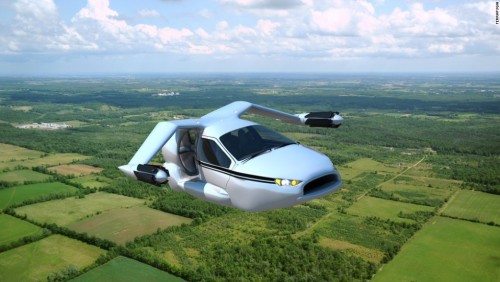
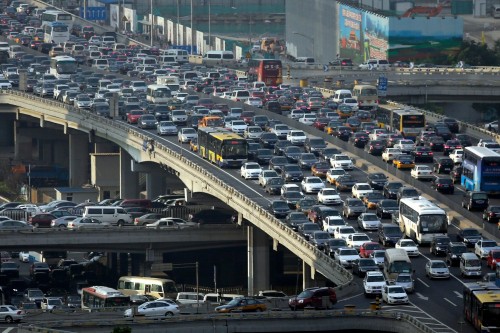
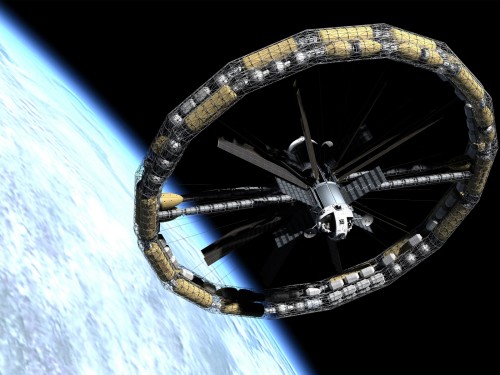
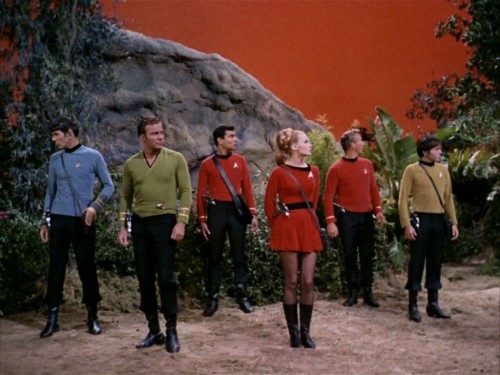
You know the Monofuture, dear reader. It’s been splashed across the media for decades, turned into the background of an endless stream of repetitive movies and novels and video games, used just as repetitively to justify the downsides of the present. The Monofuture is when we finally get routine spaceflight, orbital habitats, colonies on other worlds—all the things my generation was promised in its childhood and hasn’t gotten yet. The Monofuture has fusion power or some other limitless clean energy source, it’s got equally limitless supplies of raw materials, and replicators or robot factories or some other gimmick so that everyone gets all the consumer goods they want. It’s got flying cars, of course, and humanoid robots, and superhumanly intelligent AIs, and all the other technological wet dreams that have been squirted across the imagination of the industrial world for decades now. For a place that doesn’t exist, it has immense emotional power, and one measure of that power is just how upset believers in the Monofuture get if you point out that it’s not going to happen.


…and the reality:


Probably the easiest way to see this in operation is to suggest in public that human beings are never going to colonize other planets. If you do that, I can promise you that you’ll get an impressive degree of pushback. As it happens, there are a great many good reasons to think that human beings are in fact never going to colonize other planets. We can start with the nightmarish economics of establishing self-supporting colonies on the frozen, airless, bleach-laced deserts of Mars, go from there to the bleak fact that no other habitable body in the solar system besides Earth has a magnetic field capable of protecting vulnerable human tissues from the torrents of hard radiation blasting out from the vast unshielded thermonuclear reactor at the center of the solar system, and proceed through all the other reasons why manned space flight has turned out to be nothing more than an expensive and temporary hobby of rich nations.

Of course there are plenty of arguments in circulation as to why none of these things matter. It’s entertaining, if nothing else, to test these arguments against something that isn’t part of the Monofuture. For example—to return to a point that’s been made in this blog already—all the arguments that have been made for the colonization of Mars can be made with even more force for the colonization of central Antarctica. Compared to Mars, Antarctica is practically a tropical paradise: the climate’s significantly warmer, water and oxygen are much easier to come by, there’s a planetary magnetic field screening out most of the Sun’s dangerous radiation, mineral resources are at least as abundant, the soil’s not saturated with toxic perchlorates, getting there is easy with existing technology, and if something goes wrong, help can get there in a day or two—it’s not nine long and silent months away if Earth and Mars happen to be in the right orbital configuration just then, and anything up to twice that if you’re not so lucky.


What we were promised…


You can make equally sound arguments why colonizing the top of Mount Everest, the bottom of the Marianas Trench, the waterless and windswept Takla Makan desert of central Asia, or just about any other environment on Earth makes more sense than colonizing Mars. All of them are better suited to human habitation than Mars, and Mars is better suited to human habitation than any other body in the solar system other than Earth. Why aren’t colonists signing up to colonize Antarctica, then? Because the colonization of Antarctica isn’t part of the Monofuture, and so most people can do the math and figure out that an Antarctic colony makes no sense.

Such clarity is rarely to be found when it comes to the Monofuture. What you get instead is a remarkable degree of devout enthusiasm propped up with some of the most colorfully absurd thoughtstoppers to be found in captivity. I lost track a long time ago, for example, of the number of people I’ve heard insist in this context that “anything that people can conceive, they can achieve.” That’s absurdity on a truly grand scale—I can conceive quite readily of a working perpetual motion machine, a Paddington Bear stuffie the size of the entire cosmos, a four-sided triangle, and colorless green ideas that sleep furiously, just for starters—but if you question the weary fantasy of space colonization, you can count not only on hearing it, but on watching those who propose it scramble around for reasons why a claim so obviously false in every other context must be true in this one.


…and what we got.


You can have serious fun with those who insist on the thoughtstopper just cited, if that interests you. Ask someone who believes in it whether human beings will ever be able to predict the future by observing the movements of the planets, for example, and you can be sure of getting an indignant denial! Astrology, while it’s quite easy for people to conceive—and indeed many millions of people today do so—isn’t part of the Monofuture, and so it’s not defended by the belief system we’re discussing. I’ve referred to that belief system as faith in progress, but again, the word “progress” has to be understood in a very nuanced way. Figuring out how to predict the future by observing planetary movements would be a very remarkable sort of progress indeed, but believers in progress aren’t interested in that. The kind of progress in which they place their faith is much more narrowly defined; it consists solely of progress toward the Monofuture.

And the Monofuture itself, with its space colonies and flying cars, its superintelligent computers and clever humanoid robots, its life-extension technologies and replicators churning out consumer goods from thin air at the push of a button, its limitless pollution-free energy sources and gleaming cities where people of every race and gender have exactly the same lifestyles and beliefs and opinions about everything that matters—where did it come from? How come this single, suffocatingly narrow notion of what the future has to be like has become such an item of faith in the industrial world that many people can’t imagine any other future at all—besides, that is, some masturbatory fantasy or other of apocalyptic mass death?

Here I have to hang my head and scuff my feet a little, because I’m pretty sure that the culprit is one of my favorite genres of literature. Yes, we’re talking about science fiction.


Where we were supposed to be…

It’s only fair to say that science fiction didn’t start out talking about the Monofuture, or for that matter any of its standard-issue components such as space travel. Many historians of the genre agree that the first work of science fiction—the first story that centers on a scientific or technological development that hasn’t yet been achieved, and makes the consequences of that development central to the plot—is Mary Shelley’s Frankenstein, and that’s not about space travel or any of the other standard features of the Monofuture. For that matter, the next two really great names in the history of science fiction, Jules Verne and H.G. Wells, devoted relatively little of their prodigious literary output to space travel or other Monofuturistic gimmicks.

What’s more, if you go on to the next golden age of science fiction, the pulp era between the wars, and read the stories as they appeared in the magazines of that era, you’ll find that a great many of the stories went out of their way to ignore the Monofuture or anything like it. Plenty of those stories were set in the ordinary world of the 1920s and 1930s, just as Frankenstein was set in the ordinary world of the late 18th century, and the discoveries and inventions described in the stories don’t change the world in the least. While most of those stories have sunk into oblivion at this point—some deservedly, some not—it occurs to me that a few of my readers may have read C.S. Lewis’s science fiction novel Out of the Silent Planet, which is cut from the same cloth.


…and where we are.


Lewis’ story is a tale of space travel. The mad scientist who is an important character (and also, of course, one of the stock figures of the pulp SF era) has achieved the major technological breakthroughs needed to cross interplanetary space, and the protagonist of the series, an Oxford philologist named Elwin Ransom—yes, he was modeled by Lewis on a friend of his, another Oxford philologist named J.R.R. Tolkien—thus finds himself taking an unexpected journey to Mars. Does the world change utterly as a result? Not at all. When Ransom eventually gets back to Earth, he goes to the nearest pub to buy a pint in the serene certainty that nothing much on Earth has changed, or will change, as a result of the journey.

Mind you, stories already in print when Out of the Silent Planet was first published had begun the process of inventing the Monofuture, and you can find plenty of anthologies of old SF stories that cherrypick Monofuturistic tales out of the great mass that had nothing to do with space ships and flying cars. (That’s why it’s such an education to go back to the magazines as they appeared, and get a sense of what else science fiction was doing in those days.) Nor was the Monofuture the only game in town for a long time thereafter. If anything, as science fiction matured after the Second World War, the range of futures it was willing to explore broadened dramatically.


Is this your neighborhood?…


Now of course part of that had to do with something most people in SF won’t talk about these days—the huge crossover between pre-1980s science fiction and occultism. The takeover of science fiction fandom by materialist pseudoskeptics of the CSICOP variety in the early 1980s marked a radical shift in the genre. Before that time, a great many SF fans and no small number of important SF authors were up to their eyeballs in popular occultism. That’s why you’ll find a tolerably good description of parts of an early Wiccan initiation ritual in Heinlein’s novel If This Goes On…, why more than half the big names in 1950s and 1960s SF wrote novels in which psychic powers were the mainspring of the plot, and why the classified ads in the back of SF magazines were full of advertisements for occult correspondence courses. (It’s also why the first science fiction convention I ever attended, back in 1978, included workshops on Tarot divination—not something you found in such venues much after that.) It was a different world, a lot more open to alternative realities.

Still, there was a great deal more to it than that. Science fiction authors vied with each other in those days to come up with future societies that varied as wildly as possible from the world we inhabit today. Read Vonda McIntyre’s Dreamsnake, John Crowley’s Beasts, Brian Aldiss’ Hothouse, Susan Coon’s Rahne, M. John Harrison’s The Pastel City, and Poul Anderson’s The Winter of the World—just to cite the examples that come first to mind—and in each case you’re so far away from the Monofuture that you’d need a high-powered Macroscope to spot its traces way out there in the intergalactic distance.


... or is this?


Exactly what happened to science fiction in the decades immediately thereafter is a complex question. I suspect that part of it had to do with the space probes that brought back picture after picture of a solar system far less welcoming to human beings than anyone in the golden age of SF had ever speculated. Part of it, too, had to do with the awkward discovery that none of the many attempts to make space-based manufacturing pay for itself came close to breaking even, and let’s not even talk about living up to the enthusiastic handwaving in Arthur C. Clarke’s The Promise of Space and its many equivalents. Another part, surely, had to do with the mutation of SF from fringe literature to mass-market media property, a process set in motion by the frankly hokey if durable Star Trek franchise and propelled to warp speeds by the immense financial success of such Hollywood cash cows as Star Wars and E.T.: The Extraterrestrial.

Whatever the concatenation of causes, though, what had been one of the most innovative of literary genres became by and large as rigidly formulaic as Harlequin romances, with the Monofuture playing the role of the ruggedly handsome male lead and humanity as the female lead swooning into his cybernetically enhanced arms. One measure of that descent into formula was the chorus of outrage that rose in SF fandom a little while back when Kim Stanley Robinson, one of the best of the current crop of SF authors, published a frankly brilliant novel titled Aurora about a failed attempt at interstellar colonization. Such stories were entirely acceptable back when SF was open to a wider range of futures—John Brunner’s harrowing Total Eclipse and John Crowley’s lyrical Engine Summer are only two of many novels that used it as a theme—but the reaction to Robinson’s book? Here again, Harlequin romances offer the best equivalent: it’s exactly the sort of reaction you’d expect if Harlequin published a well-written romance novel in which the heroine, after meeting the hero and going through the usual plot twists, decided that she really did prefer to stay single after all.


This was the fantasy.


That parallel, I suspect, points straight toward the reason why the monofuture has become stuck sideways in the collective imagination of our time. People don’t read Harlequin romances because they want realistic accounts of love; they read Harlequin romances because they want to enjoy a particular kind of fantasy that’s satisfying precisely because it doesn’t imitate real life. That’s what formulaic genre fiction does—and there’s nothing wrong with that. If readers feel a little better about themselves and the inevitable frustrations of their lives because they have the chance to wallow in lush daydreams about rich and ruggedly handsome guys who fall in love with ordinary women, or heroic adventures in which a mismatched bunch of protagonists wield the Magic McGuffin of Doom to save Upper Lower Southeast Central Earth from Lord Blorg the Bad, or cozy mysteries in which the middle-aged owner of the You Know You Want One More Chocolate Bonbon Shop single-handedly catches one diabolical murderer after another, or what have you, why, that’s one of the basic human needs that literature has always served.

Most of us, though, realize that our own romantic encounters aren’t going to have much of anything in common with what goes on between the covers of a Harlequin romance. Most of us understand that our chances of being called forth on a heroic quest to liberate Upper Lower Southeast Central Earth from Lord Blorg the Bad are significantly lower than our chances of winning the Publishers Clearing House Sweepstakes, and that if we end up witnessing a serious crime, the closest we can expect to get to feats of brilliant detection is a series of long sessions repeating the same eleven facts to bored detectives in a downtown office building. That is to say, we understand the difference between imaginative literature and the real world, and don’t pretend that the latter is under some kind of obligation to imitate the former.


This is where its taken us...


That, in turn, is exactly where the contemporary myth of progress toward the Monofuture has run off the rails. It’s not just that there are solid reasons why we will never colonize other planets, or that flying cars have been built and tested repeatedly since 1917 and consistently turn out to be a lousy idea, or that fusion power was twenty years in the future when I was born and will still be twenty years in the future when the distant descendants of chipmunks study our fossilized bones. It’s that by most measurements, the quality of life for a majority of people in the US and a good many other industrial countries has been moving raggedly but remorselessly downhill since the 1970s and show no sign of changing direction.

Leave the enclaves where the comfortable preen themselves on how progressive they are, and go walk the mean streets of Pittsburgh, Baltimore, Manchester, Glasgow, the decaying industrial faubourgs that ring Paris—well, I could go on at length, but the point stands: from those places, it’s easy to see that the Monofuture isn’t coming closer at all. It’s moving further off, heading to whichever elephant’s graveyard dreams seek out when it’s their time to die. That’s why so many people insist in such shrill terms that the Monofuture is still on its way, just you wait and see. As social psychologists have been pointing out for a good long time, it’s when a belief system no longer does an adequate job of explaining the world that people cling to it most dogmatically and get most irritable when it’s questioned.

One of my readers in a recent open post mentioned that in the circles he frequents, at least, the New Age belief system that was once so widespread has become rare enough that it’s a source of surprise when someone starts talking about creating their own reality and the rest of it. What happened there was no surprise to those who were paying attention. New Age teachers made a series of claims about what their teachings would do, and by and large, those claims didn’t pan out. The impressive number of people who tried to use New Age guru Rhonda Byrne’s “Law of Attraction” to get rich flipping real estate in the years immediately before the 2008-2009 crash, and lost their shirts as a result was just the last and biggest of a series of comparable fiascos.


... and it may end up taking us here:


Since the normal human response to that kind of failure is to double down at least once, what happened after the 2008-2009 crash is that a huge number of New Agers staked everything on the supposed end of the Mayan calendar on December 21, 2012. When that day came and went without incident, in turn, the New Age movement quietly dissolved. There are still people who believe in its teachings, to be sure, and in fact little enclaves of true believers are the normal aftermath of a failed prediction of this sort, but as a significant cultural force, it’s finished.

Exactly what will do the same thing to the cult of the Monofuture is an interesting question. That something will pull the plug on Tomorrowland sooner or later, though, is baked into the cake at this point. Science fiction, delightful though it is, is no more about real futures than romance novels are about real relationships, and the fate of the New Age movement demonstrates clearly enough what happens when true believers insist that the universe is obligated to cater to an overdeveloped sense of entitlement and fork over the future they think they deserve, just because they think they deserve it. What sequence of events will deliver that awkward but inescapable lesson to believers in the Monofuture is an interesting question; all things considered, though, I don’t think we’ll have to wait indefinitely to find out.