Tuesday, January 14, 2020

I keep posting CaitOz's stuff, because I just can't help it -- too much juicy stuff

“Iran Must Begin Acting Like A Normal Nation,” Says Totally Normal Nation. Caitlin Johnstone. Jan. 13, 2020.


The government which runs a globe-spanning empire led by a reality TV host keeps talking about the lack of normality in the nation of Iran.

“What we want all countries to join in,” said State Department Spokesperson Morgan Ortagus in a recent Fox News interview, “is to help us not only to de-escalate any tensions with Iran, but to help us bring Iran to a place where they are ready to stop their terrorist and malign behavior, and where they are ready to discuss with the United States, with Europe, with everyone, about how they can change their behavior to act like a normal nation.”

“We want Iran to simply behave like a normal nation,” Secretary of State Mike Pompeo said in a press statement the other day. “We believe that the sanctions we imposed today further that strategic objective.”

These would be the additional sanctions which have been expanded to include virtually the entire Iranian economy, deliberately targeting Iran’s already sanction-starved populace, with the explicit goal of fomenting a civil war in that nation.

Which is of course a perfectly normal thing to do, from a perfectly normal nation.

This would be the same Iran whose cultural heritage sites were threatened with destruction if it retaliated for the totally normal assassination of its top military official via flying robot. The same Iran whose financial system was just threatened with destruction using the totally normal hegemony of American central banking. Perfectly normal, perfectly healthy.

So what can Iran do to become a “normal nation”? Well, since it’s the United States making this demand, we can safely assume that it’s the model Iran should look to.

In order to become a normal nation, Iran will need to expand its interests from the region and begin toppling noncompliant governments and invading nations all around the world.

In order to become a normal nation, Iran will need to circle the planet with hundreds of Iranian military bases.

In order to become a normal nation, Iran will need to obtain thousands of nuclear weapons, and actually use a couple of them.

In order to become a normal nation, Iran will need to become the most dominant military, economic and cultural force in the world, and then use that dominance to destroy any government, political party, ideology, faction, movement or person who stands in its way.

In order to become a normal nation, Iran will need to arm violent extremist factions all around the world with the goal of eliminating all governments that refuse to bow to its interests.

In order to become a normal nation, Iran will need to become the dominant producer of films, music and TV shows and use this influence to propagandize its power structure’s ideology to every possible cultural sphere.

In order to become a normal nation, Iran will need to begin meddling in scores of democratic elections all around the world and then crying for years at the possibility of any nation returning the favor.

In order to become a normal nation, Iran will need to shore up economic control of the world so that it can crush any sort of disobedience by starving civilians and depriving them of medical care while pretending that it’s a force for peace.

In order to become a normal nation, Iran will need to indefinitely occupy a vast region on the other side of the planet with thousands upon thousands of troops and trillions of dollars in military equipment, to no benefit of a single ordinary Iranian, and against the will of the people who live there.

In order to become a normal nation, Iran will need to create a presidency led by a reality TV star oligarch who is only supported because Iran’s populace is so disgusted with the status quo of their government.

I am kidding, of course. The US government does not want Iran to become like the US. The US government does not want any nation to become like the US. The US likes its abnormality among nations just the way it is, thank you very much. The US is the exception to all its own rules. That’s how American exceptionalism works. This is one of those “do as I say, not as I do” situations.


The US doesn’t want Iran to be like America. The US wants Iran to be like the other nations which have allowed themselves to be absorbed into the blob of the US-centralized empire.

The US would be perfectly happy for Iran to begin acting like Saudi Arabia: arming terrorist factions, beheading heretics, committing war crimes and deliberately creating humanitarian disasters for geostrategic convenience, yet aligning fully with US military, financial, and resource control agendas.

The US would be perfectly happy for Iran to begin acting like Israel: a nuclear-armed military outpost which constantly bombs adjacent nations, interferes in the US and other nations’ politics to shore up support, works toward the slow extermination of its indigenous population and fires upon protesters with live ammunition.

The US would be perfectly happy for Iran to begin acting like Canada, the UK, Australia, New Zealand or the EU: obedient military/intelligence assets who function as extra American states when it comes to foreign policy and international affairs.

That is what the US means by acting “normal”. Not acting moral. Not acting healthy. Certainly not acting like the US. It means acting obedient, compliant, and enslaved.

Which is precisely what Iran is resisting.


Establishment Pundits Go Nuts Over New Russian Hacking Conspiracy. CaitOz. Jan. 14, 2020.


The New York Times reports that GRU operatives launched a successful “phishing attack” on the Ukrainian gas company at the heart of scandalous allegations about Joe Biden, and establishment pundits are falling all over themselves to tweet the hottest take on this exciting new Russia conspiracy.

The story itself fails the smell test on a number of fronts. It falsely claims that allegations of Biden’s corrupt dealings with Ukrainian officials as vice president have been “discredited”, and its only named source is a cybersecurity firm with foundational ties to the NSA and to Crowdstrike, which you may remember as the extremely shady Atlantic Council-tied company at the heart of the plot hole-riddled 2016 Russia hacking narrative (whose CEO is now a billionaire).

The article also of course lacks any hard evidence for its claims, and is of course completely silent on any details as to how the security firm knows that the alleged hackers were both (A) Russian and (B) tied to the Russian government. This is par for course with mass media news reporting on anything negative about Russia, where all journalistic standards have gone out the window and nobody suffers any professional consequences for even the most egregious misreporting on that nation.

And, naturally, liberal pundits are guzzling it down like Mike Pompeo left alone at the table with the gravy boat.

I don’t know if you’ve ever seen a man trying to run with an erection, but FYI it’s the most ridiculous-looking thing you can possibly ever witness. And the mad scramble of conservative Democrats to say something viral about this new angle on an entirely exhausted theme puts one in the mind of a whole platoon of men running completely tumescent at full sprint.

“I hope my fellow editors will think hard — really hard, a lot harder than they did in 2016 — before publishing any material hacked by the Russians,” tweeted editor-in-chief of The Daily Beast Noah Shachtman in response to the NYT report.

It is very revealing that the head of a major mainstream publication believes news outlets should sit on a story exposing the corruption of a leading presidential candidate – no matter how newsworthy – if it’s believed to have come from “the Russians”. How many major stories are being spiked for no other reason than a loyalty to the US government’s geopolitical agendas against noncompliant nations, exactly?

Yet sentiments identical to Shachtman’s are currently being bleated by like-minded pundits throughout the Twitterverse right now.

“Me and Oliver Darcy took at look at this a year ago… newsrooms hadn’t a lot to say about it. Not a lot of self-reflection, it seems,” tweeted CNN’s Donie O’Sullivan in response to Shachtman’s post. “Hackers could target the 2020 election. How will newsrooms respond if they release stolen data?”

“Russians working hard for President Trump’s reelection: mainstream media do not need to collaborate with the Russians again and breathlessly promote their non-newsworthy findings, as they did in 2016,” economist David Rothschild tweeted, without specifying his peculiar definition of “non-newsworthy”.

“Will the media run info from national security hacks as blockbuster stories like in 2016? That’s the million-dollar question,” tweeted Michigan Advance editor-in-chief Susan Demas.

A CNN reporter took it up even further, preemptively speculating based on literally nothing that any evidence of Biden’s corruption which emerges from the phishing campaign will have been “doctored” by Russia.

“Russia could leak Burisma emails, and slip in some doctored emails, to harm Biden later on, if he is the Democratic nominee,” tweeted CNN’s Marshall Cohen. “The 2016 playbook all over again.”

This insanity was seconded and then ratcheted up even further by MSNBC’s Malcolm Nance, whose main job seems to be to push the Overton window of Russia hysteria toward the craziest end of the spectrum.

“DNC 2.0,” Nance wrote. “To protect Trump the GRU will manufacture and insert Black propaganda, fake emails in a data base Burisma emails to implicate Biden and support Trump. They don’t care if you believe it … it’s all to get Trump to believe it. He’ll destroy America to win.”

MSNBC analyst and former Obama administration official Richard Stengel, who has openly stated that he endorses the US government propagandizing its citizens, seized on the opportunity offered by this lawless feeding frenzy to advance a completely baseless Russiagate theory, because why the hell not?

“‘Russia, if you’re listening, hack Burisma.’ GRU has done same thing to this Ukrainian firm that they did to DNC,” tweeted Stengel. “If Trump asked Zelensky on a public call to investigate the Bidens, what do you suppose he asked Putin on a private call? Vlad, do me a favor.”

“More evidence that Putin fears Biden and is actively trying to help Trump,” added the Obama administration’s Michael McFaul. “Not good. All who believe in American sovereignty should denounce, Democrats and Republicans alike.”

“I’ll say it now: I don’t care WHAT the emails say. If he’s the guy, he’s got my vote. PERIOD,” tweeted popular #Resistance pundit Brooklyn Dad Defiant in what could generously be described as a very odd confession.

There is at this time no legitimate reason to believe that the GRU was involved in any kind of cyberattack on Burisma, let alone that it found anything worth publishing. At the moment the only information we’ve gleaned from this incident is more insight into the fact that the news media environment of the most powerful nation on earth is deeply, profoundly unhealthy, and so are the individuals operating within it.

These are the people who shape the dominant narrative. These are the thought leaders, who really do lead the way a very large sector of the population thinks. We need to bring more consciousness to how wildly dysfunctional this is.

2020 has been wild already. And all signs indicate that it’s only going to get a whole lot crazier.

Sunday, January 12, 2020

Climate Links: January 2020

Goals in Paris Agreement Might Be Out of Reach. Nature World News. Jan. 21, 2020.
Causes of Higher Climate Sensitivity in CMIP6 Models. Mark D. Zelinka et al, AGU pubs. Jan. 3, 2020.
Abstract 
Equilibrium climate sensitivity, the global surface temperature response to CO urn:x-wiley:grl:media:grl60047:grl60047-math-0001 doubling, has been persistently uncertain. Recent consensus places it likely within 1.5–4.5 K. Global climate models (GCMs), which attempt to represent all relevant physical processes, provide the most direct means of estimating climate sensitivity via CO urn:x-wiley:grl:media:grl60047:grl60047-math-0002 quadrupling experiments. Here we show that the closely related effective climate sensitivity has increased substantially in Coupled Model Intercomparison Project phase 6 (CMIP6), with values spanning 1.8–5.6 K across 27 GCMs and exceeding 4.5 K in 10 of them. This (statistically insignificant) increase is primarily due to stronger positive cloud feedbacks from decreasing extratropical low cloud coverage and albedo. Both of these are tied to the physical representation of clouds which in CMIP6 models lead to weaker responses of extratropical low cloud cover and water content to unforced variations in surface temperature. Establishing the plausibility of these higher sensitivity models is imperative given their implied societal ramifications. 
Plain Language Summary
The severity of climate change is closely related to how much the Earth warms in response to greenhouse gas increases. Here we find that the temperature response to an abrupt quadrupling of atmospheric carbon dioxide has increased substantially in the latest generation of global climate models. This is primarily because low cloud water content and coverage decrease more strongly with global warming, causing enhanced planetary absorption of sunlight—an amplifying feedback that ultimately results in more warming. Differences in the physical representation of clouds in models drive this enhanced sensitivity relative to the previous generation of models. It is crucial to establish whether the latest models, which presumably represent the climate system better than their predecessors, are also providing a more realistic picture of future climate warming.

Carbon dioxide emissions continue to grow amidst slowly emerging climate policies. Glen Peters et al, Nature. Jan. 2020.
A failure to recognize the factors behind continued emissions growth could limit the world’s ability to shift to a pathway consistent with 1.5 °C or 2 °C of global warming. Continued support for low-carbon technologies needs to be combined with policies directed at phasing out the use of fossil fuels.


Timelapse Maps: Stunning Overviews Of Our Changing Planet. via visual capitalist.


Commentary: Climate change is remaking the world. Andrew E. Dessler, San Antonio Express-News. Jan. 21, 2020.
behind paywall, so also available here.


Oil and gas emissions are reversing progress from coal’s decline. Naveena Sadasivam, grist. Jan 8, 2020.
Schaeffer cautioned that the numbers projected by the EIP are most likely underestimates. For one, the report only tallies emissions from the largest facilities that are required to secure permits under the Clean Air Act. “There are thousands of smaller [facilities] that aren’t picked up in our numbers — compressor stations, tank batteries, big storage terminals, gas processors, and so on,” Schaeffer said.

There are also signs that companies are underreporting emissions data. As oil and gas producers run out of pipeline capacity to transport fossil fuels from drilling sites to refineries and markets, they’re increasingly burning it off into the air in a process called flaring. Companies operating in the Permian Basin reported flaring about 1.37 million tons of natural gas in 2017, but independent satellite analyses by environmental groups and research firms indicate the actual number is about double that. Similarly, emissions from accidents — like the massive 2016 Aliso Canyon leak in southern California — and other malfunctions and maintenance activities are either not reported or are undercounted, the report noted.

2019 in climate science: A continued warming trend and 'bleak' research. Dana Nuccitelli, Yale Climate Connections. Jan. 7, 2020.


Bad Planet. John Davis, counterpunch. Jan. 2, 2020.
Australia is an island continent composed of a vast treeless desert edged with a fringe of heavily urbanized temperate bush where the fierce heat of the land is moderated by onshore ocean breezes from the Pacific to the East and the Indian Ocean to the West. Now, areas of this temperate fringe are aflame as hot desert winds fan bush fires amidst a record series of early-summer heat waves. A world audience watches in horror as news reaches them framed in terms of houses destroyed, lives lost, koalas scorched and kookaburras that no longer sing in the oppressive heat. Greta tweets, “Not even catastrophes like these seem to bring any political action. How is this possible?”
But it is indeed possible, probable, and arguably even inevitable because the climate crisis, née global warming, is embedded in a mostly white, liberal, humanist civilization whose peoples, at least since the middle of the fifteenth century, have privileged the appropriation of land, labor and geological resources over an ecological accommodation of the rest of the planet. It is this ideology, rooted in capital accumulation, that now manifests as extreme weather events. Their remediation requires not just political action, but an almost unimaginable civilizational reboot. We refuse to make this leap because making it threatens the accustomed terms of our existence.

Lessons from Australia’s Bushfires: We Need More Science, Less Rhetoric. Claire Lehmann, Quillette. Jan. 8, 2020.


If words make worlds, then we urgently need to tell a new story about the climate crisis. Here is one vision of what it could look and feel like to radically, collectively take action.
In 2030, we ended the climate emergency. Here’s how. Eric Holthaus, The Correspondent. Jan. 8, 2020.
... A big part of why this crisis has spun into an emergency is that there has been too much of a focus on numbers: In a series of widely read essays, Bill McKibben has written about this kind of terrifying climate math.– 1.5C,  350 parts per million,  12 years  – and not enough attention on collective stories of a better world.

Still, the most important number is easy to remember: zero.  Get to zero emissions globally as quickly as possible. Zero is revolutionary.

There are an infinite number of possible paths ahead of us, and what follows is just one of them, gathered with the help of friends from around the world.

This is a story about our journey to 2030 – a vision of what it could look and feel like if we finally, radically, collectively act to build a world we want to live in.

The economics of extinction: a reason for rebellion. Jem Bendell and Rabbi Jeffrey Newman. Jan. 7, 2020.
What would a sane society do, knowing that one of its luxury food supplies was being exhausted? Consume less perhaps? Or grow more? Japan, knowing that the Bluefin tuna is going extinct, does neither. Bluefish tuna make the most profit for fishermen the nearer they are to extinction, as their rarity endows all the more status on their consumers.

Some might think that is a quirky Japanese behaviour or an anomaly of economics, but actually the free-market system in which individuals compete for profit is resplendent with such stupidities. How else could the investment in fracking or tar sands be explained? Or the way Brazil is consuming the lungs of the Earth to pay back its debts. Or the way industry externalises the cost of processing much of its waste, poisoning the Earth and its future consumers?

The logic that leads to these flaws has long been understood, and there have been waves of visceral protest as the ideology of markets became more entrenched. It is two decades since we were shutting down city centres hosting WTO and World Bank conferences; and almost a decade since Occupy camps squatted in the sacred places of decadent high finance. This time our issue is more than economic justice – it is the way governments are standing by as the global house we live in is burning down. We now see clearer than ever how a stupid financial system is driving an environmental breakdown and mass extinction which will undermine our very civilisation.

Omnicide: Who is responsible for the gravest of all crimes? Danielle Celermajer, ABC. Jan. 3, 2020.
As the full extent of the devastation of the Holocaust became apparent, a Polish Jew whose entire family had been killed, Raphael Lemkin, came to realise that there was no word for the distinctive crime that had been committed: the murder of a people. His life work became finding a word to name the crime and then convincing the world to use it and condemn it: genocide. Today, not only has genocide become a dreadful part of our lexicon. We recognise it as perhaps the gravest of all crimes. 
During these first days of the third decade of the twenty-first century, as we watch humans, animals, trees, insects, fungi, ecosystems, forests, rivers (and on and on) being killed, we find ourselves without a word to name what is happening. True, in recent years, environmentalists have coined the term ecocide, the killing of ecosystems — but this is something more. This is the killing of everything. Omnicide.

Saturday, January 11, 2020

Glikson: Planetary arson and amplifying feedbacks

Planetary arson and amplifying feedbacks: No alternative to CO2 drawdown. Andrew Glikson, Earth and climate scientist, Australian National University. Dec. 26, 2019.

No one knows how to impose 1.5 or 2.0 degrees Celsius limits on the mean global temperature, unless drawdown / carbon sequestration of atmospheric CO₂ is attempted, nor are drawdown methods normally discussed in most political or economic forums. According to Kevin Drum (2019), “Meeting the climate goals of the Paris Agreement is going to be nearly impossible without removing carbon dioxide from the atmosphere”.

The release of some 910 billion tons of carbon dioxide is leading human society, indeed much of nature, to an existential impasse. The widest chasm has developed between what climate science is indicating and between climate policies and negotiations controlled by governments, politicians, economists and journalists—none of whom fully comprehends, or is telling the whole truth about, the full consequences of the current trend in the atmosphere-ocean-land system.

The evidence for future projections, as understood by climate scientists, has been largely put to one side, mainly because it is economically and politically “inconvenient” or is frightening. Reports from the Madrid climate COP-25 Conference suggest negotiations, focusing on emission reductions, are overlooking the evidence that at the current concentration of CO₂, which have reached 412 ppm and 496 ppm-equivalent (when the CO₂-equivalents of methane and nitrous oxide are included), amplifying feedbacks from land and ocean are pushing temperatures further upwards. This is driven by the replacement of sea ice and land ice and snow surfaces by open water surfaces, by methane leaks, desiccated vegetation, fires and reduced CO₂ absorption by warming oceans. Given the long atmospheric residence time of CO₂ (Solomon et al. 2009, Eby et al. 2009) and the short life span of aerosols, attempts at CO₂ drawdown are essential if complete devastation of the biosphere is to be avoided.


Figure 1. (A) 1990-2019 Global growth of CO₂ emissions (gigaton);
(B) 1960-2019 Annual fossil CO₂ emissions from coal, oil, natural gas and cement (gigaton).
From: CSIRO News Release


The prevailing political and economic focus in international climate projects, conferences and advisory councils is concerned with (a) limits on, or a decrease of, carbon emissions from power generation, industry, agriculture, transport and other sources; (b) limits on the current rise in global temperatures to +1.5 degrees Celsius, and a maximum of +2.0 degrees Celsius, above mean pre-industrial (pre-1750) temperatures.

However, no one knows how to impose these limits unless drawdown/sequestration of atmospheric CO₂ is attempted, nor are drawdown methods normally discussed in most forums.


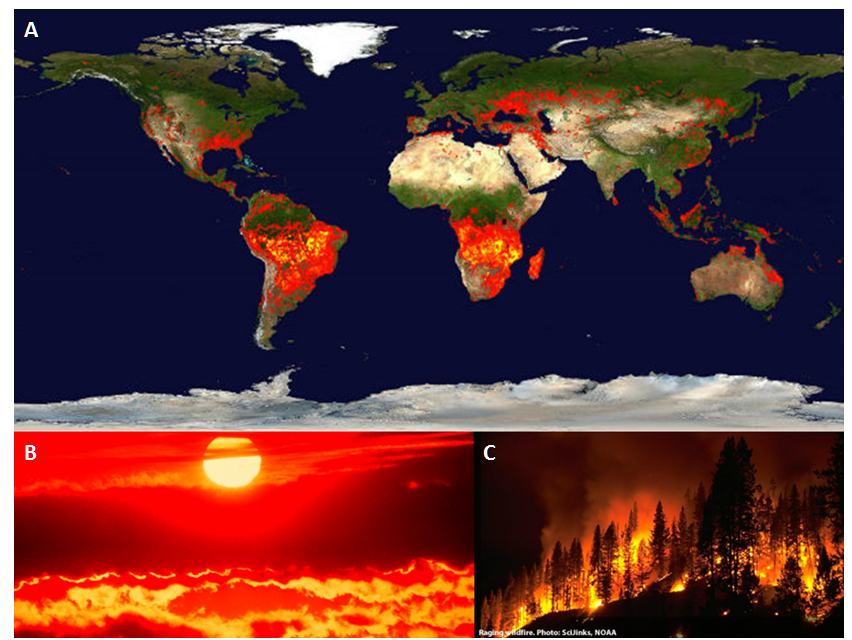
Figure 2. (A) Distribution of global fires (NASA);
(B) Fire storms over the southwest USA;
(C) Pine forest fire California.


At the present the concentration of greenhouse gases of just under-500 ppm CO₂-equivalent is activating amplifying feedbacks of greenhouse gases from land, oceans and melting ice sheets, namely further warming:

  1. An increase in evaporation due to warming of land and oceans leads to further warming due to the greenhouse effect of water vapor but also to increased cloudiness which retards warming. The water vapor factor, significant in the tropics, is somewhat less important in the dry subtropical zones and relatively minor in the Polar Regions (Figure 3).
  2. The melting of ice sheets, reducing reflective (high-albedo) ice and snow surfaces, and concomitant opening of open water surfaces (heat absorbing low-albedo) is generating a powerful positive (warming) feedback. Hudson (2011) estimates the rise in warming due to total removal of Arctic summer sea ice as approximately +1.0 degrees Celsius.
  3. The release of methane from melting permafrost and bubbling of methane hydrates from the oceans has already raised atmospheric methane levels from about 800 to 1863 parts per billion which, given the radiative forcing of methane of X25< times, renders methane highly significant.
  4. As the oceans warm they become less capable of taking up carbon dioxide. As a result, more of our carbon pollution will stay in the atmosphere, exacerbating global warming. 
  5. As tropical and subtropical climate zones overtake temperate Mediterranean-type climate zones, desiccated and burnt vegetation release copious amounts of carbon dioxide to the atmosphere. For example the current bushfires in Australia have already emitted 250 million tonnes of CO₂, almost half of country's annual emissions in 2018.

Figure 3. Total water vapor that can precipitate, as observed by
the Atmospheric Infrared Sounder (AIRS) on NASA's Aqua satellite.
With rising global temperatures and further encroachment of subtropical climate zones desertification and warming can only become more severe.


Abrupt reductions in emissions may be insufficient to stem global warming, unless accompanied by sequestration of greenhouse gases from the atmosphere, recommended as below 350 ppm CO₂.
According to Hansen et al. (2008) carbon sequestration in soil (the biochar method) has significant potential, applying pyrolysis of residues of crops, forestry and animal waste. Biochar helps soil retain nutrients and fertilizers, reducing release of greenhouse gases such as N₂O. Replacing slash-and-burn agriculture with a slash-and-char method and the use of agricultural and forestry wastes for biochar production could provide a CO₂ drawdown of ~8 ppm or more in half a century.

Stabilization and cooling of the climate could include two principle approaches (Table 1): (a) solar shielding, and (b) CO₂ drawdown/sequestration. However, solar shielding by injected aerosols or water vapor is bound to be transient, requiring constant replenishment.

Table 1. Solar shielding and atmospheric CO₂ sequestration methods.

Method
Supposed advantages
Problems
SO2 injections
Relatively cheap and rapid application
Short atmospheric residence time; ocean acidification; retardation of precipitation and of monsoons
Space satellite-mounted sunshades/mirrors
Rapid application. No direct effect on ocean chemistry
Longer space residence time. Does not mitigate ocean acidification by CO2 emissions.
Streaming of air through basalt and serpentine
(Figure 4)
CO2 capture by Ca and Mg carbonates
In operation on a limited scale in Iceland. Significant potential 
Soil carbon burial/biochar
Effective means of controlling the carbon cycle (plants+ soil exchange more than 100 GtC/year with the atmosphere) 
Requires a collaborative international effort by millions of farmers. Significant potential
CO2 capture by seaweeds 
An effective method applied in South Korea 
Decay of seaweeds releases CO₂ to ocean water. Significant potential
Ocean iron filing fertilization enhancing phytoplankton
CO2 sequestration
Phytoplankton residues would release CO2 back to the ocean water and atmosphere.
Ocean pipe system for vertical circulation of cold water to enhance CO2 sequestration
CO2 sequestration
Further warming would render such measure transient.
“Sodium trees” – pipe systems of liquid NaOH sequestering CO2 to sodium carbonate Na2CO3, followed by separation and burial of CO2.
CO2 sequestration, estimated by Hansen et al. (2008) at a cost of ~$200/ton CO₂ where the cost of removing 50 ppm of CO₂ is ~$20 trillion.
Unproven efficiency; need for CO2 burial; $trillions expense, though no more than the military expenses since WWII.


Figure 4. Iceland: The streaming of CO₂-containing air and of water through
basaltic rocks and CO₂-capture as carbonate minerals.

The big question is how effective are the above methods in reducing CO₂ levels on a global scale, at the very least to balance emissions, currently 36.8 billion tons CO₂ per year. Whereas each of the methods outlined in Table 1 has advantages and disadvantages, it is hard to see an alternative way of cooling the atmosphere and oceans than a combination of several of the more promising methods. Budgets on a scale of military spending ($1.7 trillion in 2017) are required in an attempt to slow down the current trend across climate tipping points. The choice humanity is facing is whether to spend resources on this scale on wars or on defense from the climate calamity.

Time is running out.

Forever Chemicals: PFAS & PFOS

EPA Allowed Companies to Make 40 New PFAS Chemicals Despite Serious Risks. Sharon Lerner, The Intercept. Sep. 19, 2019.
THE CHEMICAL CAUSED lab rats to lose weight. When pregnant rats were exposed to it, their pups lost weight, too, and their pups’ skulls, ribs, and pelvises tended to develop abnormally. The compound, referred to by the number “647-42-7” in Environmental Protection Agency records, also caused discoloration of the teeth, increased liver weights, decreased how much their infants nursed, and lowered the animals’ red blood cell counts. One report showed that the clear, colorless liquid caused “increased pup mortality” and, in adult rats, elevated death rates.

Female rats exposed to 647-42-7 “did not appear normal,” as another one of the reports explained, going on to detail their symptoms, which included “dental effects; mild dehydration; urine-stained abdominal fur; coldness to the touch; ungroomed coat; decreased motor activity; ataxia [uncoordinated movements]; periorbital [eye area] swelling; brown fur on the lower midline; hunched posture; and slight excess salivation.” At one dose, the chemical caused ridges to form on one of the inner layers of the rats’ incisor teeth, according to one of five reports DuPont sent to the EPA. Six other reports about the chemical submitted to the agency between 2007 and 2013 did not include the name of the manufacturer.

Despite the alarming findings of these animal experiments, between 4 and 40 million pounds of this PFAS compound were produced nationally in four locations in 2015, according to the most recent information available from the EPA. And 647-42-7, described in chemical companies’ filings with EPA as a “reactant,” is just one of 40 chemicals in the class of industrial compounds known as PFAS that are in active use despite the fact that their manufacturers alerted the EPA to substantial threats the chemicals pose to health and the environment. The chemicals were designated “active” on the EPA’s inventory, meaning that they were made or used in the U.S. by at least one company between 2006 and 2016.

DuPont was asked about the chemical and the risk reports it submitted to the EPA but declined to comment for this story.

PFOS and PFOA, the two best known chemicals in a class that contains thousands, have been used made to make firefighting foam, Teflon, and hundreds of other products. After being recognized as a source of water contamination and linked to a wide range of health problems, including cancers, PFOA and PFOS were phased out of use in the U.S. between 2006 and 2015 along with other PFAS compounds based on chains of eight carbon atoms or more. During that period, the chemical industry began moving to “shorter-chain” alternatives, such as 647-42-7, which is based on six linked carbon atoms. These replacement compounds were promoted as safer and more environmentally sustainable.

At a hearing before the House Committee on Oversight and Reform about corporate responsibility for PFAS contamination on September 10, Daryl Roberts, chief operations and engineering officer of DuPont, acknowledged the dangers of PFOA and PFOS when he “reaffirmed our commitment to not make, buy, or use long-chain PFAS materials.” And Paul Kirsch, chief executive officer of Chemours, which spun off from DuPont in 2015 and inherited its PFAS business, said that the company “supports EPA’s process to determine whether legacy long-chain PFAS chemicals should be designated as hazardous substances under the Superfund law.” Yesterday, appearing before the House Committee on Transportation and Infrastructure, Dave Ross, assistant administrator in EPA’s Office of Water, promised that the agency “will propose a regulatory determination” for PFOS and PFOA.

Yet as these reports make clear, the short-chain PFAS compounds that remain in use present many of the same threats associated with longer-chain molecules. Manufacturers filed at least one report of substantial risk with the EPA for each of these 40 compounds, according to The Intercept’s analysis of documents accessed through the agency’s website. 3M submitted reports for 21 of these chemicals; DuPont submitted the reports for most of the rest. Some chemicals were the subject of more than a dozen reports. The specific risks associated with these 40 PFAS chemicals — and the fact the EPA has had hundreds of reports documenting them for years, and in some cases, decades — has not been previously reported.

All PFAS chemicals persist indefinitely in the environment and have the potential to contaminate water and remain in the bodies of people and animals. But these compounds presented additional risks that, once discovered, required their manufacturers to report them to the EPA. Among the health effects on lab animals noted in the reports were neurotoxicity; developmental toxicity; decreased pup weight; decreased conception; testicular, pancreatic, and kidney cancers; severe convulsions; bleeding in the lungs; tooth problems; post-natal loss; hair loss; and depression of sperm function.

Ideally, the findings in these animal studies would have led to more testing, according to Laura Vandenberg, a toxicologist and associate professor at the University of Massachusetts Amherst School of Public Health and Health Sciences who reviewed several of the reports found by The Intercept. Vandenberg cited one study, in which rats began to show “sudden movements characterized by pronounced jumping” after being exposed to one of the compounds. “As a consequence of the pronounced jumping, the snout/limbs of Group 3 rats were observed to protrude through the bars of the confinement cage, resulting on occasions in a trapped snout,” according to the report, which 3M submitted to the EPA in 2000.

“That’s a very severe outcome,” said Vandenberg. “It should have been used as a trigger to study lower doses and more subtle outcomes.” Still, many of the harms associated with the chemicals in the reports did not surprise Vandenberg, who said they were very similar to the effects of PFOA and PFOS seen in animal experiments. “What is shocking is that the concern that came after learning the effects of PFOA and PFOS isn’t being transferred to these other perfluorinated chemicals,” she said. “These chemicals are being introduced as if they’re safe as replacements when in fact they’re not and someone else knew that they weren’t.”

Despite their dangers, at least 15 of these 40 PFAS compounds that were the subject of substantial risk reports are not only on the most recent list of compounds in active use but also, like 647-42-7, are produced in very large quantities. While most manufacturers withheld the exact amount of the chemicals they produced, on the grounds that the information is confidential and that its disclosure would harm their businesses, these 15 were included on a list compiled by the EPA of compounds produced or imported in excess of 25,000 pounds per year in a single location.

Such amounts have the potential to profoundly alter human biology, according to Philippe Grandjean, a toxicologist and adjunct professor of environmental health at Harvard University. “A tiny speck could seriously impact the health of a person,” said Grandjean, whose research has shown that very low levels of the chemicals depress children’s immunity. Even if each of the manufacturers of 647-42-7 made the smallest amount in the range of production volumes they reported — which would total 4 million pounds in a single year — that quantity is more than the weight of all PFAS accumulated in the blood of everyone in the United States, according to Grandjean.

7,757 Secret Chemicals

Among the newer generation of PFAS replacements made in large quantities is GenX, DuPont’s substitute for PFOA. Like the chemical it replaced, GenX causes cancer and other diseases in lab animals, as The Intercept was first to report in 2016. That chemical has since been found in the drinking water of some 250,000 people in North Carolina.

Other chemicals used in large quantities since longer-chain PFAS have been phased out appear to present similarly alarming risks, but haven’t yet made it onto the radar of regulators in part because the studies are not included in the published literature.

Consider one compound that looks and behaves much like the PFAS chemical 3M previously used to make the fabric and carpet protector Scotchgard, but is based on a four- rather than eight-carbon chain. Beyond their structural and functional similarity, this new compound shares something else with its chemical predecessor: alarming health effects.

Mortality was observed at all doses,” explained an EPA summary of studies of the chemical that were submitted to the agency by 3M between 2002 and 2017. In one of the experiments, the compound interfered with the development of baby rats’ skulls, ribs, and foot bones. The more of the compound the rats were exposed to, the more severe the interference was, one of the surest signs that the chemical was responsible for the problems. In another experiment, the compound harmed the livers, kidneys, and bladders of both male and female rats. Because the bladder damage occurred at even the lowest doses given the lab animals, the researchers determined they were not able to set a level at which the chemical had no effects.

The compound was included on the 2012 and 2016 lists of chemicals made in large volume but was not on the list in 2002 and 2006, before the phase out of longer-chain PFAS was complete. Although 3M submitted several reports documenting the chemical’s toxicity to rats and their developing pups, no information was available about where it is made or used, by whom, for what, or in what quantities— because all of that information, including the name of the company itself, was removed as confidential business information.

In some cases, companies have declared the very existence of chemicals confidential. In the EPA’s most recent inventory of chemicals, which was released in March 2019, 7,757 active compounds were on a list that is entirely kept from the public, making it impossible to locate risk reports or any other information about them. While it’s not clear how many of these mystery chemicals are in the PFAS family, “it’s almost certain that there are a lot of PFAS on the confidential part of the inventory,” said Richard Denison, lead senior scientist at the Environmental Defense Fund. That means that many more PFAS chemicals beyond the 40 compounds mentioned in this story have likely been the subject of risk reports that aren’t available.

Companies are also allowed to shield the identities of their products on the list of chemicals made in large quantities, meaning that many more than 15 PFAS compounds may be produced on a massive scale, though it’s impossible to know how many, where, or in what volumes.

Historically, there were few requirements for adding chemicals to this secret list. “Companies simply asserted the identity of a chemical to be confidential and EPA would never review that claim,” said Denison. A 2016 update of TSCA, the law regulating toxic chemicals, tightened up the requirements for shielding the identity of chemicals. But so far those improvements have not yet materialized, according to Denison. “Under the Trump admin, the EPA has been exceedingly slow in implementing these new requirements.”

Nobody’s Looking for Them

If scientists had information about where the compound was made and used, they could know where to check for environmental contamination. Evidence from Parkersburg, West Virginia, and Carneys Point, New Jersey, and some of the other places where hundreds of facilities emit PFAS show that manufacturing and using the chemicals can be a messy business, and the chemicals often seep into nearby soil and water.

Yet even when the location of a production site is known, it is not clear that anyone is looking for these compounds. Several of the companies that make PFAS in large volumes have supplied the addresses of their sites. Two of the chemicals, including one described as “neurotoxic at all levels,” had a 3M facility in Rock Island, Illinois, listed as their production site in the most recent EPA records.

Yet the EPA doesn’t appear to have asked the company to test for either of these chemicals or their breakdown products at the plant. In 2006, the agency did ask 3M to look for PFOA and PFOS in water at the plant. While the company found both of those chemicals at high levels in every spot it looked for them and had already measured them in alfalfa grown at the facility — indicating that the water contamination could lead to food contamination — 3M was no longer making PFOA and PFOS in 2006. It was, however, making this other PFAS compound in large quantities — and, according to EPA documents, still was as of 2016 — but apparently has not been required to look for it.

In response to an inquiry about this story from The Intercept, 3M provided the following statement: “3M regularly and proactively examines the environmental and health impacts of our products, including our PFAS materials. We work closely with the EPA and state and local regulatory agencies to provide appropriate monitoring, testing and public reporting around our manufacturing sites. We have more information on other recent actions we’ve taken around PFAS stewardship at www.3M.com/PFAS.” 3M did not respond to questions about whether it had looked for or found this particular compound in the water near its Rock Island facility — or whether it had done so for three other PFAS chemicals it reported to the EPA.

So far, the EPA’s search for PFAS contamination has been limited to a few better-known compounds in the class. The only national survey conducted by the agency looked for six PFAS chemicals, none of which are still produced in large quantities. There is no national environmental surveillance program for these newer compounds. And, with the exception of GenX, state regulators haven’t been testing for most of them.

The Minnesota state agency responsible for addressing water pollution hasn’t looked for a PFAS compound that, according to the most recent EPA records, was being produced in large quantities at a 3M facility in Ramsey, Minnesota. The chemical had pronounced reproductive effects, according to a 2003 report 3M submitted to the EPA, which found that for pregnant rats given the highest doses of the compound “the number of liveborn pups was significantly decreased and the number of stillborn pups was significantly increased”.

But the Minnesota Pollution Control Agency couldn’t test water for it because it wasn’t aware that the chemical was made in its state. “There’s no ability for us to say, ‘Hey 3M, just give us the whole list of what you’re making,’” said Summer Streets, an environmental chemist at the Minnesota Pollution Control Agency. Instead the state agency relies on EPA to learn about what’s produced at the plant. And many of the critical details in the documents it receives from the EPA have been withheld on the grounds that they’re confidential business information, according to Streets. “That gets in a way of a lot of work,” she said. “We’re forever behind the eight ball.”

The Honor System

Since 1976, the Toxic Substances Control Act has required companies that make, process, or distribute chemicals to immediately report to the EPA information that “reasonably supports the conclusion” that a chemical presents a substantial risk to health or the environment. But the reporting works on the honor system; companies have no requirement to look for this evidence of harm. And there is no way to know whether they send in all they have. If the EPA discovers after the fact that companies have withheld damning information, it can fine them, as the agency did in 2005 and 2006 after realizing that both 3M and DuPont had kept evidence of the health threats of PFOA and PFOS secret for years. But the amounts of the fines the companies faced were miniscule compared to their profits.

If companies do perform tests and report their results to the EPA, the agency doesn’t necessarily have to do anything in response. By law, the regulators can seize the substance, order more testing, restrict its manufacture, or begin the process of banning it — but they don’t have to do any of these things and almost never do. In the case of the vast majority of the hundreds of PFAS compounds that are still made and used in this country, the agency has done little.

One step the EPA has taken with new PFAS compounds, whether they’ve been the subject of risk reports or not, is to enter into legal agreements known as consent orders that limit how companies handle new chemicals they’re introducing to the market. The EPA has issued more than 200 consent orders for new PFAS compounds since 2002, most of which note that the new chemical “may present an unreasonable risk of injury to human health and the environment” and that there may be “significant (or substantial) human exposure to the substance and its degradation products.” Despite this worrisome combination, the agreements allow the chemicals into commerce. And because the consent orders are often heavily redacted, it’s extremely difficult to figure out whether the restrictions they apply are being violated.

In a 2010 consent order for a PFAS compound used to manufacture paint and coatings, for instance, the EPA required further testing of the chemical once the company produced a certain amount of it, but because that number is redacted, and because the company also declared the amount of the chemical it produces confidential, it’s impossible to determine whether the testing should have been done.

There’s good reason to worry about whether this PFAS compound has made its way into drinking water. In animal experiments, the chemical, which “may be used as a major substitute for PFOA,” as the consent order notes, had effects on rats’ thyroid, livers, and nasal tissues. Abnormalities were also found in some of the tests of male rats exposed to the compound, which the consent order noted was a “sign of concern for male reproductive toxicity.” Despite these red flags, the compound was made in large quantities at a Chemours facility in Deepwater, New Jersey, according to the most recent information on its production, which EPA issued in 2016.

Chemours did not respond to multiple requests to comment for this story. The New Jersey Department of Environmental Protection was asked whether it monitored soil or water for contamination from the compound near the Chemours plant in Deepwater but did not reply.

Even when a consent order limits how much of a chemical can be released into the environment, it’s exempt from that restriction if the chemical is a byproduct of another process rather than being produced to be sold. This loophole allowed DuPont to freely emit GenX into the Cape Fear River in North Carolina, even though the company had entered into a consent order with EPA that strictly limited its release as a product.

It’s just loophole upon loophole upon loophole,” said Eve Gartner, a staff attorney at Earthjustice who works on toxic chemicals. Gartner called EPA’s handling of PFAS “an unmitigated disaster” and said that the agency had failed to use its full power under the law. “EPA could have used its authority in a meaningful way to stem the tide of these chemicals into commerce, the environment and human bodies. And instead it has taken tiny baby steps that have really not been protective,” she said. “This is a crisis that we will be dealing with for millennia.”

According to an EPA spokesperson, the agency has taken steps to restrict the entry of new PFAS onto the market. Since 2006, companies have withdrawn their applications to introduce new PFAS compounds in the class on 44 occasions while they were under EPA review. The EPA has also denied 49 applications for low-volume exemptions for PFAS, which allow the companies to begin producing less than 10,000 kilograms per year of a substance without having to undergo a full safety review.

Rather than leading to more research or serving as justification for EPA to forbid the compounds from entering the market, it seems that most of these risk reports were simply filed away. Although they were technically accessible through the EPA website, the specific risks posed by the replacement PFAS chemicals have gone unnoticed by regulators, scientists, and the general public. In the meantime, some of these compounds have spread into the environment. An article published in Ecotoxicology and Environmental Safety in June noted that seven PFAS replacement compounds were found in 19 rivers in China, the United States, Germany, the United Kingdom, the Netherlands, Sweden, and Korea. The chemicals have also already been detected in fish, frogs, seals, polar bears, and killer whales. And though little research has yet been done in the area, a few scientists have already measured replacements PFAS in human blood. One 2017 study found 3M’s PFOA replacement, ADONA, in people living in South Germany. Researchers have found several replacement PFAS chemicals in people living near a Chemours plant in Fayetteville, North Carolina. And one of the compounds is now widespread in women and fetuses in China.

Had they been made widely available, researchers might have been able to investigate whether people exposed to the chemicals responded the same way the lab animals did.

It’s a question that keeps Hope Grosse up at night. Grosse grew up near a military base in Pennsylvania where multiple PFAS compounds contaminated her drinking water. She was diagnosed with cancer at 25, and she and her sister have struggled with autoimmune problems. She and her older brother are also missing several teeth, and two of her children, who also grew up near the base, have severe dental problems. Everyone in her family has teeth that crumble easily and her 20-year-old daughter, whose dental care has cost the family more than $300,000, is missing 16 teeth.

There is no way to know for sure whether her family’s dental issues or other health problems are due to the chemicals. But when told that several of the risk reports PFAS manufacturers submitted to EPA documented the chemicals’ dental effects, including alterations to the “mineralization of dentin,” one of four substances that comprise teeth, and “the enamel space of the incisor teeth,” Grosse was dismayed.

“It would be a violation of scientific ethics to submit humans to experiments,” said Grosse. “Yet the continued use of these chemicals without further testing has been an experiment on us.”


Top U.S. Toxicologist was barred frm saying PFAS Cause Disease in Humans. She's Saying It Now. Sharon Lerner, The Intercept. Oct. 24 2019.
THE WIDESPREAD ENVIRONMENTAL contaminants known as PFAS cause multiple health problems in people, according to Linda Birnbaum, who retired as director of the National Institute of Environmental Health Sciences and the National Toxicology Program earlier this month.

The statement may come as little surprise to those following the medical literature on the industrial chemicals that have been used to make nonstick coatings, firefighting foam, and host of other products. Thousands of scholarly articles have linked the chemicals to at least 800 health effects. Some of the health problems found in humans — including elevated cholesterol levels, liver dysfunction, weight gain, reproductive problems and kidney cancer — have been shown to increase along with the levels of the chemicals in blood. Extensive research also shows that children with higher levels of PFAS have weakened immune responses.

Yet while she was leading the NIEHS, a division of the National Institutes of Health, whose mission is “to discover how the environment affects people, in order to promote healthier lives,” Birnbaum was not allowed to use the word “cause” when referring to the health effects from PFAS or other chemicals.

“I was banned from doing it,” said Birnbaum. “I had to use ‘association’ all the time. If I was talking about human data or impacts on people, I had to always say there was an association with a laundry list of effects.” Birnbaum said this restriction “was coming from the office of the deputy director. His job hinged on controlling me.” Birnbaum also said that the Trump administration has recently begun coordinating its messaging on PFAS.

Association, the coincidence of a chemical exposure and disease, and causation, in which a health problem happens as the result of the exposure, are different. Because many factors, including chance and genetics and exposures to other substances, can influence the development of disease, the term “cause” is used rarely and cautiously in the field of environmental health.

But Birnbaum, who has studied PFAS compounds for decades, believes the global contaminants have cleared that high bar. “In my mind, PFAS cause health effects because you have the same kind of effects reported in multiple studies in multiple populations,” she said in a phone interview. Birnbaum pointed in particular to longitudinal studies, which follow populations’ exposures and health over time. “You have longitudinal studies showing the same effects in multiple populations done by multiple investigators and you have animal models showing the same impact,” said Birnbaum. In addition, she pointed to studies that show the mechanism through which PFAS chemicals cause harm in people.

“That is pretty good evidence that PFAS or certain PFAS can cause health effects in people. It is not as strong for every effect, but there are quite a number of effects where they’re strong enough to say ‘caused,’” Birnbaum said. She pointed in particular to the relationship between the chemicals and immune response, kidney cancer, and cholesterol in humans, saying, “That data is very clear.”

Birnbaum has been targeted by the chemical industry and politicians beholden to it on several occasions during her nearly 40-year career as a federal scientist, which included 19 years at the Environmental Protection Agency. In 2012, Republicans on the House Science Committee went after Birnbaum for writing that endocrine-disrupting chemicals in the environment were responsible for “a staggering increase in several diseases.”

She also faced backlash after the National Toxicology Program conducted screenings of formulations containing glyphosate, the main active ingredient in Monsanto’s popular weedkiller Roundup. “There were huge attacks on the institute and on me personally related to glyphosate,” said Birnbaum, whose office was flooded with FOIA requests that she said came from law firms. “I had to hire four to six people to work on the FOIA issue. We were up to having about 140 to 150 backlogged FOIA requests. You couldn’t deal with them quickly enough.”

Her run-in with Republicans on the House Science Committee last year may have had the most severe consequences. Reps. Andy Biggs and Lamar Smith accused Birnbaum of lobbying based on an editorial in the journal PLOS Biology. In it, Birnbaum wrote that “U.S. policy has not accounted for evidence that chemicals in widespread use can cause cancer and other chronic diseases, damage reproductive systems, and harm developing brains at low levels of exposure once believed to be harmless.” She called for more research on the risks posed by chemicals and noted that “closing the gap between evidence and policy will require that engaged citizens — both scientists and non-scientists — work to ensure that our government officials pass health-protective policies based on the best available scientific evidence.”

After that, “everything was scrutinized that I did. Everything I did required clearance. Even in my lab,” said Birnbaum. “All of a sudden, everything had to go up at least to building 1,” she said, referring to the Bethesda building that serves as the administrative center for the National Institutes of Health. Birnbaum was also denied a salary increase after the incident and became aware that her job was at stake. “I was told that they were trying to fire to me.”

At the same time, PFAS compounds were becoming the focus of intense scrutiny from both state regulatory agencies and Congress. As contamination from the chemicals was being discovered around the country, it became clear that both the companies that made and used the PFAS compounds and the military, which used firefighting foam that contained them, could face billions of dollars of liability.

Proving a causal connection between the chemicals and disease will be central to holding them accountable. In litigation over PFOA contamination in West Virginia, DuPont’s lawyers were forbidden from questioning the causal relationship between exposure to the chemical and six different diseases, including testicular cancer and kidney cancer. The company has paid out over $1 billion in that case and subsequently spun off its division that makes PFAS compounds to a new company, Chemours.

Despite the voluminous research on the health effects of the chemicals, 3M, the company that first developed both PFOA and PFOS and sold PFOA to DuPont for many years, still argues that the compounds do not cause health problems. In her testimony before the House Committee on Oversight and Reform in September, Denise Rutherford, 3M’s senior vice president of corporate affairs, said that “the weight of scientific evidence has not established that PFOS, PFOA, or other PFAS cause adverse human health effects.” The company also requested that The Intercept remove the word “cause” in a recent article about PFAS. That request was denied.

Even though she knew she was being closely watched, Birnbaum felt it was important to continue to make her institute’s science public. At a meeting this summer, she reported on the results of rat studies done by the National Toxicology Program that linked exposure of very low doses of PFOA to pancreatic cancer. Birnbaum said that, based on that data, a safe dose of the chemical would be about .1 parts-per-trillion, 700 times lower than the EPA’s safety threshold, as The Intercept reported at the time.

The gulf between the threshold suggested by the new cancer data and the actual number published by the EPA pointed to a schism between the federal agencies — and reveals the inadequacy of the government response to the threats posed by the chemicals. Along with the delay of a report on PFAS by the Agencies for Toxic Substances and Disease Registry, which also proposed lower safety thresholds than those set by the EPA, Birnbaum’s public discussion of the alarming rat study may be part of the reason that the White House’s Office of Management and Budget began holding regular meetings of federal agencies working on PFAS in recent months. According to Birnbaum, two groups of federal scientists have been gathering to coordinate the government’s science, policy, and messaging around PFAS. The White House office did not respond to inquiries about the group.

For her part, Birnbaum is now enjoying being able to speak about science free of the constraints that came with her job, which had worsened in recent years. By the end, “I couldn’t even give a welcome at a meeting without approval,” she said. Asked what she would have done differently had she not been under such intense pressure, Birnbaum responded that “I would have used the word ‘cause.’”


What Are PFAS? Rachel Ross. LiveScience. April 30, 2019.


The introduction of per- and polyfluorinated compounds (PFASs) in the mid-twentieth century unleashed a wave of persistent and toxic chemicals into the environment, contaminating everything from food and drinking water to the dust around us. Also known as “forever chemicals,” these substances continue to persist in the environment and in our bodies even after a partial phase-out of their production in the United States, often resistant to even the most advanced water treatment technologies.
Now, mounting evidence shows that the emergence of seemingly safer and less persistent “alternatives” to legacy PFASs may pose the same problems as their predecessors. An ineffective and broken regulatory system and weak environmental laws in the United States have done little to stymie the ever-revolving chemical treadmill that has contaminated entire communities and put public health at risk. The federal government must take immediate action to strengthen regulations to stop PFASs from contaminating our environment, and to remove them from our drinking water.

Per- and polyfluoroalkyl substances are a large group of related synthetic compounds that were introduced in the 1940s and 1950s, when chemical regulations were even weaker than today. Due to their stable chemical structure, PFASs are long-lived substances with the ability to repel both water and oil, making them extremely useful in a wide variety of applications and products. However, the characteristics that have made them attractive for use in an array of products are the very ones that have led to their wide-spread contamination of the environment and people.

As of 2018, at least 478 PFASs had been reported to the U.S. Environmental Protection Agency (EPA) as being used in U.S. commerce. Other sources report that thousands of PFASs have been produced and used by various industries, in both the United States and around the world.

The most studied and pervasive chemical forms are per- fluorooctanoic acid (PFOA) and perfluorooctane sulfonate (PFOS). PFOA has been used in the production of the chemical polytetrafluoroethylene (PTFE), best known by the commercial name TeflonTM, which was first synthesized in 1938 by a DuPont scientist and came into widespread use in the 1960s. The compound also has been used in waterproof textiles, electrical wire casing and more.

Similar to PFOA, PFOS has been used in the production of everyday household items as well. One of the most well-known products that contained PFOS was 3M’s line of ScotchgardTM stain repellants. PFOS also has been used in pesticides, surface coatings for carpets, furniture, waterproof apparel and paper goods.

PFOA and other PFASs have been used to produce TeflonTM and other fluoropolymers, which coat a wide range of products to protect against heat, chemicals and corrosion. PFASs also have been used in aqueous film forming foam, which was developed in the late 1960s to extinguish petroleum fires.

PFASs, and PFOA and PFOS in particular, have been in the spotlight due to numerous incidents of widespread contamination and mounting toxicological evidence, much of which came from the producers and users of the chemicals themselves. As a result, PFOA and PFOS have been targeted for control and removal by various cities, states and the federal government. While awareness of these substances seems to have gained momentum over the past 20 years, evidence of PFASs’ stubborn persistence and toxicity has been around since the late 1960s and 70s, only to be overlooked until relatively recently. This resulted in delayed intervention, even as the substances continue to be released into the environment.

The manufacture and use of PFOA, PFOS and other similar PFASs have decreased significantly in the United States due to a series of EPA-facilitated voluntary phase- outs by major manufacturers that occurred starting in 2000. Remaining sources of these chemicals may come from existing stocks that might still be in use, from companies not participating in the voluntary phase-out of these chemicals, and the presence of these substances in imported products. While industrial releases of PFOA and related compounds have declined in the United States, along with production in other industrialized nations, China’s production has been increasing, and the country is now the largest emitter of PFOA in the world.

After the phase-out of PFOA and PFOS, manufacturers began replacing them with different, but similar, chemicals, with claims of reduced toxicity and bioaccumulation. However, there are concerns that these alternatives to legacy PFASs may in fact have the same problems as their older relatives. While these chemicals may not be as likely to accumulate in the tissues of people and animals as their predecessors, they are still resistant to breaking down. The emerging PFASs also are less effective, creating concern that they may be used in larger volumes and thus negate any benefits of lower bioaccumulation. Moreover, there is evidence that they can transform into legacy PFASs. Many of these newer chemicals lack important, publicly available data on characteristics such as their chemical properties and toxicity. 
PFASs Are “Forever Chemicals” That Contaminate the Environment and Animals 
PFASs are incredibly prevalent and persistent in the environment, meaning that they stay in the soil and water for long periods of time. Often referred to as “forever chemicals,” PFASs are immune to degradation, regardless of environmental conditions. Natural breakdown over time is assumed to be virtually nonexistent.

PFAS contamination is pervasive and comes from a wide range of sources. These chemicals can enter the environment directly from landfills where products such as carpets and textiles break down and leach into the air, soil and water. They also can indirectly enter the environment when precursor chemicals break down to form compounds like PFOA and PFOS. PFASs have been shown to linger long after their production and use. PFOS, PFOA and other PFASs have been shown to be present in groundwater for anywhere from 5 to 15 years following the end of firefighting activities at a military base in Michigan. PFASs also have been found in a number of plants and animals. Residues have been found in strawberries and lettuce, as well as fish, seals, polar bears and dolphins.

Due to characteristics such as their high water solubility and persistence, PFASs are mobile in soil, are prone to leaching into groundwater and can travel large distances. PFASs have been found to contaminate environments of all sorts, including landfills and wastewater treatment plants, as well as remote and seemingly pristine regions, such as the deep sea and the Arctic.

For decades, PFASs have contaminated drinking water in the United States and around the world, presenting a huge risk to public health. PFASs have been found to frequently exceed the U.S. EPA’s lifetime health advisory level, some- times many times over. As of 2016, PFASs had been detected in 194 of 4,864 surveyed public water supplies in the United States, potentially exposing 16.5 million people in 33 states.

State- and local-level testing has found evidence of even more widespread contamination. In 2018, the Michigan Department of Environmental Quality found that 50 per- cent of drinking water and groundwater samples were found to have detectable limits of PFASs. A 2018 report from the Vermont Department of Environmental Conservation found PFOA in over 400 out of the approximately 600 drinking water wells tested, with about 75 percent of these wells containing levels greater than the state’s 20 parts-per-trillion (ppt) PFOA/PFOS drinking water standard.

Recent reports show that emerging PFASs, such as GenX, have been on the rise, with concentrations vastly exceeding those of legacy PFASs. Despite claims of low bioaccumulation, emerging PFASs are as environmentally persistent as their predecessors. Additionally, there is evidence that these newer chemicals can break down to form their legacy counterparts.

PFASs Are Toxic 
PFASs have been found in nearly the entire U.S. population, and a growing body of science has been documenting their toxicity and public health impacts. PFOA and PFOS have been most studied of the PFAS chemicals in terms of their health impacts on humans, but there is a dearth of literature for many other PFASs, particularly the emerging chemicals that are now used as substitutes.

Reports of PFAS contamination in humans and the environment began appearing in the 1970s and 1980s. Humans are exposed to PFASs via a large number of sources, including food (both homegrown and store-bought), food packaging, drinking water, the dust inside homes and more. A 2003 to 2004 survey by the U.S. government estimated that over 98 percent of the U.S. population had detectable levels of PFASs in their blood.

PFASs can concentrate in the bodies of humans and animals over time through a process known as bioaccumulation. For example, as a result of PFOA’s tendency to bioaccumulate and its long half-life in humans, PFOA’s presence in the body can persist even after exposure stops. PFOA’s half-life (the length of time it takes for a substance to decrease to half of its original value) in humans is anywhere from over two to nearly four years, while other PFASs have been shown to have a half-life of over eight years. There is also evidence that some PFASs can biomagnify, or increase in concentration, up the food chain.

Some evidence indicates that even very low levels of PFAS exposure may not be completely safe for human health. Ongoing exposure to low levels of PFOA found in drinking water can substantially increase total exposure in humans and can lead to concentrations in the body high enough to potentially increase health risks. Infants may be especially vulnerable to PFOA, due to PFOA contamination of breast milk and their higher intake of water relative to their body weight. PFOA and related substances have been found in human maternal and cord blood in North America and abroad.

PFASs pose serious risks to human health. There are a number of well-documented health effects associated with exposure to PFOA and other PFASs. This includes high cholesterol, thyroid disease and weight gain. PFOA also has been shown to be associated with reproductive effects, such as decreased fertility and pregnancy-induced hypertension. Increased exposure to PFOA was found to correlate with decreases in birth weight. PFOA exposure also has been shown to cause adverse impacts on the liver and on the immune system — with a link to decreased vaccine response and ulcerative colitis — as well as result in neurobehavioral effects such as attention deficit hyperactivity disorder (ADHD). There also has been increased concern about the link between PFASs and endocrine disruption.

PFASs may cause cancer. The World Health Organization’s cancer research arm, the International Agency for Research on Cancer, classifies PFOA as a Group 2B carcinogen, or “possibly carcinogenic to humans.” The U.S. EPA concludes that there is “suggestive evidence” of carcinogenicity of PFOA in humans. Highly exposed humans were observed to have correlating increases in testicular and kidney cancer.

Water Treatment Can Remove Some Forms of PFASs 
According to the EPA’s Drinking Water Treatability database, PFOA and PFOS can be removed by up to 99 percent by processes such as granular activated carbon, membrane separation, ion exchange and powdered activated carbon. Aside from these technologies, PFAS removal is resistant to many, if not most, water treatment processes, while other technologies may in fact increase their concentrations. Other processes, such as powdered activated carbon, are effective at removing older PFASs, but become less effective with newer PFASs, many of which are replacing the legacy PFASs.

PFASs Are Weakly Regulated 
Drinking water quality: There is no current enforceable federal standard for PFASs in drinking water. The EPA has established a lifetime drinking water health advisory level of 0.07 micrograms per liter (mg/L), or 70 ppt, for PFOA and PFOS, but it has not yet issued an enforceable Maximum Contaminant Level for drinking water. The health advisory level falls short not only in lack of effectiveness, but in stringency. Sure enough, emails disclosed in early 2018 found that the EPA suppressed a scientific assessment of PFASs from a federal health research agency that recommended a much more stringent level of protection that was nearly 7 to 10 times lower than the EPA’s health advisory.

The EPA collects data for unregulated contaminants in drinking water that the agency has not set a health-based standard for under the Safe Drinking Water Act. This means the agency is only monitoring the prevalence of these chemicals, but does not require drinking water providers to reach any specific contamination level through treatment. Six PFASs were included in the previous 2013 to 2015 monitoring cycle, including PFOA and PFOS.

A handful of states have worked to develop enforceable and more stringent standards. New Jersey is in the process of implementing a limit for PFOA at 14 ppt and has proposed limits for PFOS and PFNA at 13 ppt, constituting some of the lowest standards in the country. Vermont’s combined health advisory level for five PFASs (PFOA, PFOS, PFHxS, PFHpA and PFNA) is 20 ppt.

Partial phase-out: In 2006, the EPA invited eight major chemical manufactures to participate in a global stewardship program on PFOA and other related chemicals. The companies — Arkema, Asahi, Ciba, Clariant, Daikin, DuPont, 3M/Dyneon and Solvay Solexis — all agreed to commit to reducing these chemicals from their emissions and products by 95 percent by 2010 and by 100 percent by 2015.

The phase-out has not completely eliminated these legacy PFASs from U.S. production and use. Some companies are not participating in the PFOA Stewardship Program, some companies may be using existing stocks, and there are still limited acceptable uses of these chemicals. Additionally, PFOA and PFOS are allowed in goods imported from other countries.

Limited data are available on ongoing production and use of PFOA, PFOS and other PFASs within the United States, and any relevant data reported are done so as confidential business information.84 Information on industrial PFAS releases is also sparse. Facilities are not required to test for or report PFAS wastewater discharges since the EPA has not classified any of these chemicals as toxic pollutants or hazardous substances under the Clean Water Act, and are not required to report on environmental releases of these chemicals to the EPA’s Toxics Release Inventory.

International attempts to curb PFAS use: In 2009, PFOS was added to Annex B of the Stockholm Convention, in which participating countries must restrict the production and use of the substance due to its persistence in the environment, long-range environmental transport and ability to bioaccumulate and biomagnify in mammals and birds. PFOA and PFHxS are currently proposed for listing. The United States signed the Stockholm Convention in 2001 but has not ratified it.

PFASs Continue to Be Used on Military Installations 
PFASs contained in firefighting foam products that are used to put out petroleum fires have contaminated military bases and surrounding communities for decades and continue to do so despite restrictions.

Watersheds that contain military fire training areas have higher concentrations of PFAS chemicals than areas without. In 2017, 401 military installations were found to have a known or suspected PFAS release, and 23 percent of public and private drinking water systems tested off-base were found to have PFAS levels above the EPA’s health advisory level.

The cleanup cost of PFOA-contaminated groundwater is estimated to be up to $2 billion, in addition to the $200 million that the Defense Department has already spent on treating and testing its water supply and providing bottled water.

The Defense Department is looking for replacements for firefighting foams that do not contain PFASs. In the meantime, the military is allowing ongoing use of PFAS foams with some restrictions.

Major Incidents of Contamination 
As of 2018, there were 172 documented PFAS contamination sites across 40 states. Several of these have constituted major public health crises due to their especially large reach, affecting millions of residents, as well as to significantly high spikes of PFAS levels in drinking water for a number of vulnerable communities. Below are just a few of the examples from many communities around the country dealing with this contamination:

Hoosick Falls, New York: In 2014, residents of Hoosick Falls, a small town near Albany, New York, became aware of PFOA when testing revealed high levels of the contaminant in their drinking water. A nearby plastics factory, now operated by Saint-Gobain Performance Plastics, which used PFOA in its manufacturing process, had been contaminating the town’s water supplies. The majority of samples revealed PFOA levels over 600 ppt, far higher than the 400 ppt U.S. EPA health advisory at the time. Groundwater under a Saint-Gobain plant was found to have PFOA levels at 18,000 ppt. Many residents were found to have PFOA levels in their blood that were 100 times the national average. The U.S. EPA has since added the Saint-Gobain Performance Plastics site to its Superfund National Priorities List of the most hazardous waste sites in the country, which requires the agency to ensure that the contamination is cleaned up.

Parchment, Michigan: As of September 2018, the Michigan Department of Environmental Quality (MDEQ) has identified PFAS contamination in 44 municipal water systems across the state, impacting over 1.6 million residents.100 At the top of this list is Parchment — at 1,828 ppt, over 25 times the U.S. EPA’s health advisory level, the city has the highest level of total PFASs in Michigan. The elevated PFAS levels in Parchment’s water supply prompted Michigan state officials to advise residents to stop drinking the water and to declare a state of emergency in July 2018. The MDEQ believes that the sources of contamination include a nearby shuttered paper mill, which used PFAS additives on laminated paper products, and its associated landfill.

Cape Fear, North Carolina: Chemours, a company spun off of DuPont, contaminated North Carolina’s Cape Fear River with GenX and dozens of other PFASs, affecting over 200,000 residents who depend on the river for drinking water. Since a local newspaper reported on the contamination in June 2017, the controversy over Chemours’ operation upstream of Wilmington has continued. The North Carolina Department of Environmental Quality (NC DEQ) has charged the company with multiple violations, including one for failing to report a GenX precursor spill in October 2017 and another in February 2018 for failing to control GenX air emissions, which were causing groundwater contamination. But NC DEQ budget cuts have impeded the regulation of PFAS polluters, and ratepayers are facing looming increase in water costs due to potential water treatment upgrades needed to deal with PFAS contamination.

Conclusion and Recommendations 
The risks of PFASs far outweigh their benefits. We need to address the existing PFAS contamination of our water, our bodies and the environment. The federal government must take urgent action to stop the production and use of PFAS-containing products, set up enforceable standards that limit their environmental presence, provide funding for their testing and require cleanup of contaminated sites.

More specifically, Food & Water Watch recommends:
  • The U.S. EPA should treat all PFASs as a class, rather than individually. This must apply not only to older PFASs, like PFOA and PFOS, but to their newer substitutes, like GenX and PFBS. After decades of delay and widespread exposure for a large portion of the population, action is urgently needed, and the fastest way to tackle this issue is to regulate PFAS chemicals as a class.
  • The U.S. EPA should set a strong enforceable drinking water standard that addresses both old and new PFAS contamination.
  • The U.S. EPA must allocate funds to states and municipalities for the testing and any needed treatment of drinking water from community water systems and individual household wells. If treatment or groundwater remediation is untenable or unsuccessful, support should be provided to connect water systems and households to alternative water supplies.